Replace vague feedback with clear advice
Three focused prompts move groups past opinions into specific, useful suggestions.

Tool
A simple feedback tool that helps groups name what works, offer useful advice, and raise better questions.
Use it when feedback conversations get vague, noisy, defensive, or hard to turn into action.
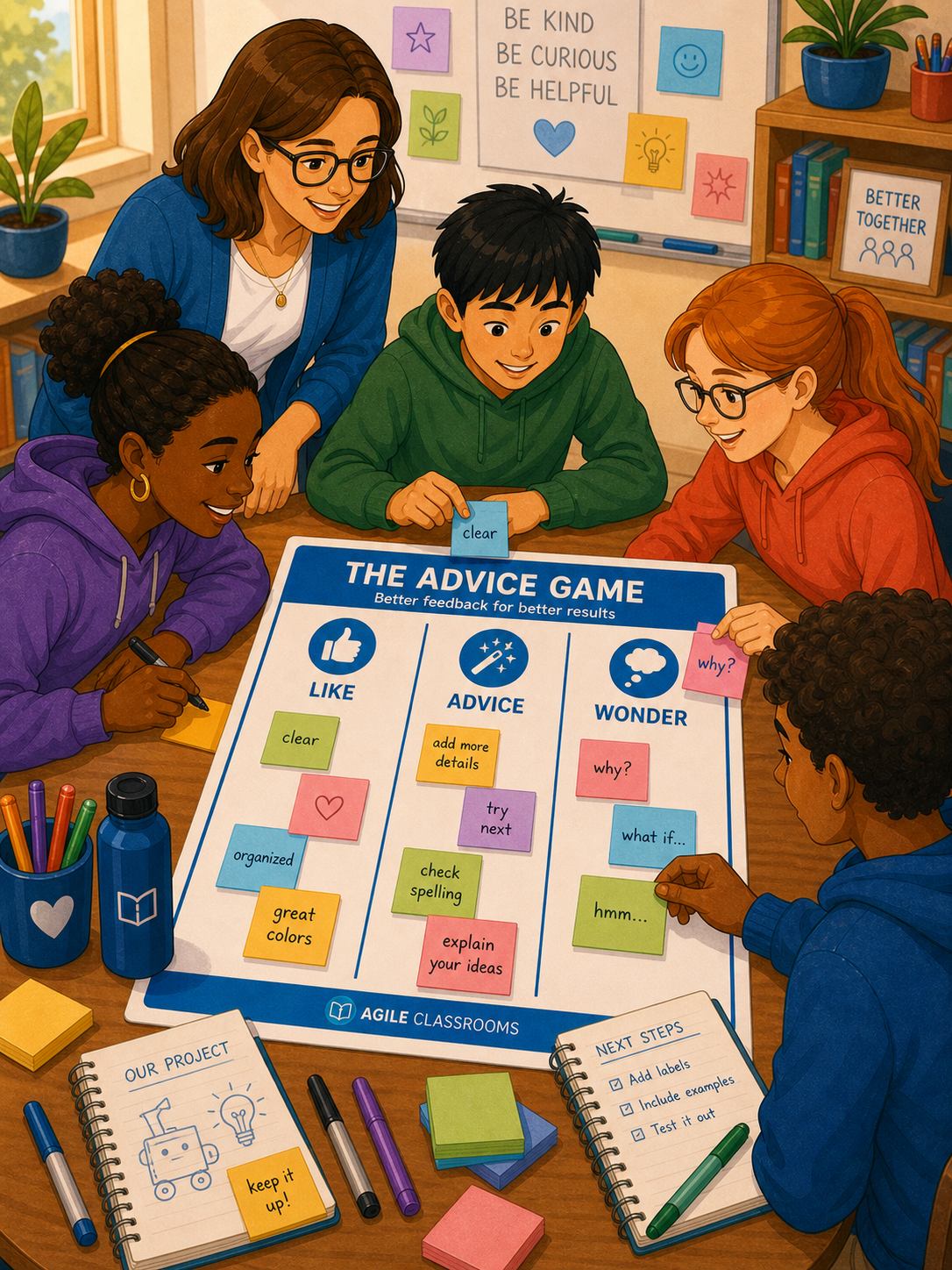
Three focused prompts move groups past opinions into specific, useful suggestions.
A shared structure lowers the stakes so every student or participant can contribute.
Advice and wonderings translate directly into changes for the next iteration.
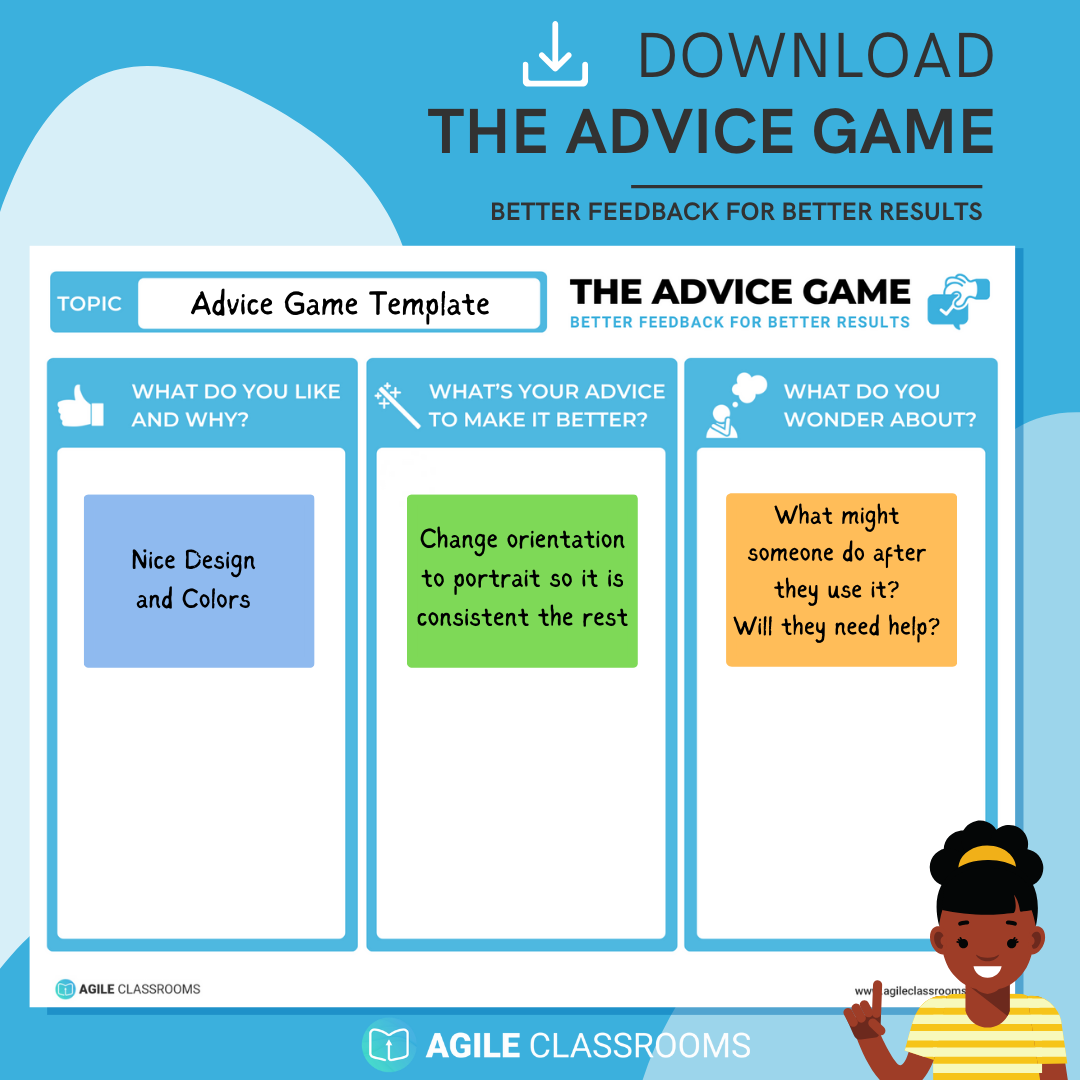
The Advice Game gives everyone the same simple structure before the conversation begins.
Set a positive tone and surface what is working.
Replace vague opinions with solution-focused suggestions.
Open safe questions that invite deeper thinking.
Pick something specific: a student project, prototype, draft, presentation, lesson plan, sprint review outcome, or team process. If the focus is too broad, the advice will be too broad.
Ask participants to respond to:
Give everyone a few minutes to write before anyone speaks. This protects thinking time, gives quieter people a way in, and keeps the first voice from shaping the whole conversation.
Group similar comments together. Separate appreciation, improvement advice, and questions.
Decide what changes now, what waits, and what needs more discovery.
Feedback gets better when thinking is visible.
Most feedback sessions go sideways because people start talking before they have had time to think. The Advice Game creates a short silent round first, so everyone can notice what works, offer advice, and raise questions before the conversation begins.
Feedback can sound like judgment. Advice changes the posture of the room. It asks people to help improve the work. The goal is not softer critique. The goal is feedback people can actually use.
Do not skip the silent writing round. That is the mechanism. Name the focus, give the three prompts, let people write, then cluster the advice and choose the next move.
Want the full explanation and examples? Read the article: The Advice Game
A team shares a project draft. Instead of starting with open discussion, everyone writes silently under the three prompts. The team can then see what people appreciated, what advice came up more than once, and what questions need to be answered before the next version.
This resource supports feedback, communication, reflection, and collaborative improvement. These are suggested connections, not a formal standards alignment.
Download the free printable template with the three Advice Game prompts and try it in your next review, critique, or feedback round.
Download for free