
Scrum for Students Certification: Career-ready teamwork, earned in 6 hours.
A 6-hour certification that gives CTE students a real teamwork process they can use in capstones, CTSOs, and on the job.
Backed by a Certified Scrum Trainer® · Aligned to CTE, WBL, CRP & Perkins V
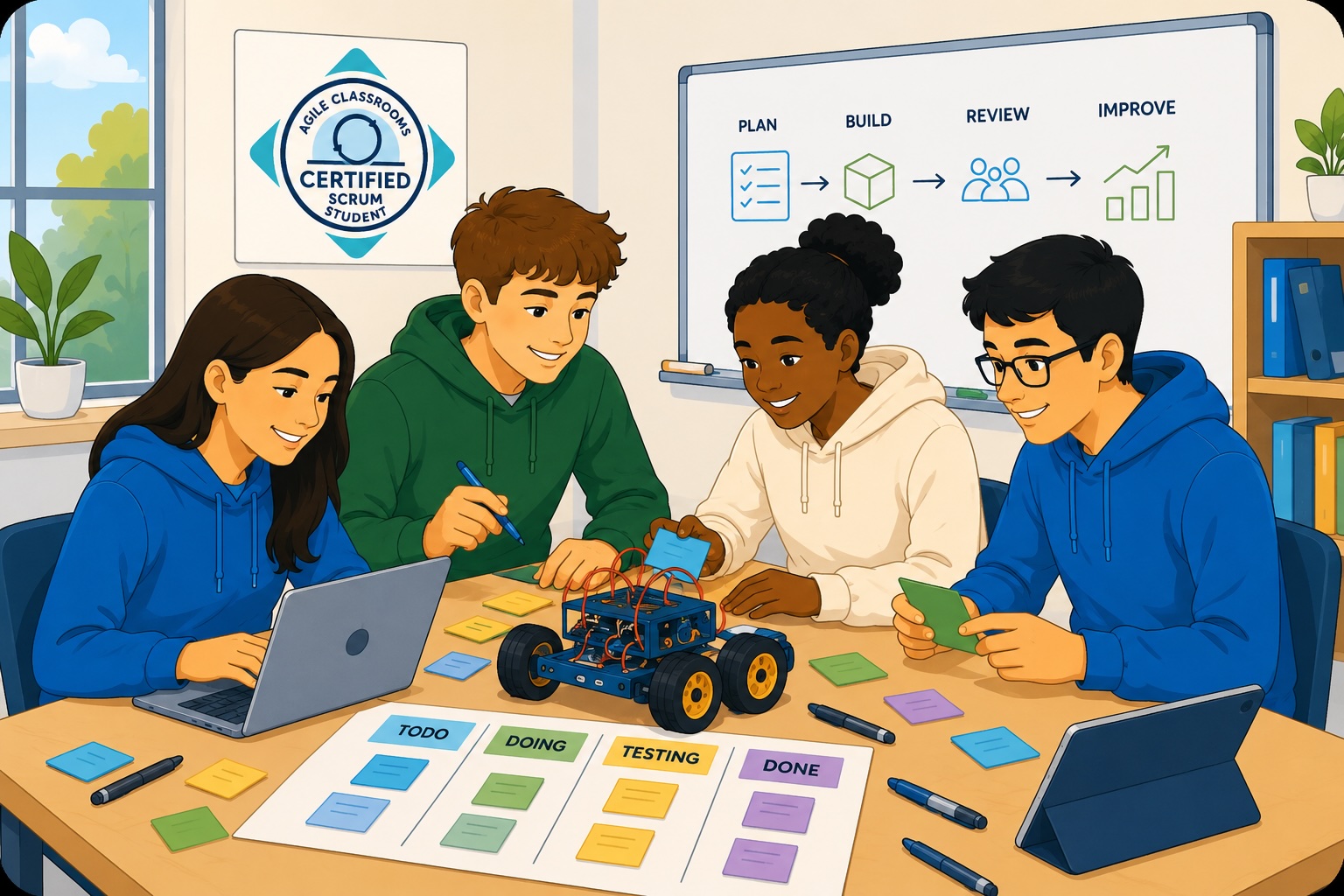
Why now
Why CTE programs are bringing Scrum in
- Transferable skills. Teamwork, communication, and self-direction students can use in any career pathway.
- Project-based learning that holds up. A repeatable process for planning, doing, reviewing, and improving real work.
- CTE alignment. Supports Work-Based Learning, Career-Ready Practices, and Perkins V employability outcomes.
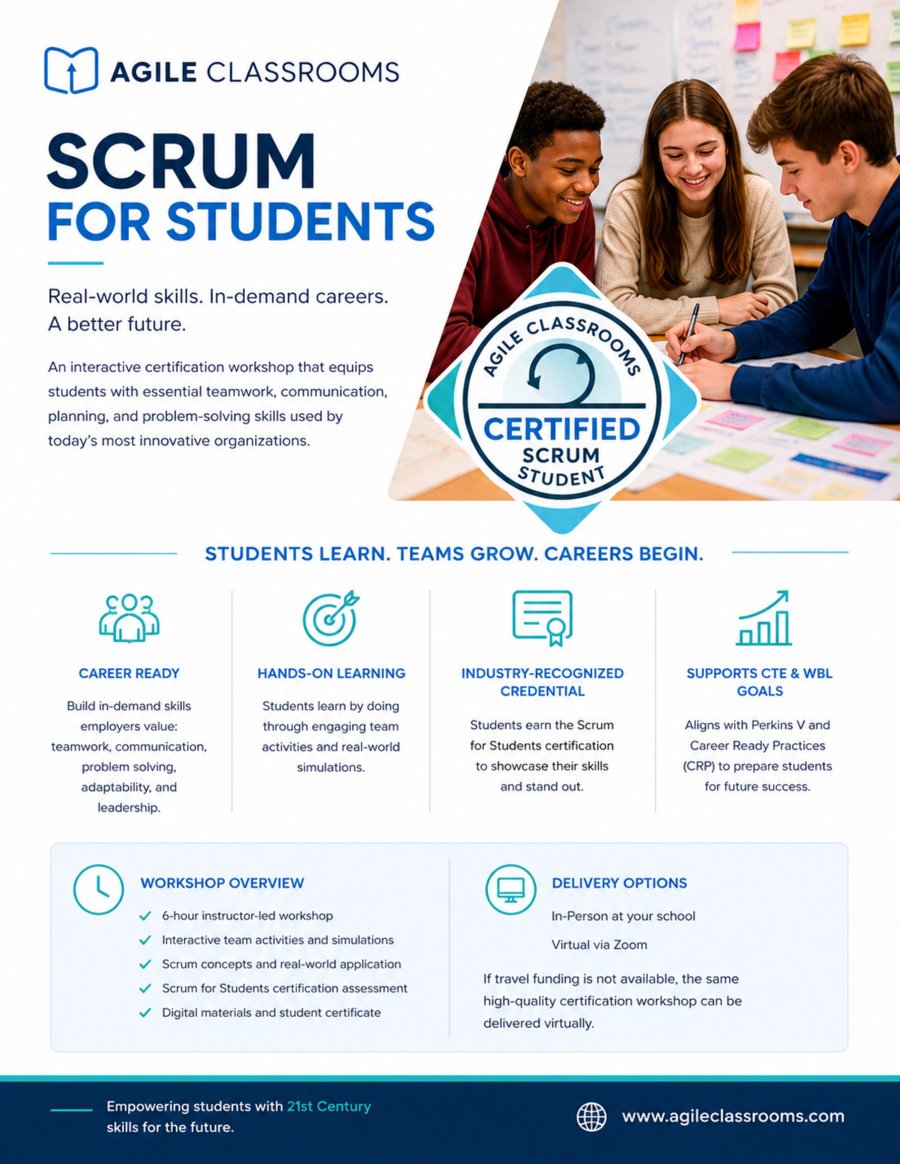
Need to share this with your school or district?
Download a one-page overview of Scrum for Students with the workshop format, student outcomes, credential details, and delivery options.
Share it with a principal, CTE director, counselor, or work-based learning lead.
The framework
What is Scrum?
A lightweight way for teams to plan, work, and improve together — built on three connected pieces.
Roles
Defined team roles so every student knows how they contribute.
Events
Short, repeating events for planning, checking in, reviewing, and reflecting.
Artifacts
Simple, visible tools that show what the team is doing and what's next.
Student outcomes
What students walk away with
A team role they can own
Students take a defined role and learn how to contribute to a working team.
A sprint cycle they can run
Plan, do, review, and improve work in a short, repeatable timebox.
Work they can show
Visible artifacts and progress they can put in a portfolio or interview.
A resume-ready certificate
A Scrum for Students credential they can list on resumes and applications.
Program outcomes
What changes for your program
For CTE programs
- A shared language for teamwork across pathways.
- Stronger evidence for WBL and Perkins V outcomes.
- Project work that holds up to industry expectations.
- A repeatable model teachers can run year after year.
Where students reuse it
- Senior projects and capstones.
- CTSO competitions and events.
- Work-based learning placements.
- Group projects across CTE pathways.