
So much of how educators currently teach is based on pedagogical models and practices commonly used in classrooms of the last century. Information can be unidirectional as it flows through the classroom: the teacher serves as the conveyer of knowledge, with students receiving, replicating, and duplicating knowledge. In both traditional and non-traditional classrooms, we see the prevalence of strict adherence to a rigid curriculum, set deadlines, and teacher-defined assessments.
Students are entering a fast-paced, dynamic, and uncertain world, and they will be tasked with addressing increasingly complex problems. They need to develop skills and a mindset that will help them navigate this changing environment. Agile Education more effectively prepares students for the 21st-century lives and careers they are destined to enter.
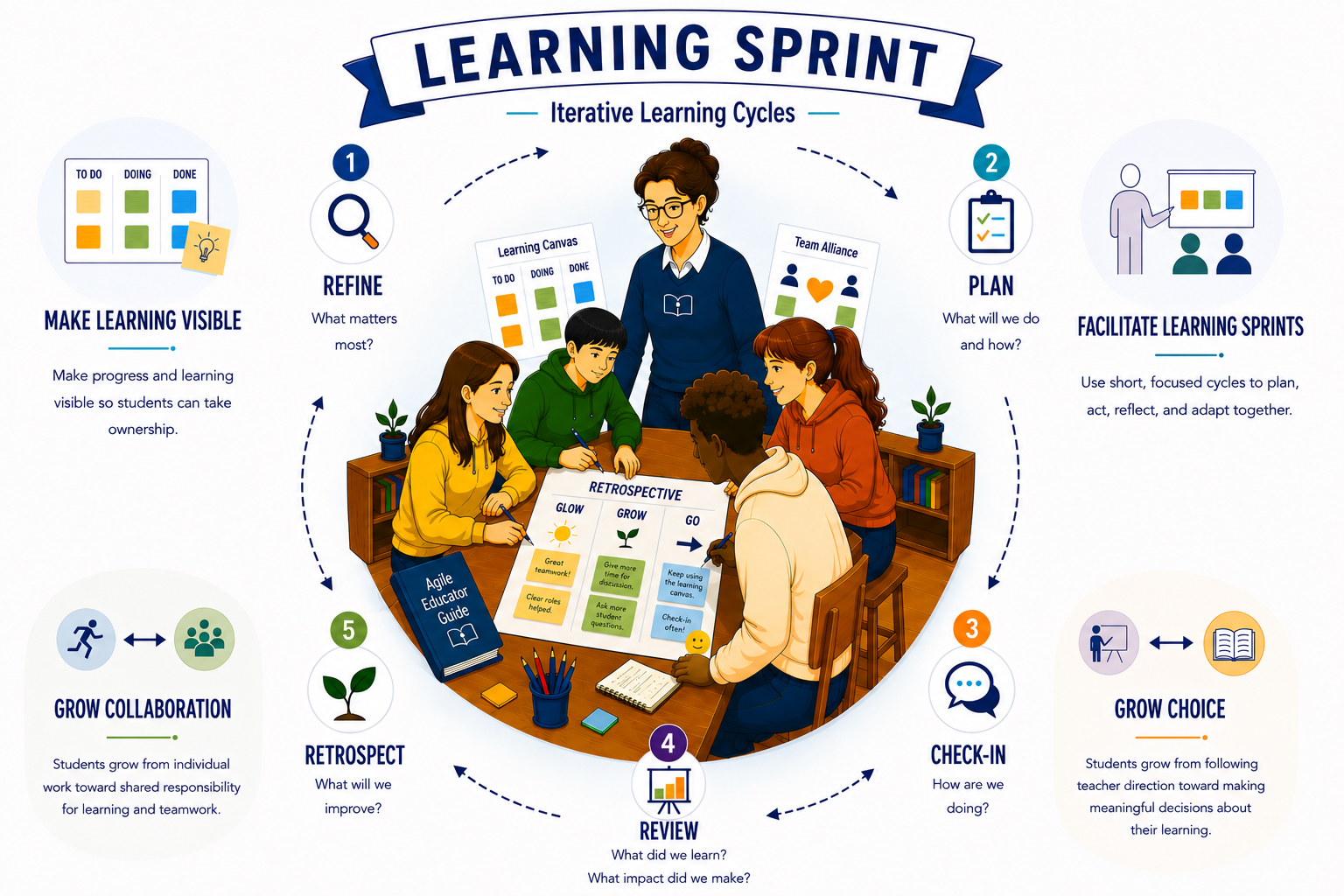
This guide will help you move your students along a continuum toward increased agility in your classroom. Agility gives students the capacity to self-direct their learning and collaborate effectively. Agile in the classroom can manifest in a variety of ways, including in individual projects, project- or problem-based learning, inquiry-based learning, or as the main vehicle for students to meet content standards aligned with curriculum.