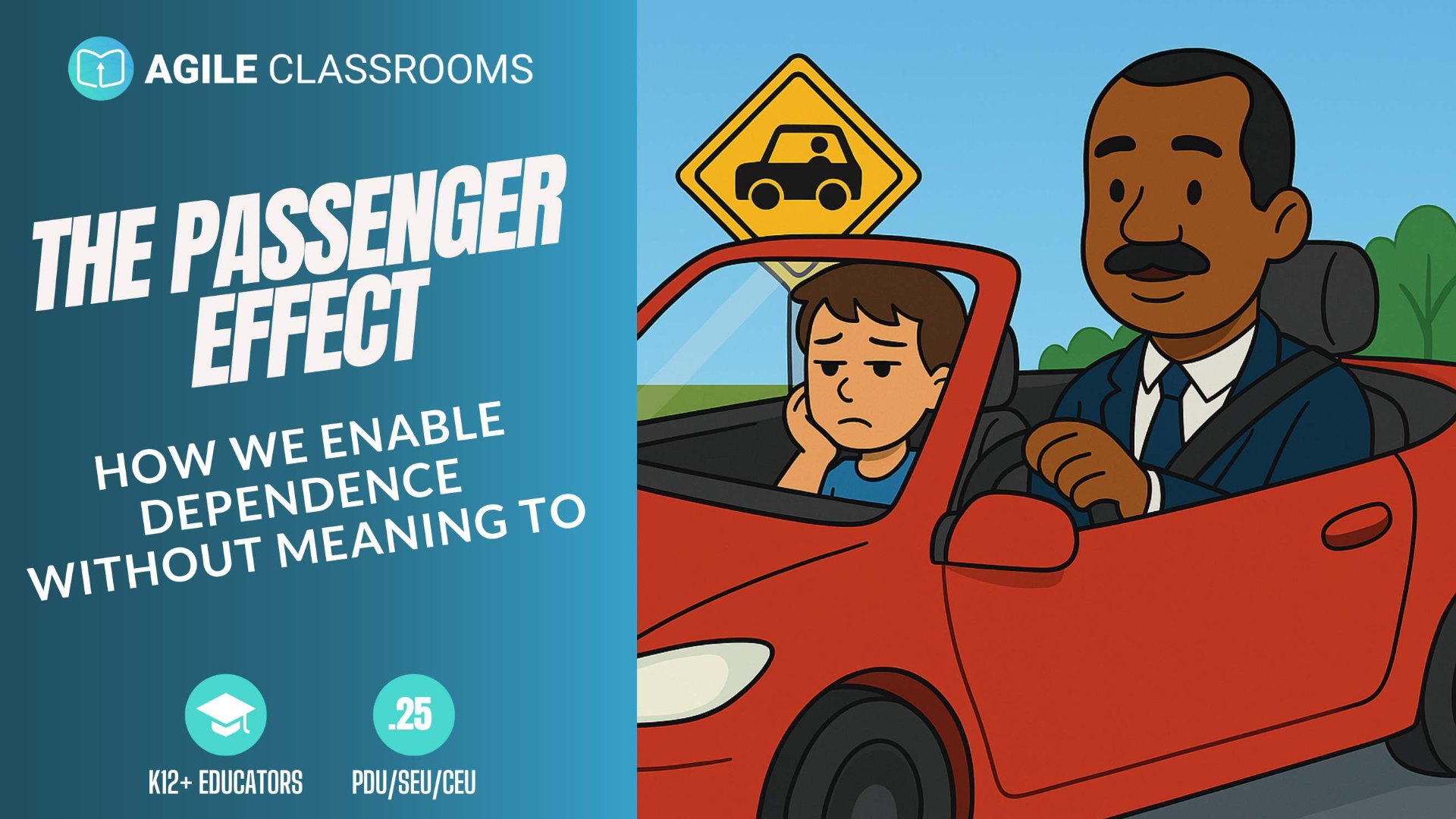
Every morning, I drive my daughter to school. Same route. Same turns. Same stops. But when I asked her, “Could you get here on your own?” she didn’t hesitate:
“No way. I don’t pay attention when you’re driving.”
She’s seen the road hundreds of times—every tree, every stoplight. But why notice when someone else is in control? If you’ve ever felt like the lone navigator for your students, you’ll know exactly what I mean.
The Passenger Problem in Learning
It’s not her fault. Passengers don’t have to pay attention to the process. They just trust the driver to get them there. And that’s fine—until the day they need to take the wheel themselves.
The same thing happens in classrooms. Students absorb content as passengers in their education. They memorize facts, follow instructions, and complete assignments. And while this builds knowledge, it doesn’t equip them with the skills to navigate learning on their own.
They’re learning what to know but not how to learn.
The Science Behind It: Inattentional Blindness
Psychologists call this phenomenon “inattentional blindness”—when people fail to notice critical details because they’re not actively engaged. In learning, this means students can excel at following directions or recalling facts but struggle when asked to:
- Set their own goals
- Solve open-ended problems
- Reflect on their progress
Without engagement in the process, the skills of learning remain out of reach.
Learning to Drive Their Own Education
Learning how to learn requires more than passivity. It’s about actively navigating the process—choosing goals, making decisions, solving problems, and reflecting on outcomes. Just like driving, it’s not enough to know the map. You have to practice steering, accelerating, and braking in real time.
And just like we wouldn’t hand over car keys to a first-time driver without instruction, we can’t simply give students control of their learning all at once. The goal is to give control without things going out of control.
The Shift: From Passenger to Driver
For students, this means:
- Engaging in their own learning—not just following instructions but setting goals, planning their approach, and reflecting on what works.
- Moving from passive recipients to active participants, equipped to navigate their own learning journeys.
For educators, it’s about recognizing:
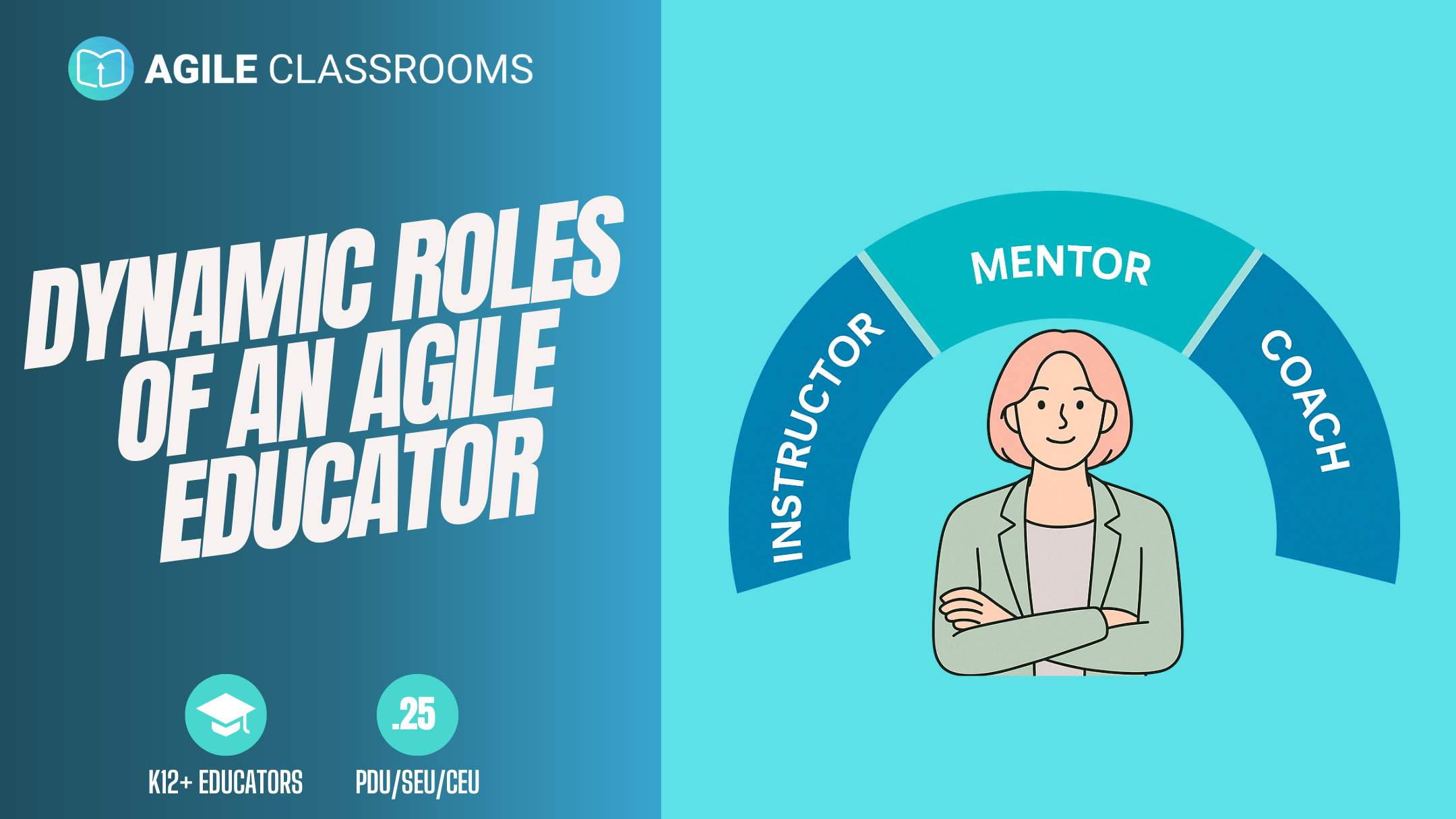
- When to lead, when to guide, and when to step back.
- How to prepare the road, install guardrails, and coach from the passenger seat.
What the Shift Actually Looks Like
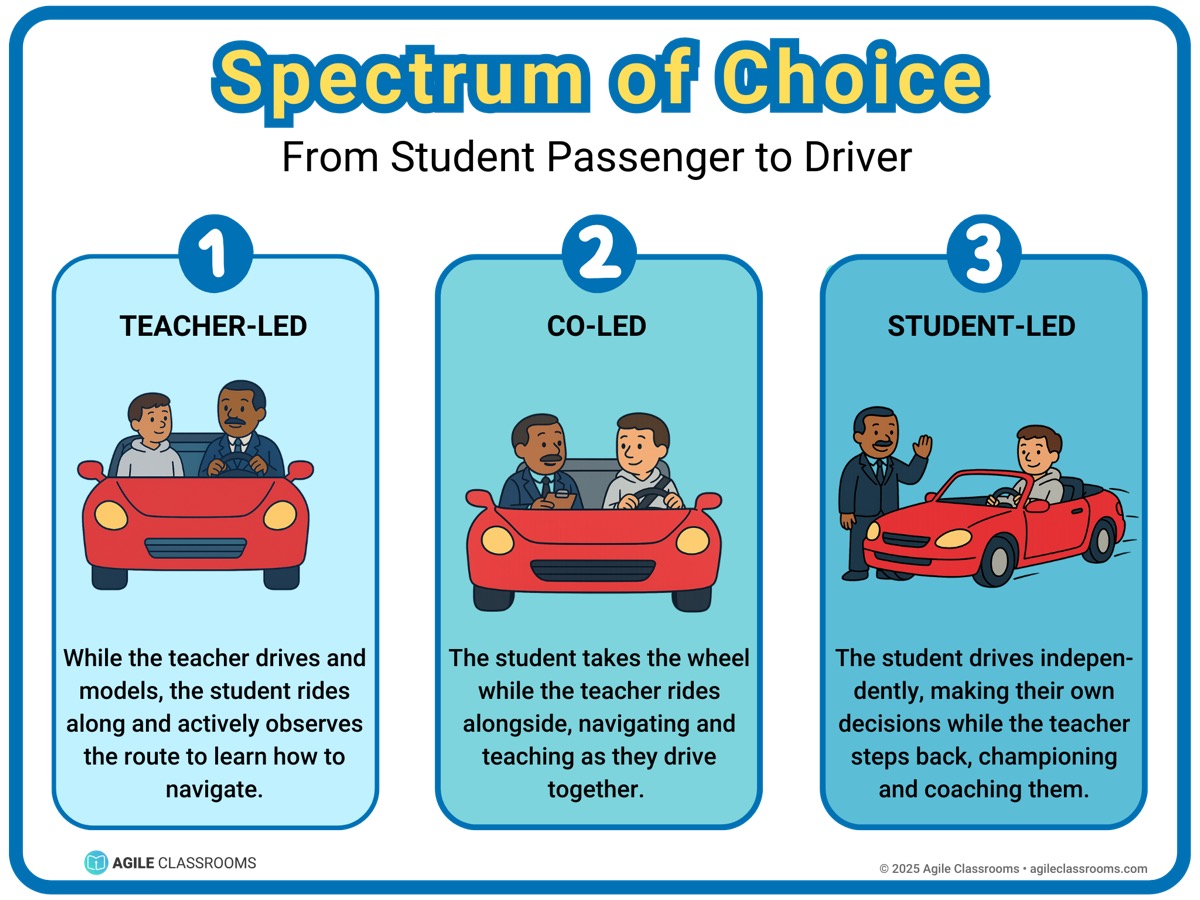
This shift from dependence to agency isn’t binary. It happens in stages:
- Stage 1: Teacher-Led. The teacher drives. The student rides along, observing and absorbing the process without needing to navigate.
- Stage 2: Shared Control. The student takes the wheel with the teacher beside them—guiding, supporting, and sharing responsibility as they begin to make learning decisions.
- Stage 3: Student-Led. The student drives independently, making their own decisions while the teacher steps back to coach, champion, and provide feedback as needed.
Because when students become the drivers of their education, something transformative happens. They stop just getting to the destination. They start discovering their own routes, building the skills to learn, adapt, and succeed—long after they’ve left the classroom.
Help Students Drive Their Own Learning
The Agile Classrooms Framework gives you the tools to make this shift real.
Start by using the Spectrum of Choice to scaffold student decision-making, then integrate Self-Directed Learning Routines that help students practice reflection, planning, and goal-setting.
Want to go deeper? The ACT Teacher Certification Workshop helps educators create learning environments where students don’t just follow the path—they learn how to find their own way.