“I want my students to be more independent, but I'm not sure how to let go without the classroom falling apart.”
Creating self-directed learners is essential for lifelong education. But guiding students from dependence to independence takes more than good intentions. It requires flexibility and strategy.
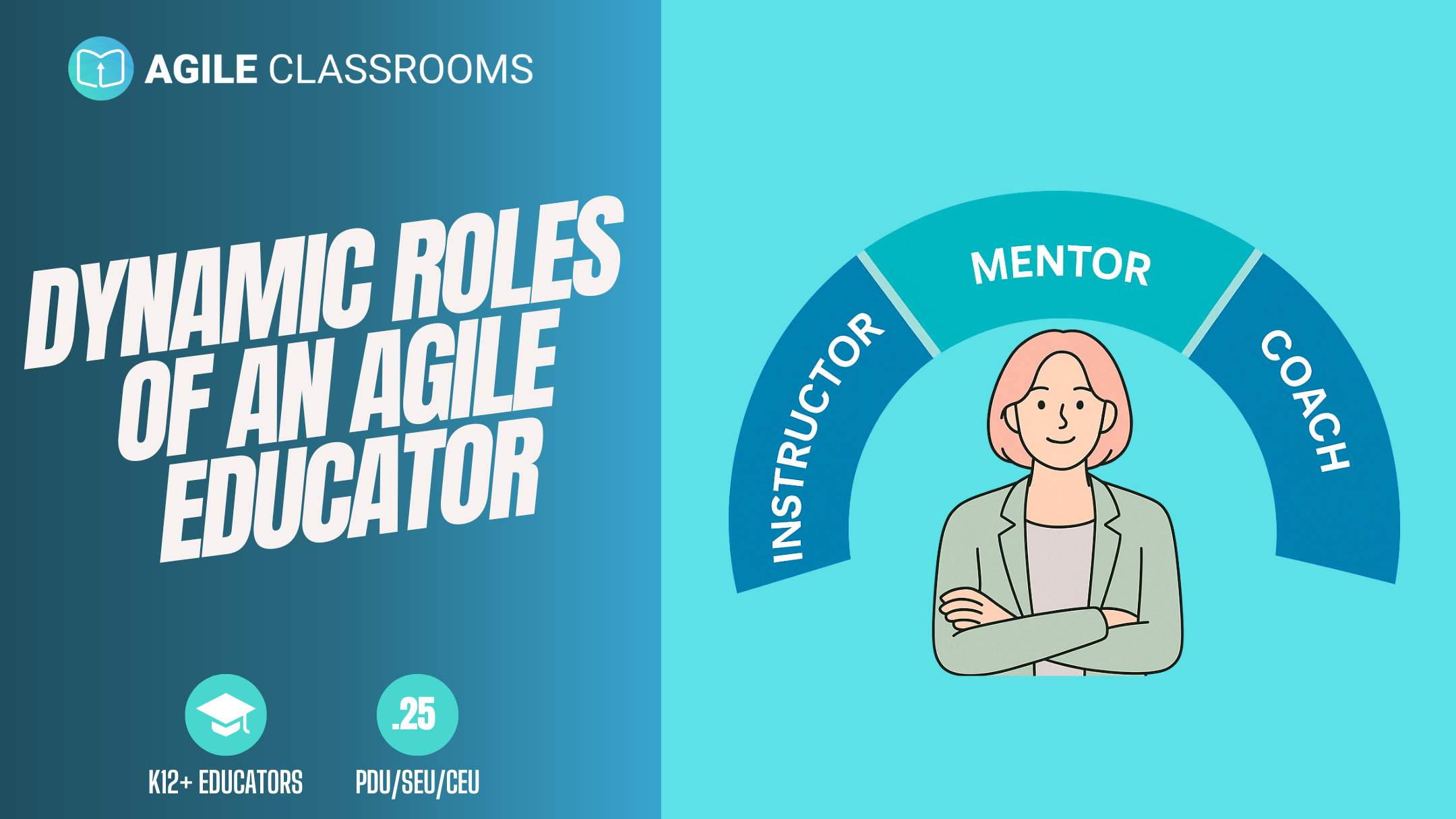
The three dynamic roles of an agile educator—Instructor, Mentor, and Coach—align with different levels on the Spectrum of Choice to support this transformation.
By moving fluidly between these roles, teachers adjust their guidance based on students' readiness, promoting progressive self-direction.
Why Independence Increases Student Load
As students take more control, their cognitive load increases. They're not just learning content. They're managing goals, decisions, and their own progress.
That shift requires careful scaffolding to prevent overwhelm.
It's about giving control without losing control.
Educators must support independence in a way that builds capability, not chaos.
Understanding the Spectrum of Choice
Each educator role aligns with a level of student autonomy:
- Teacher-Led
- Co-Led
- Student-Led
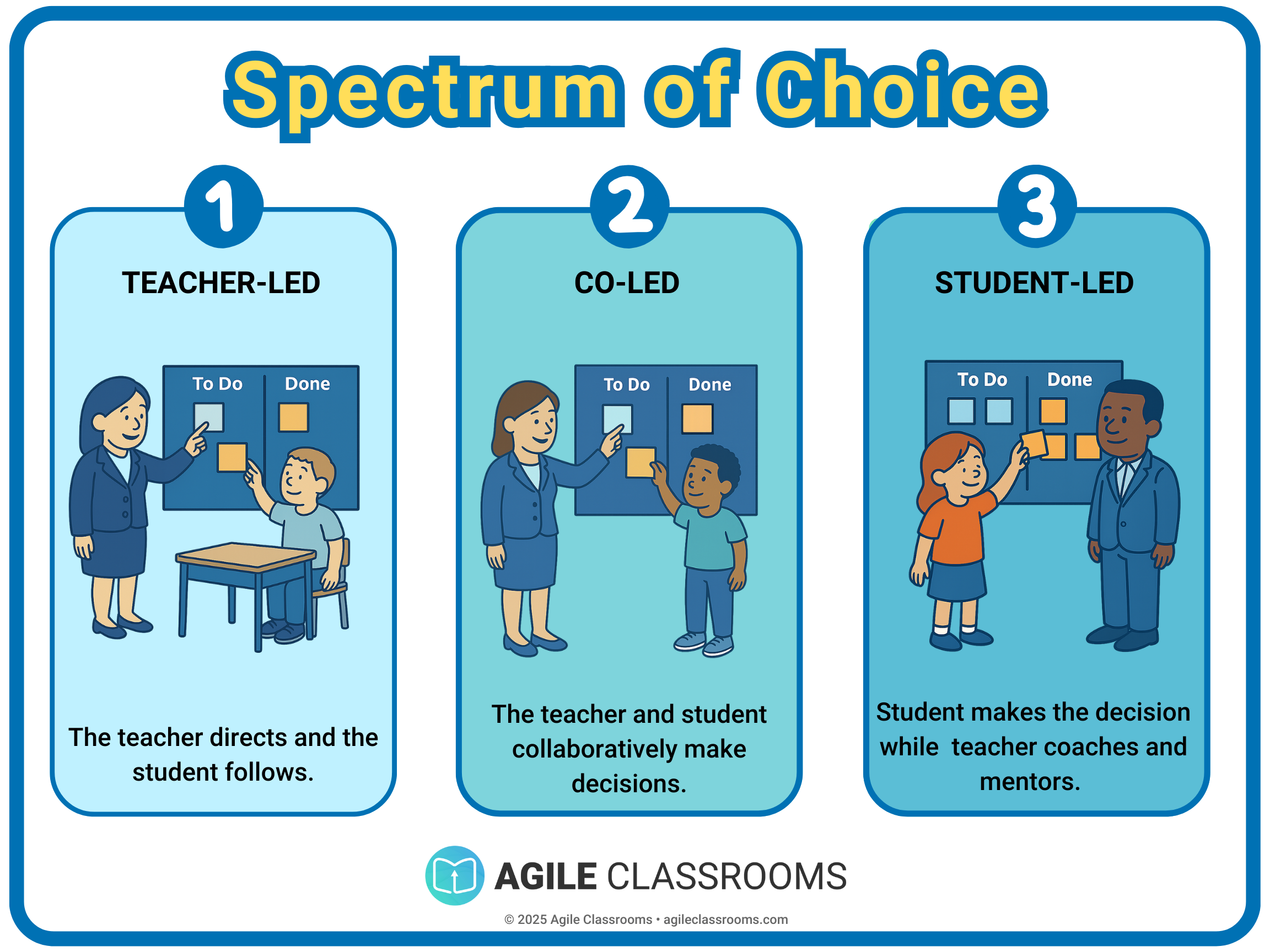
These levels aren't rigid stages. They're adaptable responses to student growth. Educators shift roles based on what learners need to succeed.
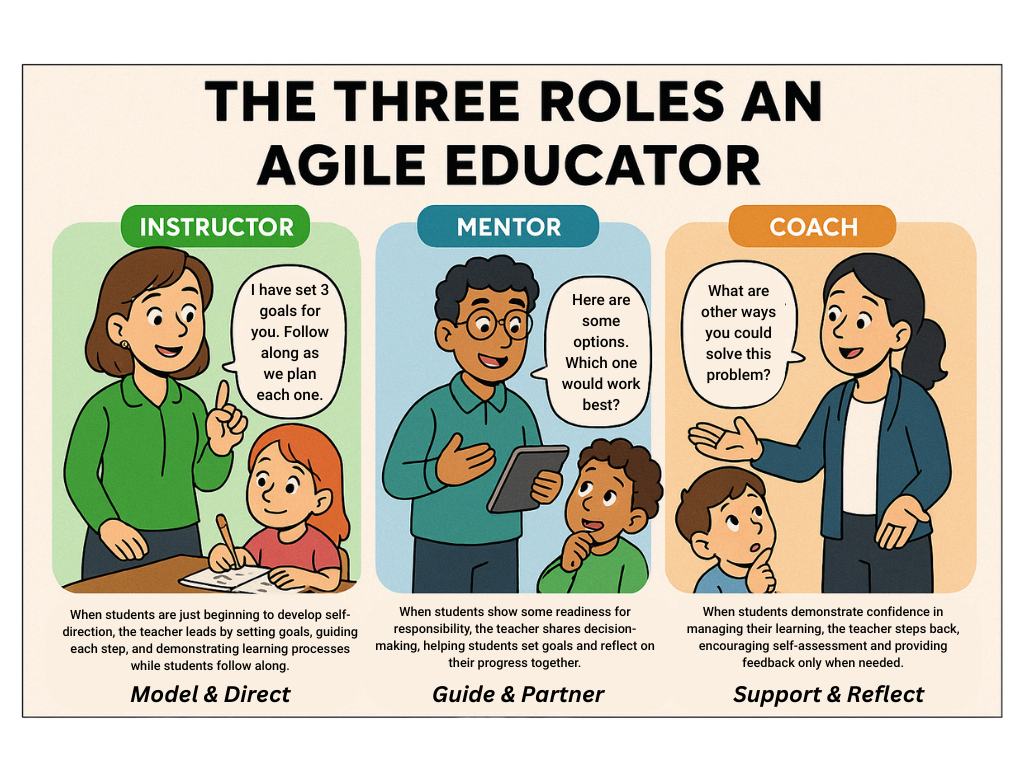
Level 1: Teacher-Led Learning
Instructor Role
When to Use:
At the beginning of learning or when introducing new concepts.
Students rely on the teacher's structure and direction to build foundational skills. The teacher models every step.
Teacher Actions:
- Models clear goal-setting and tracking
- Provides structured guidance
- Demonstrates learning strategies
- Establishes routines and expectations
Example Language:
“Today, we'll focus on these specific goals.”
“Let me show you how to track your progress.”
Level 2: Co-Led Learning
Mentor Role
When to Use:
When students are ready to share responsibility and contribute ideas.
The teacher shifts into a Mentor, guiding students as collaborators. They begin to co-create goals and strategies.
Teacher Actions:
- Collaborates on setting goals
- Guides reflection through questions
- Offers feedback and suggestions
- Supports decisions while maintaining oversight
Example Language:
“Here are some options. What other ideas do you have?”
“Let's decide together which ones to choose.”
Level 3: Student-Led Learning
Coach Role
When to Use:
When students demonstrate self-management and are ready for full ownership.
Here, the teacher steps back into a Coach role. Students lead their learning process with minimal intervention.
Teacher Actions:
- Empowers student-led goal-setting and tracking
- Promotes deep reflection and self-assessment
- Provides feedback only when asked
- Celebrates student initiative and problem-solving
Example Language:
“What insights have you gained from your approach?”
“How might you adjust your strategy based on what you've learned?”
A Year in Ms. Rivera's Classroom
To see this in action, follow Ms. Rivera's journey as she adapts her role across the school year.
Fall: Instructor Role – Teacher-Led Learning
She starts the year modeling key self-direction skills:
- Visual goal-setting tools
- Techniques for tracking progress
- Daily reflections
- Planning templates
This structure gives students the foundation they need.
Winter: Mentor Role – Co-Led Learning
As skills build, Ms. Rivera shares control:
- Joint goal-setting sessions
- Guiding questions
- Peer feedback discussions
- Light-touch oversight
When students struggled, she temporarily returned to the Instructor role—showing the fluidity of this approach.
Spring: Coach Role – Student-Led Learning
By spring, most students owned their learning:
- Ms. Rivera observed more than directed
- Used open-ended prompts
- Let students lead goal-setting and reflection
- Intervened only when necessary
Students set meaningful goals and managed their progress with confidence.
Principles of the Agile Educator
To implement the Spectrum of Choice well:
- Responsive Flexibility: Shift roles based on student readiness
- Strategic Scaffolding: Gradually release responsibility
- Balanced Support: Enough guidance to challenge, not overwhelm
- Growth Mindset: Treat setbacks as part of the learning journey
Why It Matters
When used well, the three agile roles lead to:
- Increased engagement: Students are more invested when they choose
- Metacognitive growth: Reflection becomes part of the process
- Stronger problem-solving: Students think and act with ownership
- Confidence and independence: Students advocate for their learning
Final Thought
The roles of Instructor, Mentor, and Coach give educators a flexible framework for building student self-direction. Each aligns with a level of readiness on the Spectrum of Choice.
When teachers respond to student needs instead of following a script, they build capable, confident, independent learners.
Ms. Rivera's classroom journey shows what's possible when educators shift from control to coaching.
Ready to Try It?
Want to learn how to put the Spectrum of Choice into action in your classroom?
Join an upcoming Agile Classrooms Teacher (ACT) Workshop and build your toolkit for self-directed learning.