Overview
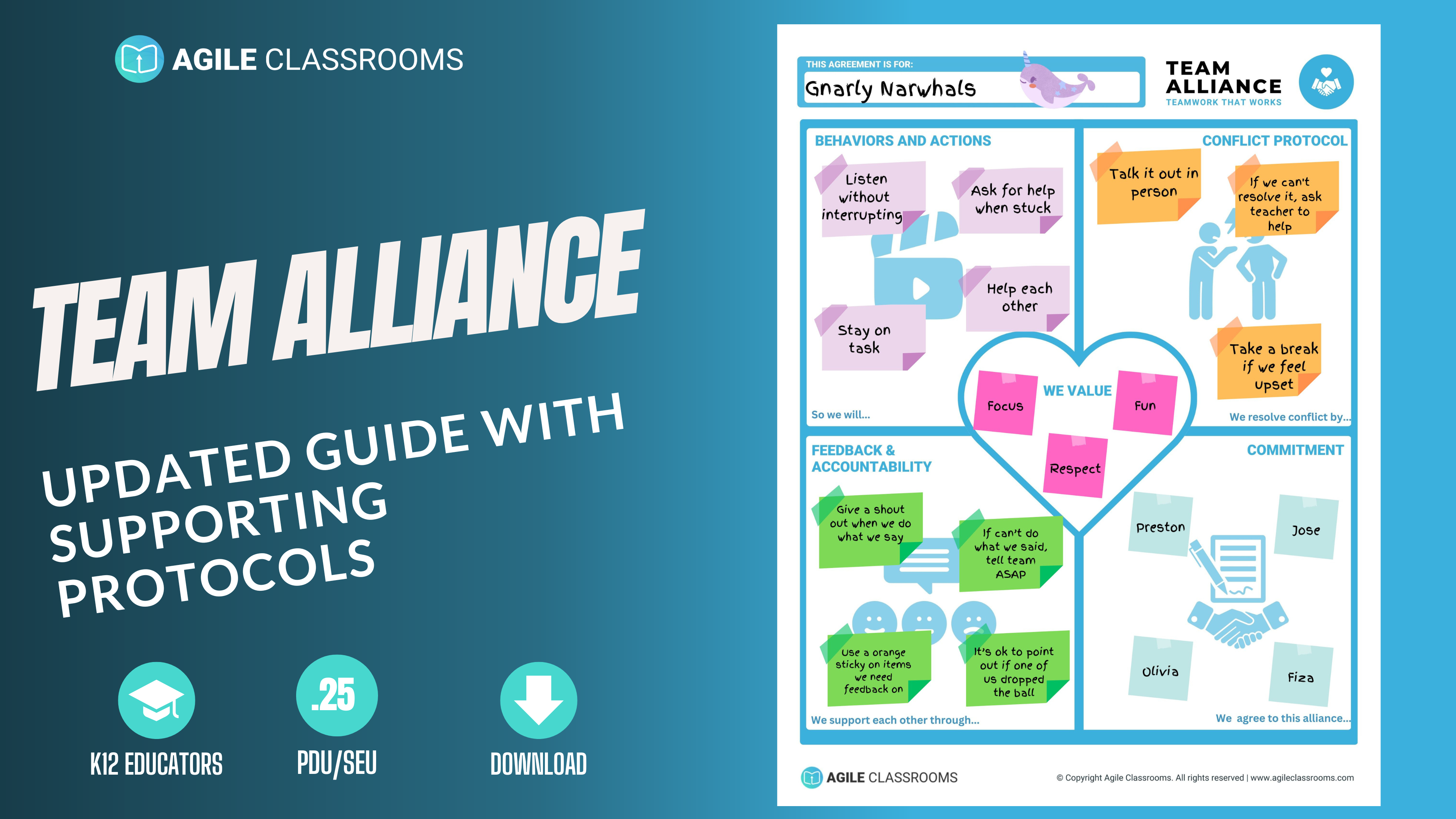
Tired of group project drama? The Team Alliance Canvas is a simple yet powerful framework that helps students collaborate effectively by setting shared values, clear expectations, and accountability measures. It reduces unequal workloads, conflicts, and wasted time, making teamwork smoother and more productive for students and teachers alike.
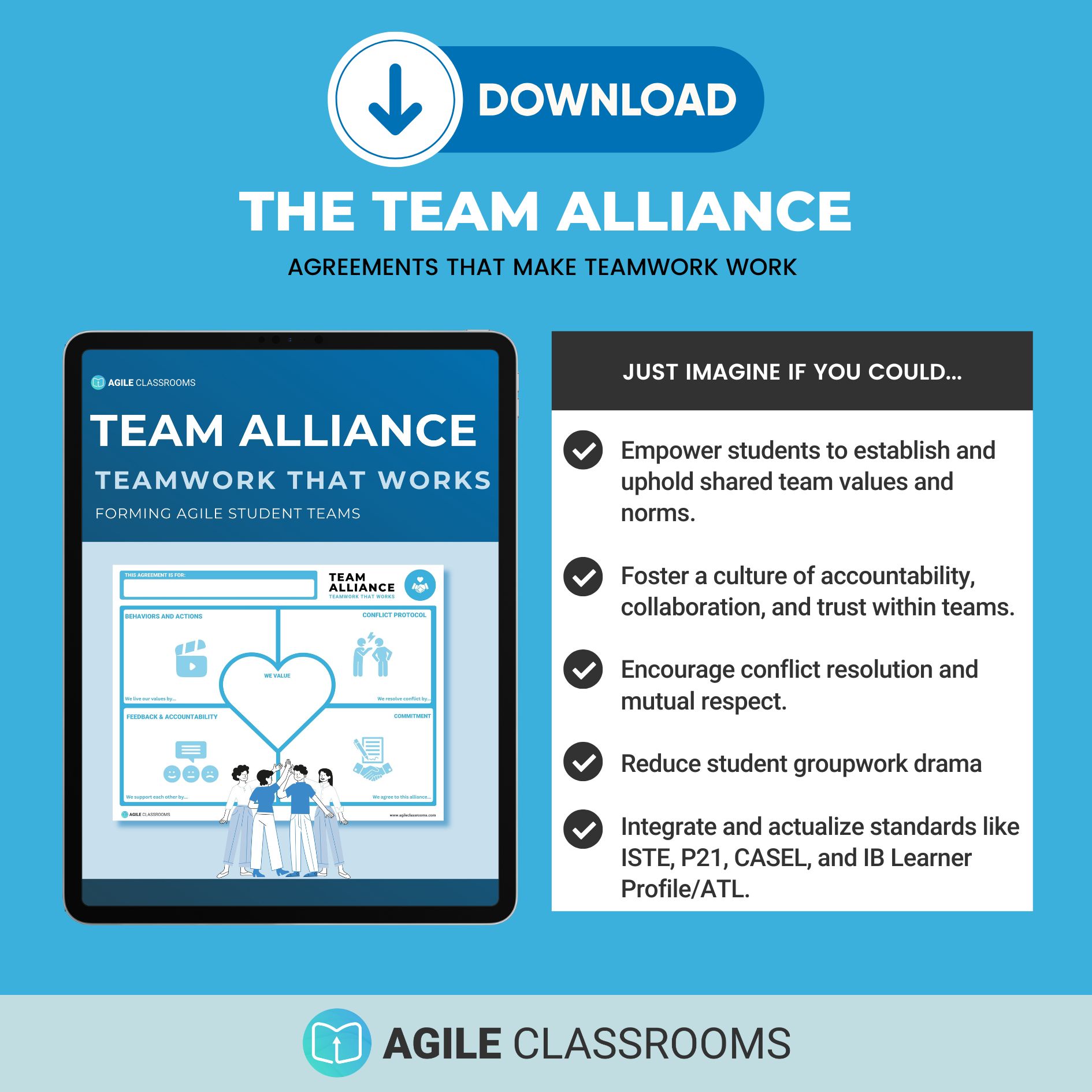
Download the Team Alliance Guide
Prefer to Listen?
Want a quick breakdown of how the Team Alliance Canvas eliminates group drama? Listen to this short podcast-style overview by NotebookLLM.
Group Work: Why It So Often Fails
Without guidance, students struggle with teamwork, leading to:
- Uneven workloads: One student does all the work while others coast.
- Personality clashes: Miscommunication turns into conflict.
- Process confusion: Teams argue about how instead of making progress.
Teamwork is a learned skill, and students need a structured approach to do it well.
How the Team Alliance Canvas Works
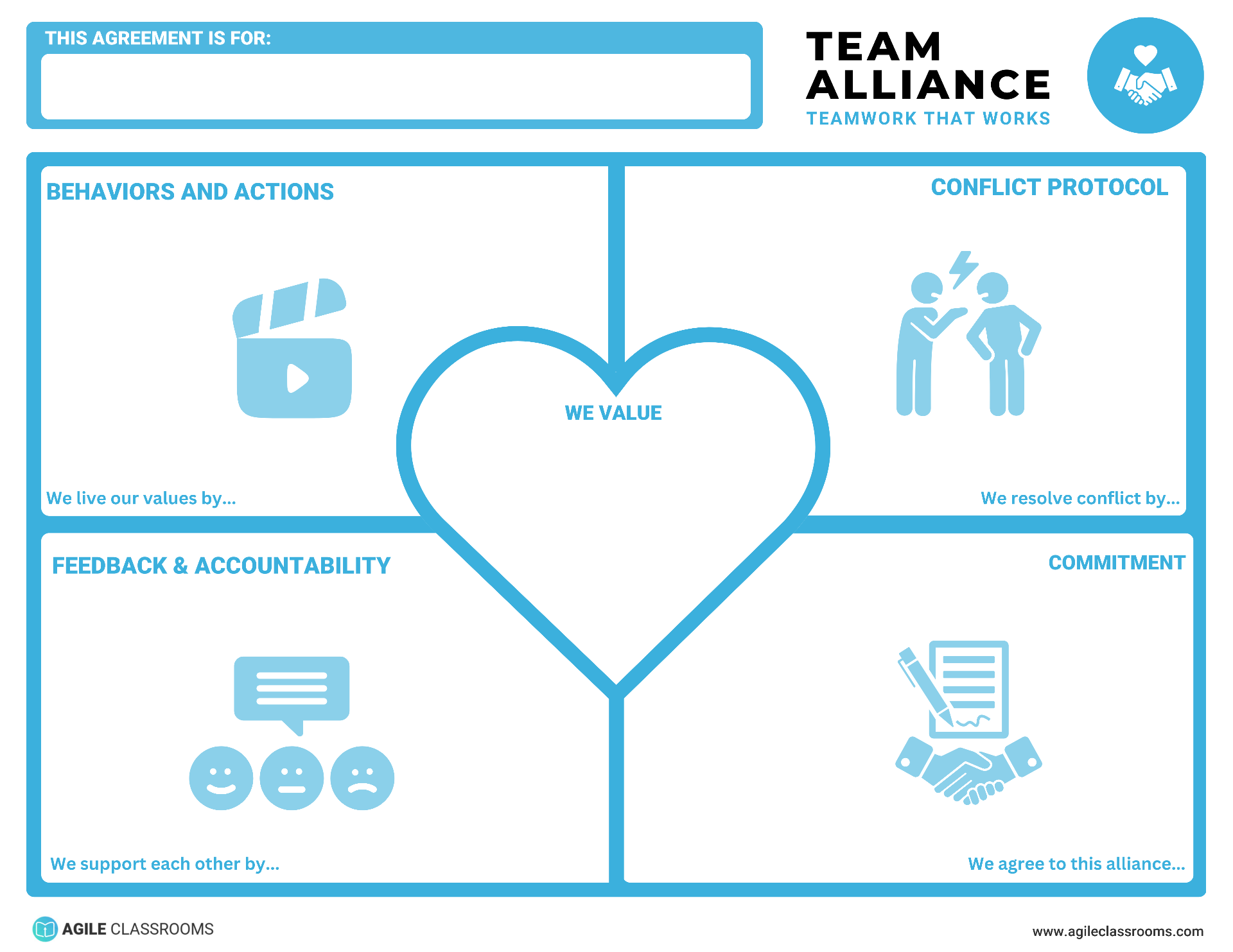
These five steps for creating a Team Alliance turn group chaos into productive teamwork:
- Shared Values. Teams define core values, such as respect, inclusion, and responsibility, to shape their team culture.
- Positive Behaviors. Values are translated into clear, agreed-upon behaviors, such as:
- Listen without interrupting.
- Help teammates who are stuck.
- Conflict Resolution. Teams prevent drama by establishing proactive conflict strategies, such as:
- Cooling-off periods.
- Face-to-face discussions.
- Involving a mediator if needed.
- Feedback & Accountability. Teams agree on how to give and receive feedback constructively and hold each other accountable.
- Commitment. Students sign the Team Alliance Canvas, reinforcing their agreement to shared values and expectations.
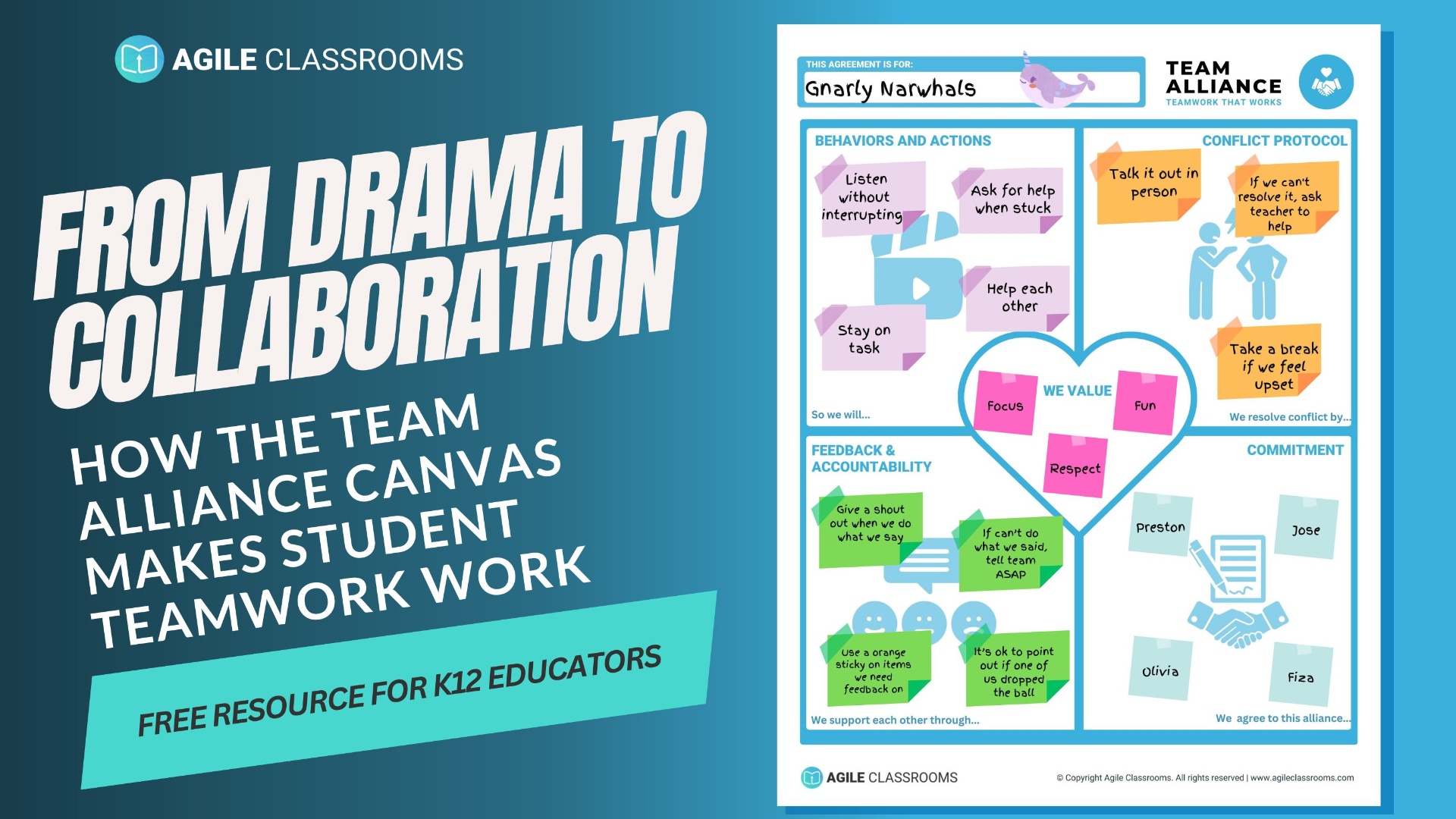
See It in Action
Curious how a real team uses this?
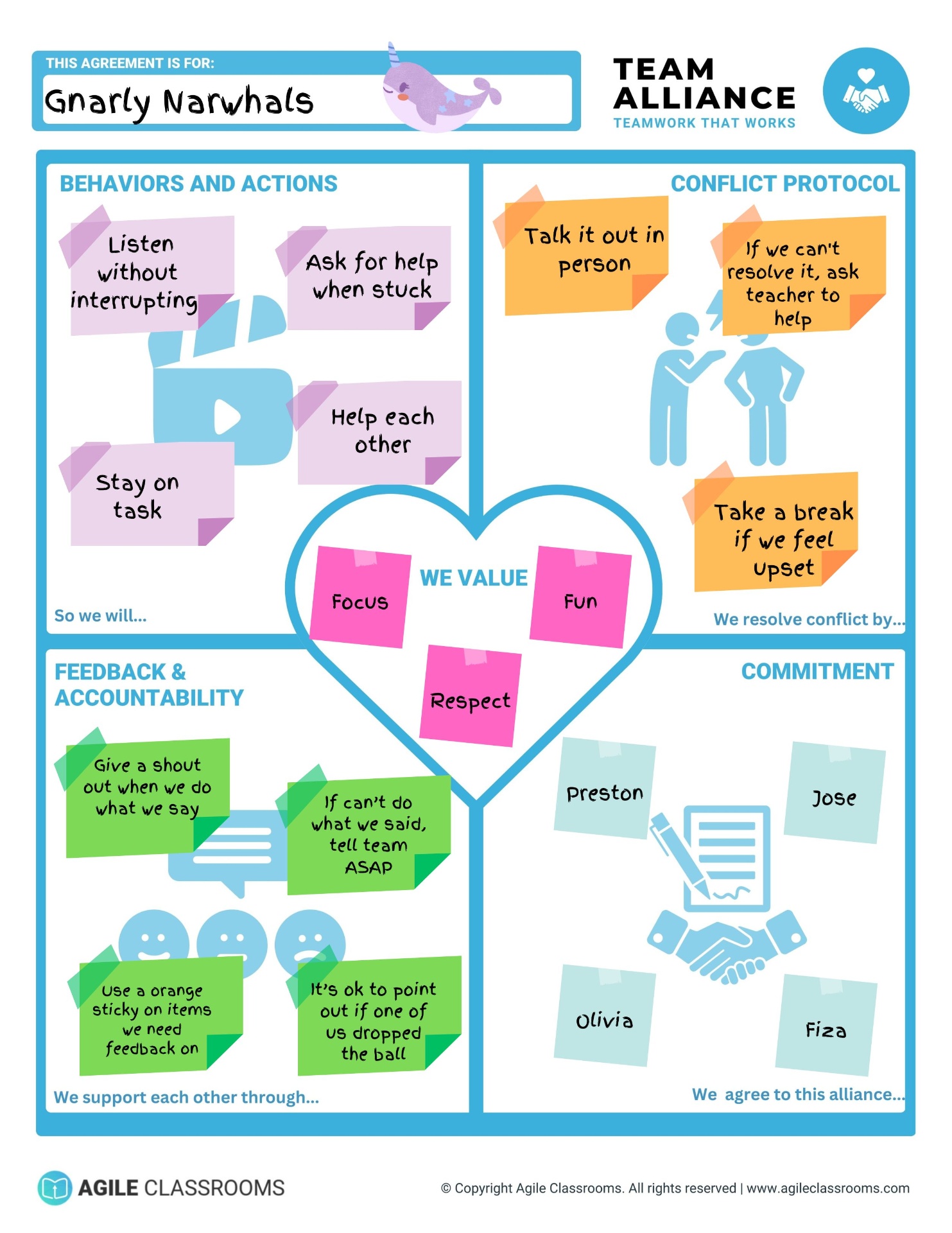
This visual framework helps students set expectations, navigate teamwork, and grow as collaborators.
What's Inside the Guide?
Download the Team Alliance Guide
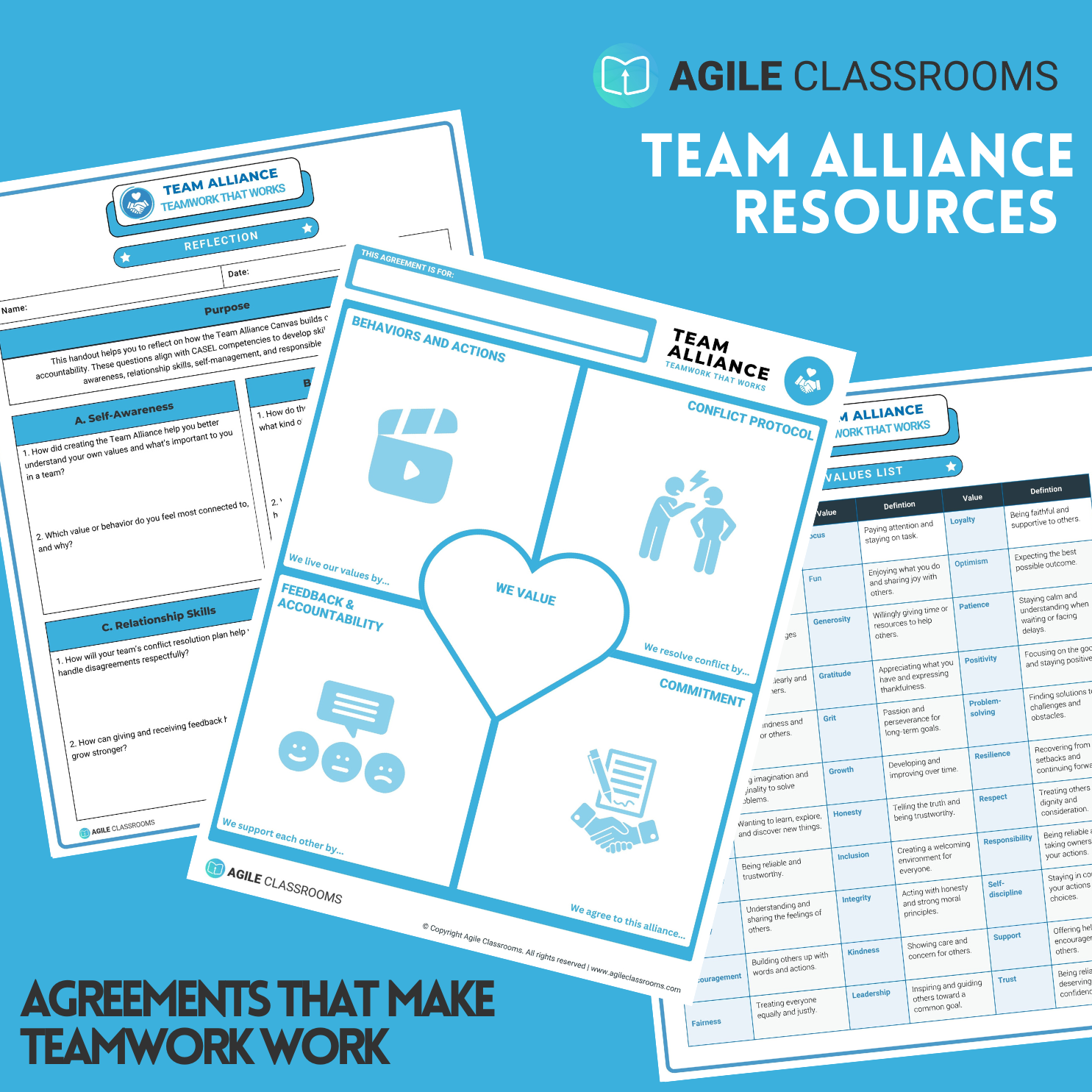
Inside, you'll find:
- The Team Alliance Canvas: a clear, customizable framework for teams.
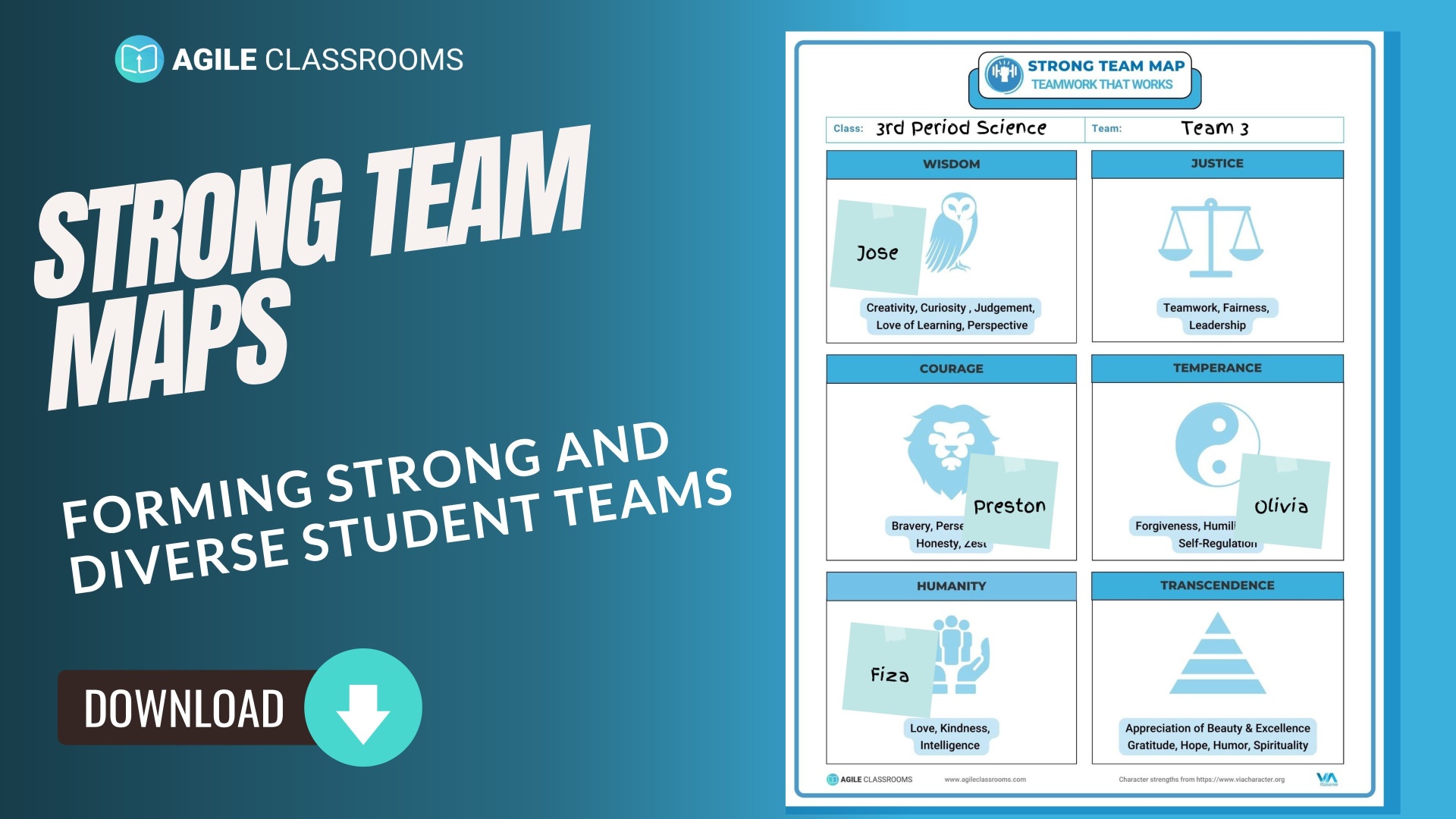
- Student Values List: helps teams define their core principles.
- Reflection Questions: prompts to improve collaboration and decision-making.
Designed for seamless use, whether in print or digital format.
Standards Actualized
The Team Alliance Canvas aligns with key educational standards, helping teachers meet critical learning goals:
- Social-Emotional Learning (SEL): Supports self-awareness, responsible decision-making, and relationship-building (CASEL).
- 21st-Century Learning Skills: Enhances collaboration, communication, and adaptability (P21, ISTE).
- IB Approaches to Learning (ATL): Reinforces conflict resolution, self-management, and teamwork.
- College & Career Readiness: Builds essential teamwork and accountability skills for success beyond the classroom.
This means educators can confidently integrate the Team Alliance Canvas into their curriculum while ensuring students develop real-world collaboration skills.
Why the Team Alliance Canvas Matters
Less Work for Teachers
- Students manage their own behavior, reducing teacher intervention.
- More time for teaching, less time refereeing conflicts.
Skills That Go Beyond the Classroom
- Academics: stronger collaboration, communication, and execution.
- Careers: real-world teamwork, adaptability, and accountability.
- Life: handling group dynamics and taking responsibility.
Better Classroom Culture
- Psychological safety fosters respect and student engagement.
- Aligned with SEL, 21st-century learning, and IB frameworks.
Empowers Student Independence
Students co-create their agreements, resolve conflicts, and give feedback, building leadership skills for life.
Teamwork Doesn't Have to Be Chaos
Take Teamwork to the Next Level
Want to see the Team Alliance Canvas in action? In our Certified Agile Classrooms Workshop, you'll work in teams, experience an Agile classroom firsthand, and learn how to implement this framework with your students.
In the workshop, educators get:
- Hands-on experience working in groups like students will.
- A chance to see Agile classrooms in action, not just theory.
- Tools and strategies to transform teamwork in the classroom.