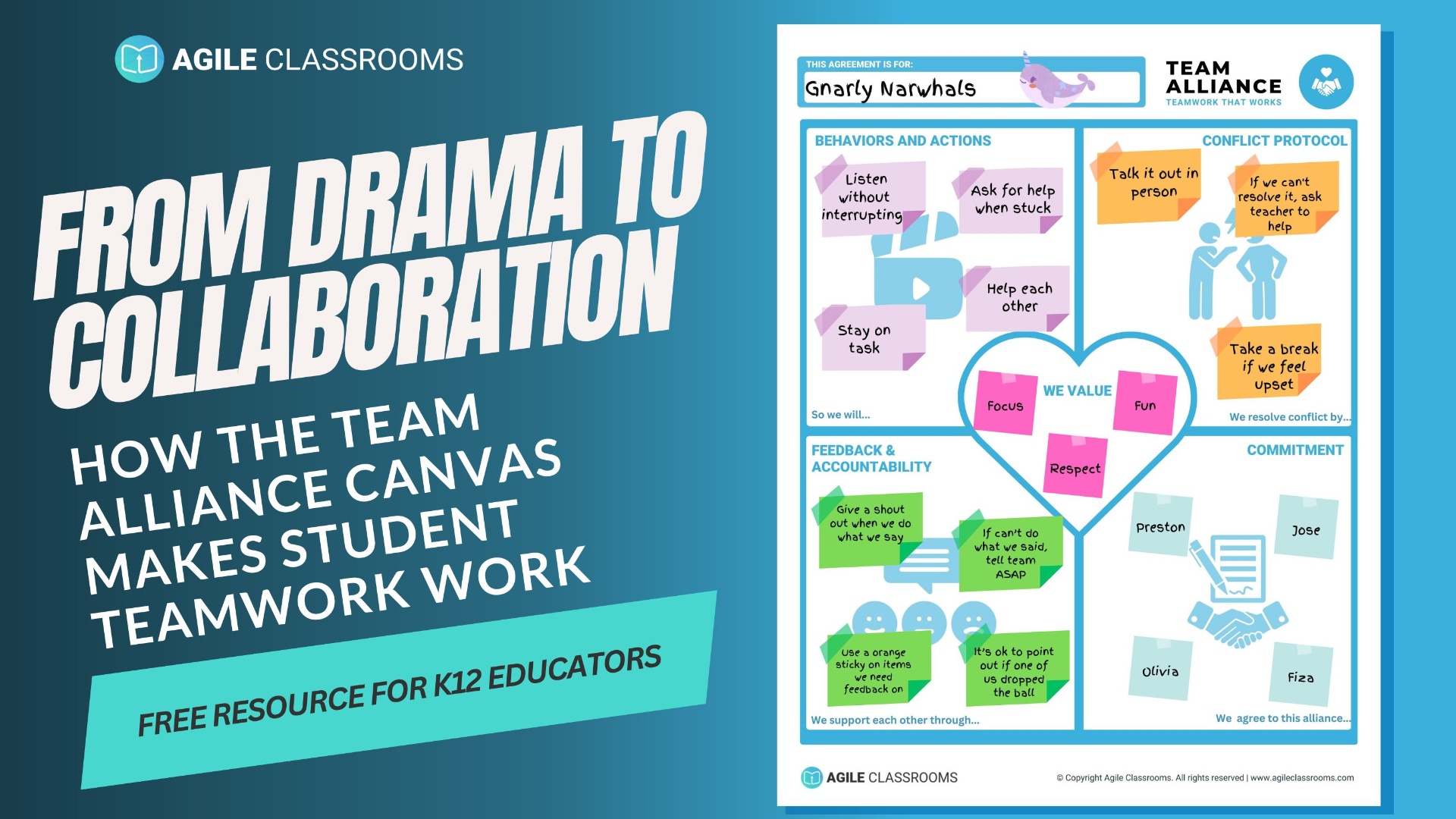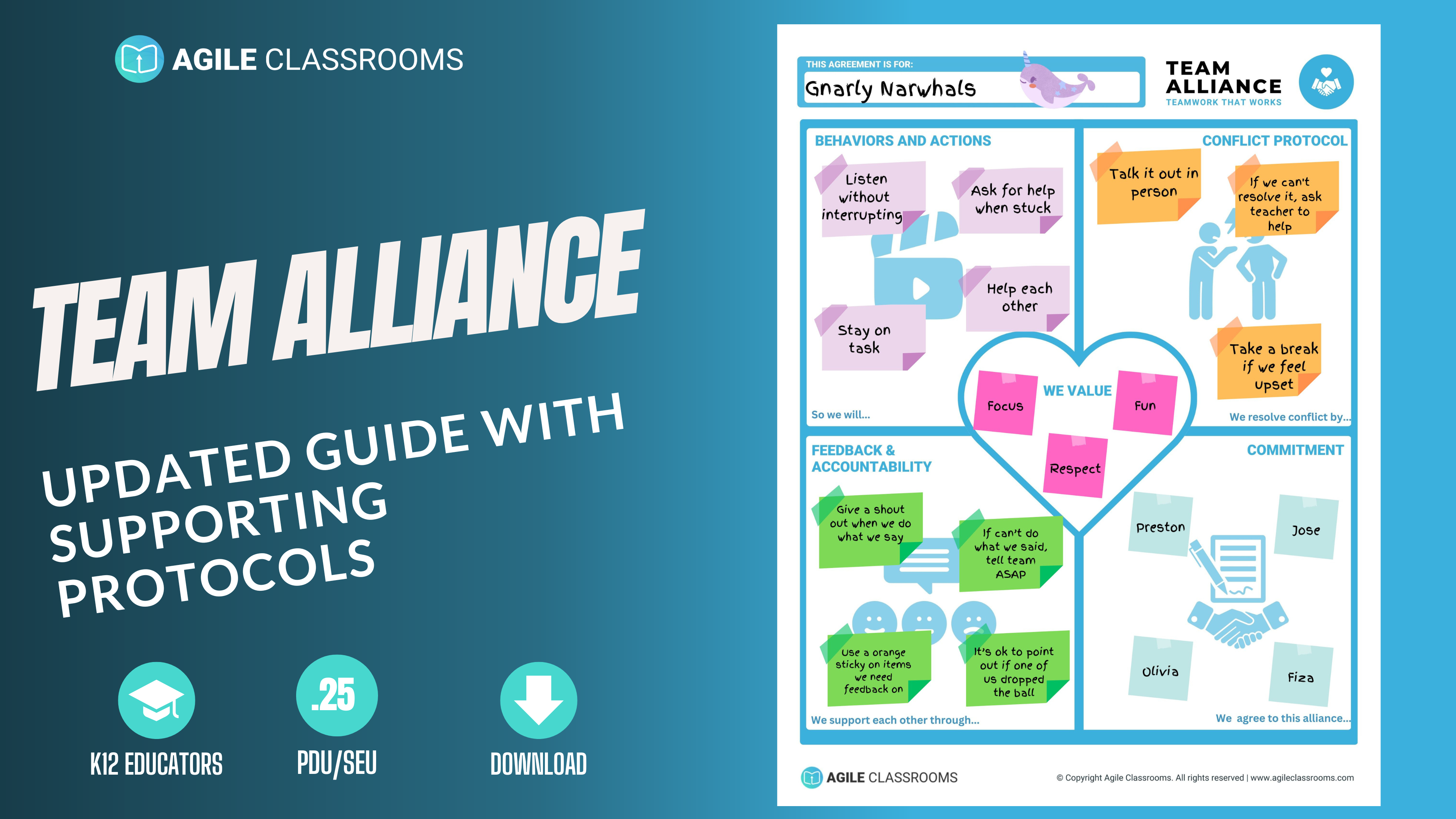
Strong teams don't just happen, they are designed. The Team Alliance Guide helps student teams build that design by creating a shared agreement on how they'll work together.
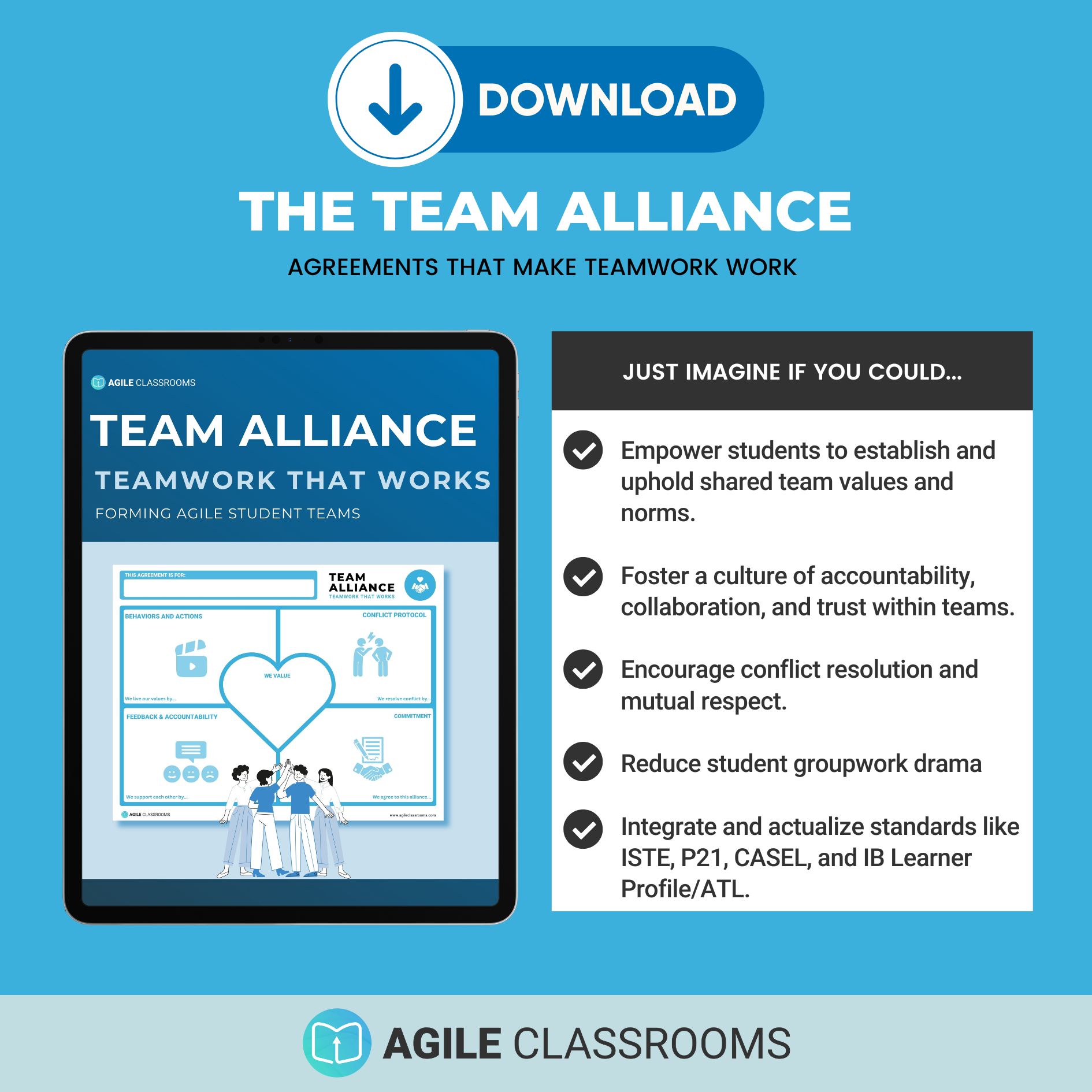
At its core is the Team Alliance Canvas, a simple visual tool that walks students through defining:
- Values - the principles they want their team to live by, like respect, inclusion, or responsibility.
- Behaviors - the everyday actions that make those values visible.
- Conflict Protocols - how they'll handle disagreements when, not if, they arise.
- Feedback and Accountability - how they'll give input, celebrate progress, and stay true to their commitments.
- Commitment - signing their agreement as a team pledge and keeping it visible as a living reference.
The process takes just 15-20 minutes but creates a foundation that supports collaboration, trust, and self-management. It also ties directly to 21st-century skills and social-emotional learning, helping students practice self-awareness, empathy, communication, and responsible decision-making.
What's New in the Guide
The updated edition expands the guide with ready-to-use protocols for conflict resolution, accountability, and feedback - three areas students often struggle with most:
- Conflict Resolution Protocols - Tools like the STOP technique, time-outs, and peer mediation help students navigate disagreements constructively.
- Accountability Protocols - Routines such as shout-outs, accountability buddies, and group cheers keep progress visible and teams motivated.
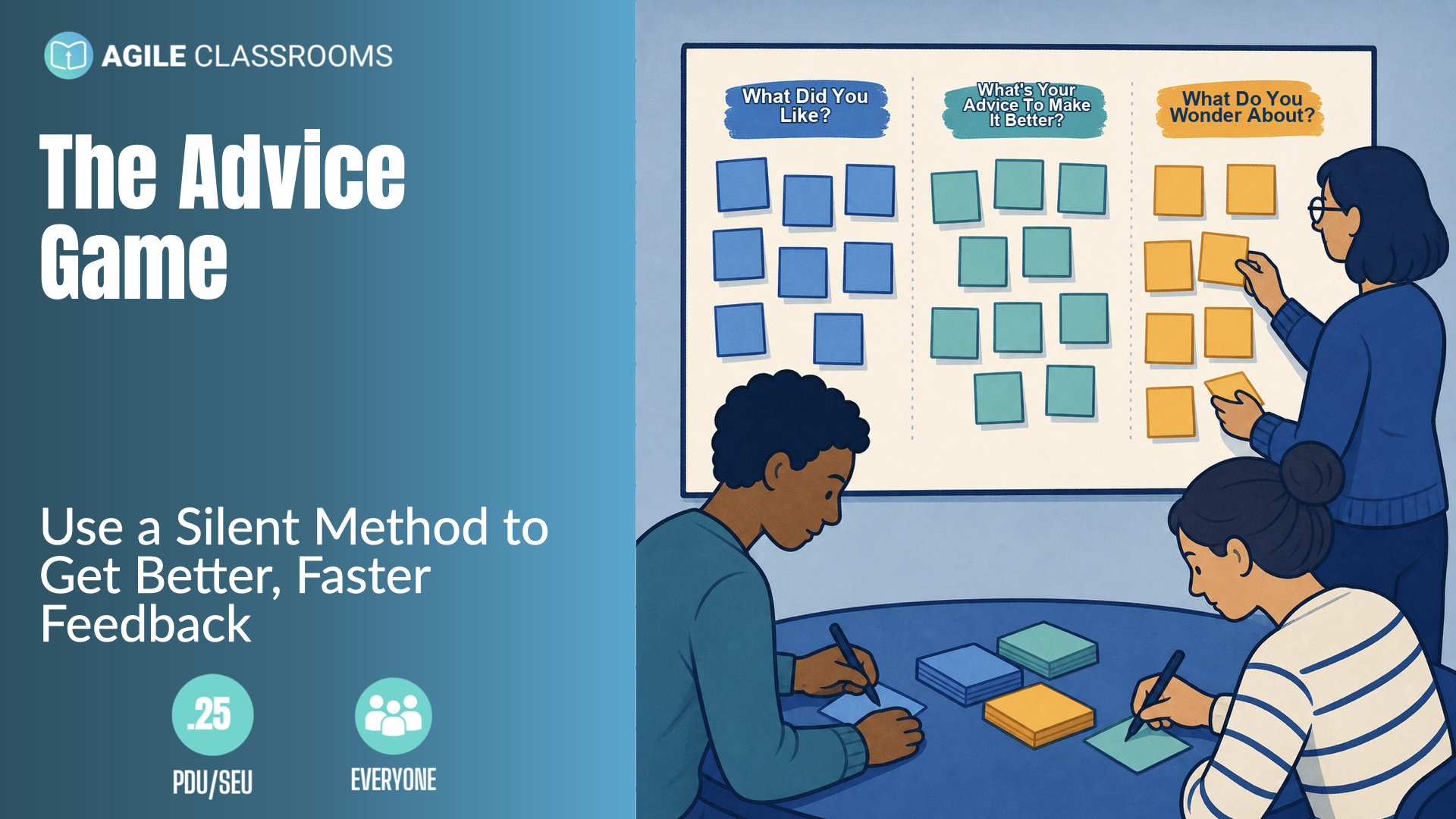
- Feedback Routines - Lightweight structures like "Thumbs Up + Tip" and "High Five Feedback" build a culture of supportive, actionable feedback.
Why This Matters
By using the Team Alliance Guide, educators can move beyond managing group work and start teaching teamwork as a skill. Students learn how to create shared norms, resolve challenges without teacher intervention, and hold each other accountable - all skills that extend far beyond the classroom.
Get the Free Guide
You can download the updated Team Alliance Guide for free here.
Take It Further: Practice in a Live ACT Course
Reading the guide is a great start. But to truly master how to apply these tools in real classrooms, join an Certified Agile Classrooms Teacher (ACT) course.
You'll get hands-on practice designing team alliances, facilitating feedback and conflict protocols, and learning how to make Agile work for your students.