Article In A Nutshell
This article explains how Agile Classrooms accelerates student agency—the ability to set goals, plan, adapt, and reflect—through structured Learning Sprints.
Key Takeaways
- Why It Matters: Agency turns students from passive participants into drivers of their learning, equipping them for complex challenges.
- The Four Properties of Agency:
- Intentionality: Setting meaningful goals.
- Forethought: Planning and strategizing.
- Self-Reactiveness: Monitoring and adapting.
- Self-Reflectiveness: Evaluating and improving.
- Learning Sprints: Short, focused cycles where students repeatedly practice the skills of agency through refinement, planning, check-ins, reviews, and retrospectives.
If you’re ready to help students lead their learning, dive into the full article for actionable strategies.
Student Agency
Student agency isn’t just a buzzword—it’s the backbone of how people learn, adapt, and thrive in the face of uncertainty. Agency is what allows students to set their own goals, envision pathways to success, and reflect on their progress. It’s the difference between following instructions and owning your education.
Albert Bandura, one of the most influential psychologists of our time, identified four key properties of agency: intentionality, forethought, self-reactiveness, and self-reflectiveness. These aren’t just abstract ideas—they’re psychological skills that enable people to shape their lives. Without agency, students might master facts but miss out on learning how to learn. And when they graduate into a world that values adaptability, collaboration, and critical thinking, the cost of a lack of agency becomes clear.
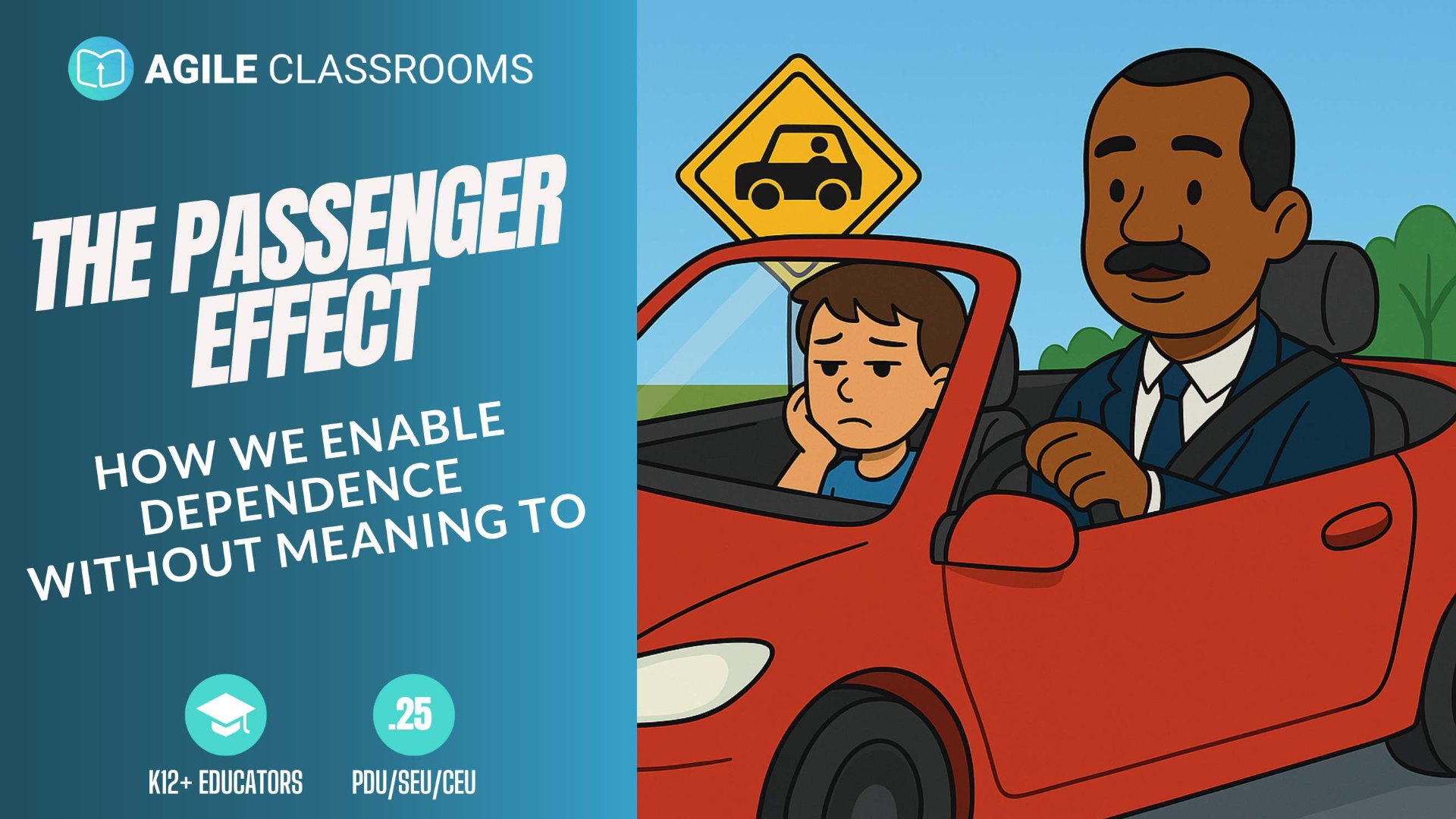
In many classrooms, students take the passenger seat. They follow directions, complete assignments, and absorb what’s taught. But they don’t learn how to navigate on their own. This is the Passenger Effect, and it explains why students often struggle when they’re asked to self-direct. They’ve been passengers, not drivers. (Read more about the Passenger Effect.)
Agile Classrooms offer a way to change this dynamic. By using Learning Sprints—short, structured learning cycles—students practice the skills of agency intentionally and repeatedly. The skills of agency are not acquired like content knowledge; they are mastered through repetitive practice and feedback. Learning sprints provide an environment where students can actively set goals, plan their actions, adapt when things don’t go as planned, and reflect on their process—all in a safe, structured framework.
What Are the Properties of Agency?
Albert Bandura’s four properties of agency are the foundation for helping students take control of their learning. Each property represents a skill that can be taught, practiced, and refined.
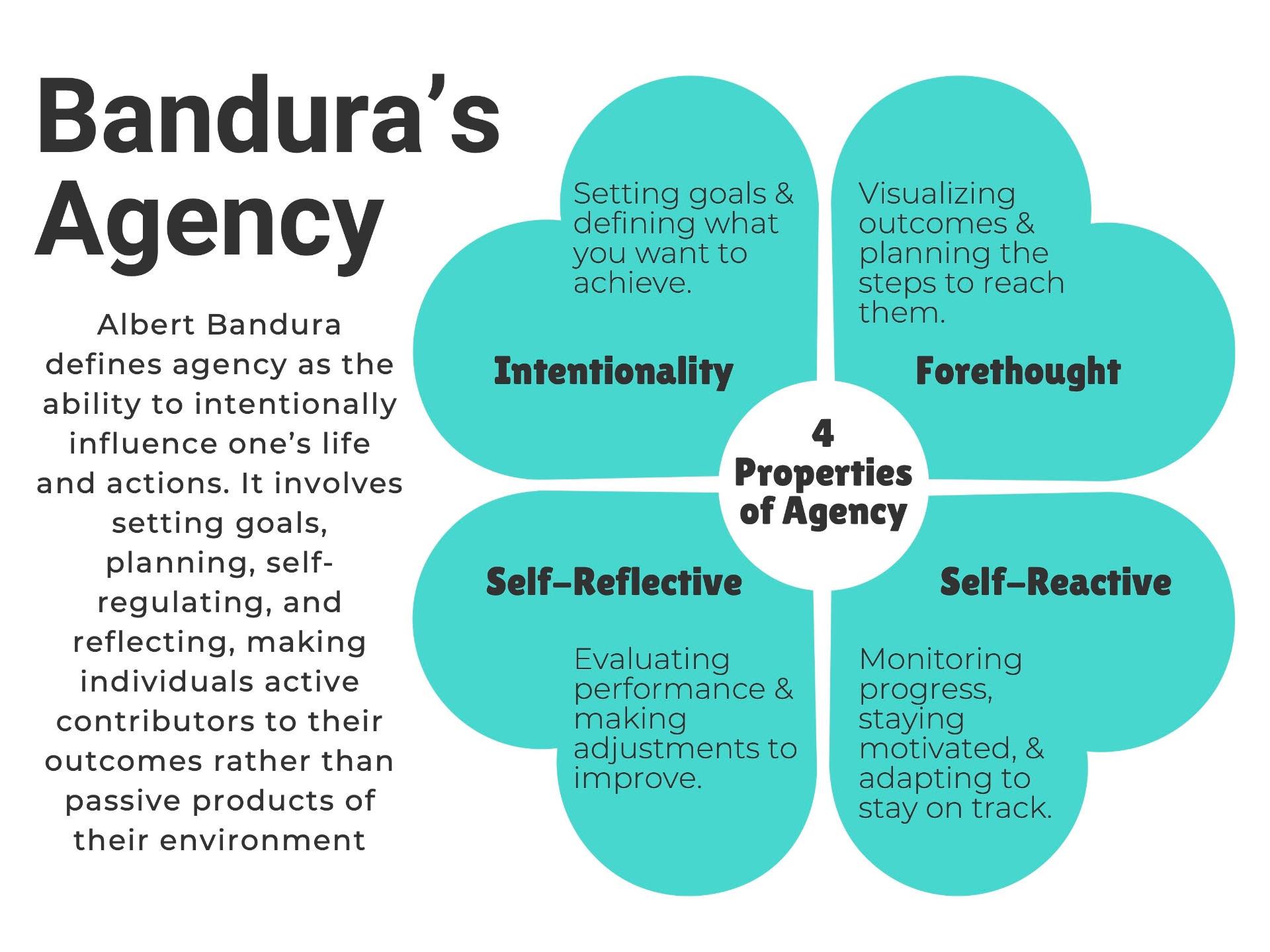
- Intentionality is about setting meaningful goals. It’s the ability to articulate what you want to achieve and why it matters. Without intentionality, learning becomes aimless. In classrooms, this means helping students move from completing tasks to asking, “What do I want to accomplish during this sprint?”
- Forethought is the ability to anticipate and plan for the future. It’s about thinking ahead, breaking goals into actionable steps, and preparing for obstacles.
- Self-reactiveness is the capacity to monitor your progress and adjust when things don’t go as planned. This is the skill of staying motivated, recognizing when you’re off track, and adapting. In classrooms, self-reactiveness means students regularly ask themselves, “Am I on the right path? What needs to change?”
- Self-reflectiveness is the ability to evaluate one's actions and improve based on learning from past behavior and insights. It’s metacognition—the ability to think about one's thinking. Reflection turns failure into growth and success into momentum.
How Agile Classrooms Build Agency
In Agile Classrooms, students develop agency through deliberate practice. The framework revolves around Learning Sprints—short, time-boxed cycles that integrate routines aligned with Bandura’s properties of agency. These routines aren’t just organizational tools; they’re opportunities to practice the skills of goal-setting, planning, adaptation, and reflection.
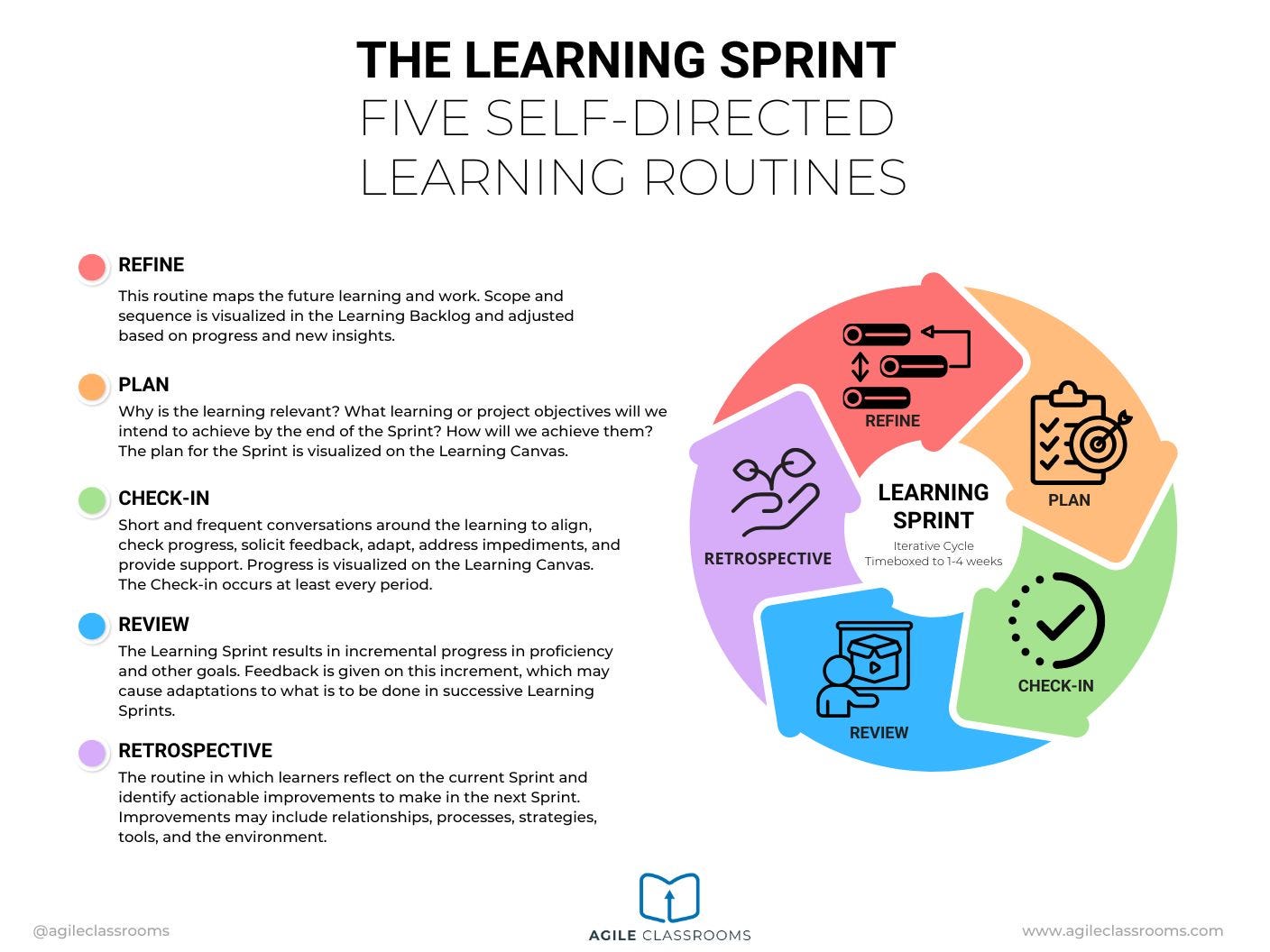
- Refinement: Clarify What Matters Most
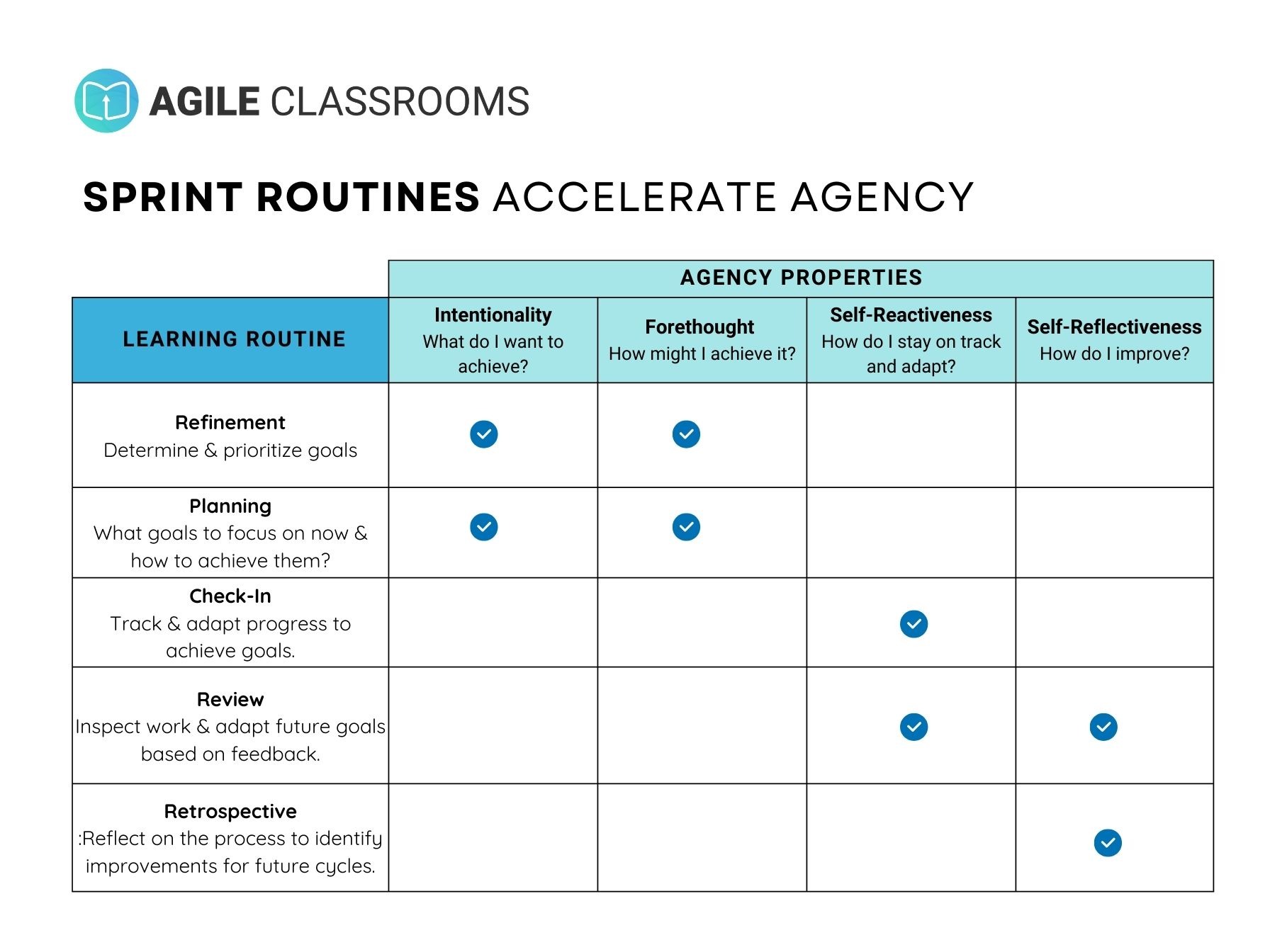
Refinement teaches intentionality and forethought by helping students prioritize their goals. They learn to take large, ambiguous objectives and break them into smaller, actionable tasks. This process forces clarity: “What do I want to accomplish? What steps will get me there?”
- Planning: Map the Path Forward
Planning strengthens both intentionality and forethought. Students decide what they’ll achieve during the sprint and how to approach it. They visualize their steps, anticipate challenges, and create a plan. It’s not just about doing the work—it’s about planning how to do the work.
- Check-In: Stay on Track
Check-ins build self-reactiveness by providing structured moments to assess progress. Students reflect on their accomplishments, identify obstacles, and adjust their plans. It’s a habit of regularly asking, “What’s working? What needs to change?”
- Review: Learn From Feedback
Reviews reinforce self-reactiveness and self-reflectiveness. Students present their work, compare it to success criteria, and incorporate feedback. This is where they learn to iterate—not just to complete a task, but to improve it.
- Retrospective: Improve the Process
The retrospective focuses entirely on self-reflectiveness. Students evaluate the sprint process itself, asking what went well, what didn’t, and what they’ll do differently next time. It’s not just about improving the work; it’s about improving how they work.
The table below shows how the five self-directed learning routines in the Learning Sprint actualize the four agency properties.
Why Students Need Frequent Practice
Agency isn’t something that can be memorized or passively absorbed. It’s developed through action. By embedding repetitive practice and feedback into the daily rhythm of learning, Agile Classrooms make agency a skill that students don’t just learn—they internalize. This process transforms students from passengers to drivers of their own learning.
Learning sprints offer an ideal environment for this development. The short cycles allow students to experience the full arc of setting a goal, taking action, adapting, and reflecting—all while receiving feedback that sharpens their skills. This repetition builds competence and confidence as students see themselves improve with each sprint.
These skills extend far beyond the classroom. Adaptability, collaboration, and critical thinking are essential in today’s workplaces and communities. When students leave Agile Classrooms, they aren’t just equipped with knowledge; they have the tools to navigate complexity and uncertainty in any setting.
Shifting From Apathy to Agency
Agency isn’t a luxury—it’s a necessity. It’s what prepares students to navigate uncertainty, solve complex problems, and lead their own learning journeys. Agile Classrooms offer a framework for cultivating these skills through deliberate, structured practice. When we help students build agency, we’re not just improving their learning today. We’re equipping them with the tools to thrive tomorrow.
It’s time to stop asking students to simply follow directions and start teaching them how to chart their own course. Let’s move them from passengers to drivers. They’re ready. Are we?
“It’s time to stop asking students to follow directions and start teaching them how to chart their own course.”
Want to see how Agile Classrooms empower students? Explore the Agile Classrooms Framework here.
For educators ready to implement Learning Sprints, check out our Certified Agile Classrooms Teacher (ACT) Workshop.