Feedback sessions in teams and classrooms usually fail for a simple reason: the room starts talking before the thinking is visible. That can happen in a sprint review, a student project critique, a product demo, or a lesson-plan review.
Once that happens, the loudest person gets a head start. The fastest reaction becomes the anchor. The person with the most status shapes the room before quieter people have formed their thoughts. What looks like collaboration is often just a race to influence the conversation.
That race feels productive because people are participating. But participation is not the same as useful signal. That is why the Advice Game works. It slows down the part that needs thinking and speeds up the part that usually wastes time.
Feedback Gets Messy When It Starts Out Loud
Most teams and classrooms do not struggle because people have no opinions. They struggle because the feedback format makes good feedback harder to give.
A typical feedback conversation has predictable failure modes:
- vague comments that sound helpful but do not change the work
- strong personalities setting the tone before others contribute
- quieter people editing themselves out of the conversation
- long discussions that produce more heat than usable next steps
- defensive reactions because the work feels judged before it is understood
The problem is not that people are careless. The problem is that the process rewards immediate reaction. Immediate reaction is not the same as useful advice. If the first move is discussion, the session has already chosen a bias. It will favor confidence over reflection, speed over pattern recognition, and social comfort over clearer next steps.
Why It Is Called Advice, Not Feedback
Language changes the posture of the room. When you ask people for feedback, many people hear an invitation to judge. They look for what is wrong, what is missing, or what they would have done differently. That can be useful, but it can also push people into critic mode.
When you ask for advice, the relationship changes. Advice asks the person to help improve the work. It still allows critique, but it frames critique as contribution.
That small shift matters. Robert Cialdini has pointed to the difference between asking for an opinion and asking for advice: advice tends to move people toward partnership. The Advice Game uses that shift on purpose.
The goal is not softer feedback. The goal is feedback that can be used.
How The Advice Game Works
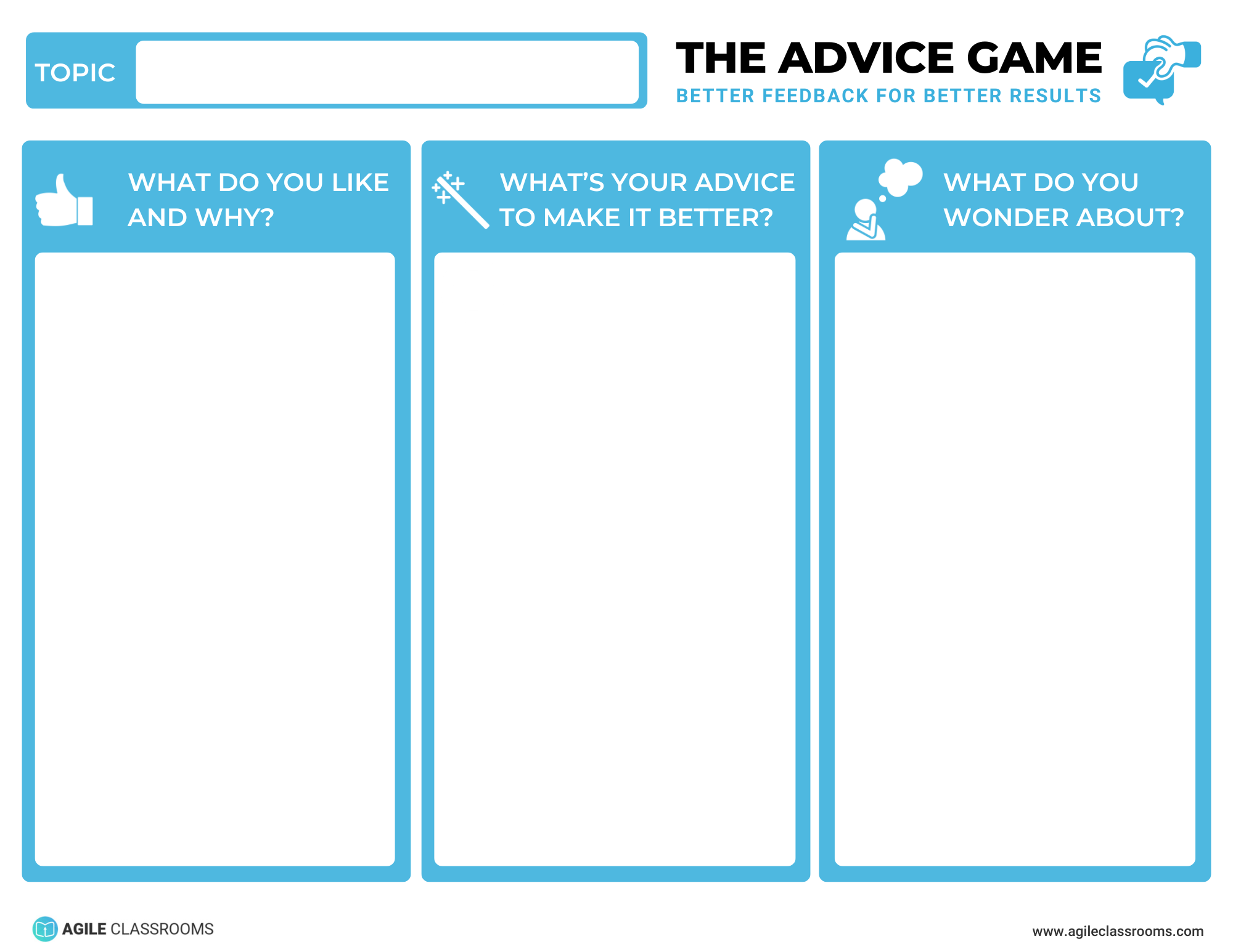
The structure is simple. First, decide what needs advice. Be specific. A product demo, student project, lesson plan, prototype, draft, process, or presentation can all work. What does not work is asking for broad reactions to everything. The focus should fit on a sticky note: this draft introduction, this student project, this prototype flow, this sprint review outcome, this classroom routine. If the focus is too broad, the advice will be too broad.
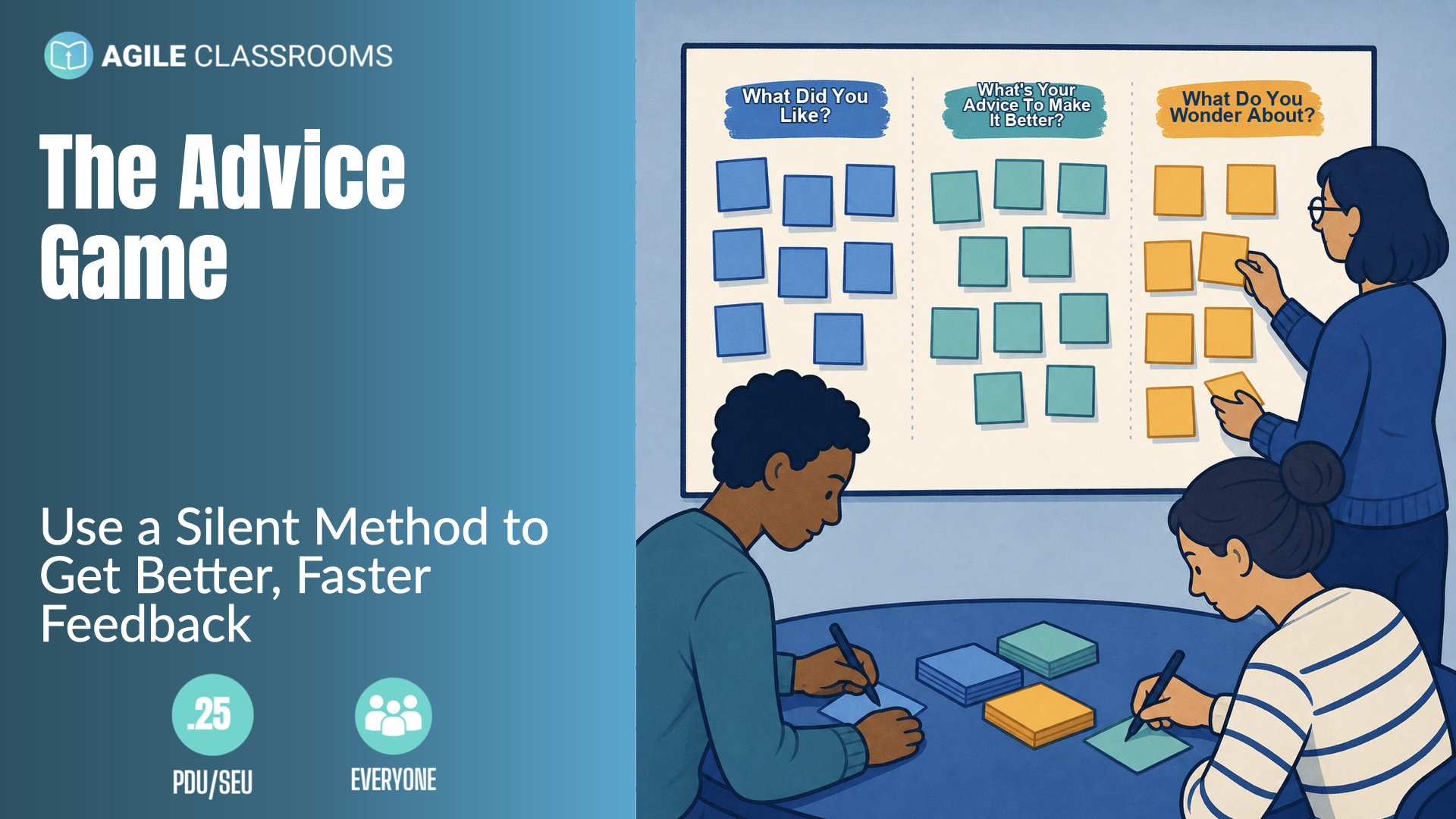
Then give everyone the same three prompts:
- What did you like?
- What's your advice to make it better?
- What do you wonder about?
The important move is silent writing. Give people five to seven minutes to write independently before anyone discusses the work. Use sticky notes, chart paper, index cards, a shared document, or a digital board. The tool is an implementation detail; the constraint is the mechanism.
No discussion until the advice is visible. That one rule protects the session. It gives quieter participants room to think. It keeps the first speaker from becoming the agenda. It gives the facilitator something real to work with instead of trying to capture a messy conversation in real time.
After the silent round, group the advice. Look for patterns. Separate appreciation from improvement advice. Pull out questions that reveal confusion, risk, or curiosity. Then decide what the work needs next.
The output should not be a transcript. It should be a decision: what changes now, what waits, and what needs more discovery.
A Classroom Example
Imagine a fifth grade class sharing group projects about recycling. In a normal discussion, a few confident students might dominate the conversation. Some students would repeat what had already been said. Others would stay quiet because their thought felt unfinished or because they did not want to criticize a friend's work out loud.
With the Advice Game, the teacher posts three chart papers:
- What did you like?
- What's your advice to make it better?
- What do you wonder about?
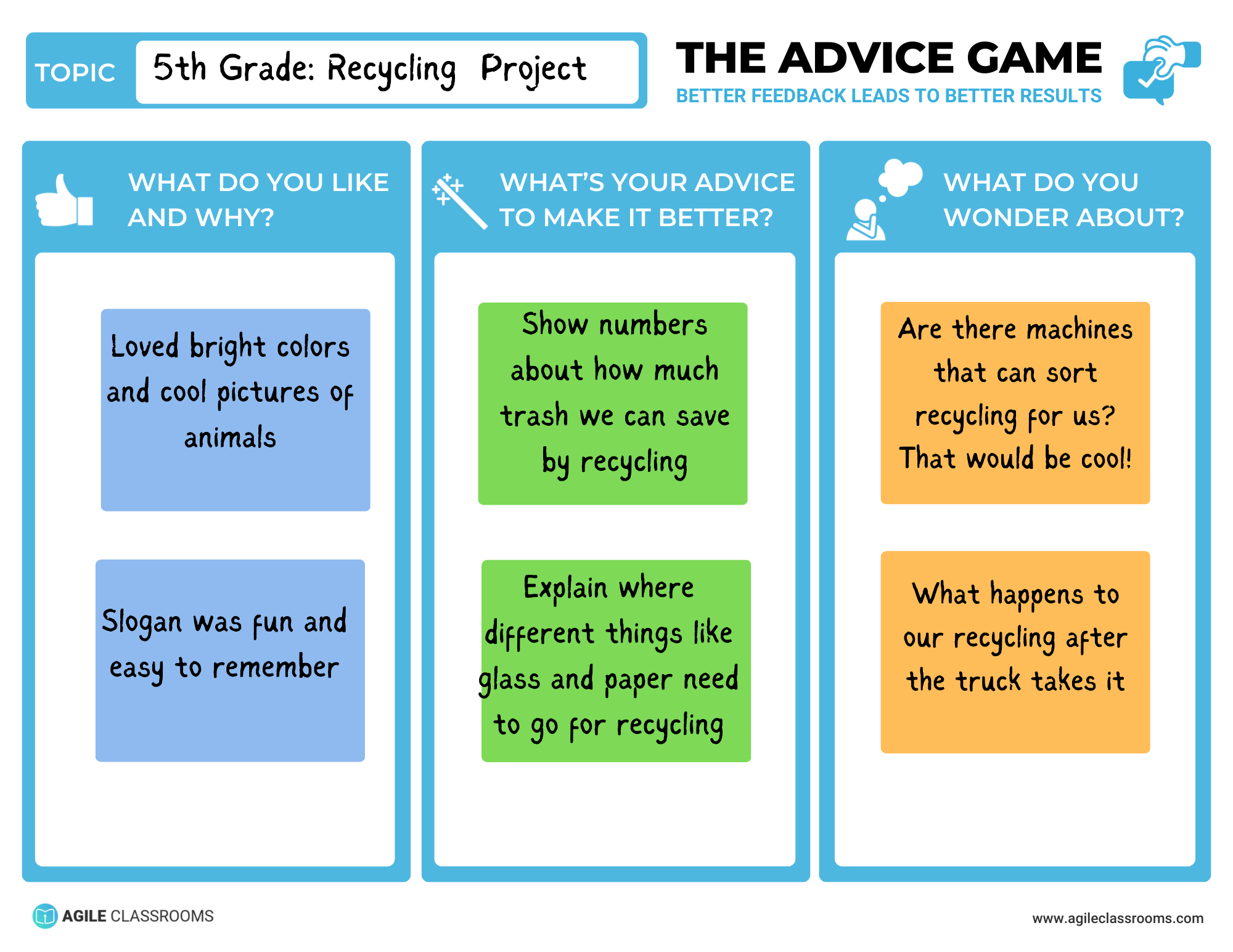
Students write silently on sticky notes. One student notices the bright visuals. Another suggests adding numbers about how much waste recycling can reduce. Someone else wonders what happens after recycling is picked up.
Now the class has something better than a discussion shaped by whoever spoke first. They have visible thinking. The teacher can cluster the notes, name the patterns, and help the group decide what to revise.
Maybe the project needs more evidence. Maybe the visuals already work. Maybe the class has a shared question about what recycling actually changes after pickup. The point is not to collect every possible comment. The point is to turn student response into usable improvement.
A Product Team Example
The same structure works in a sprint review or product demo. Without structure, stakeholder feedback can drift. A senior stakeholder may focus on one issue in a Figma prototype of a student dashboard and pull the whole conversation there. A customer question may get debated before the team has heard from anyone else. The session stretches, and the team leaves with a pile of impressions instead of a better backlog.
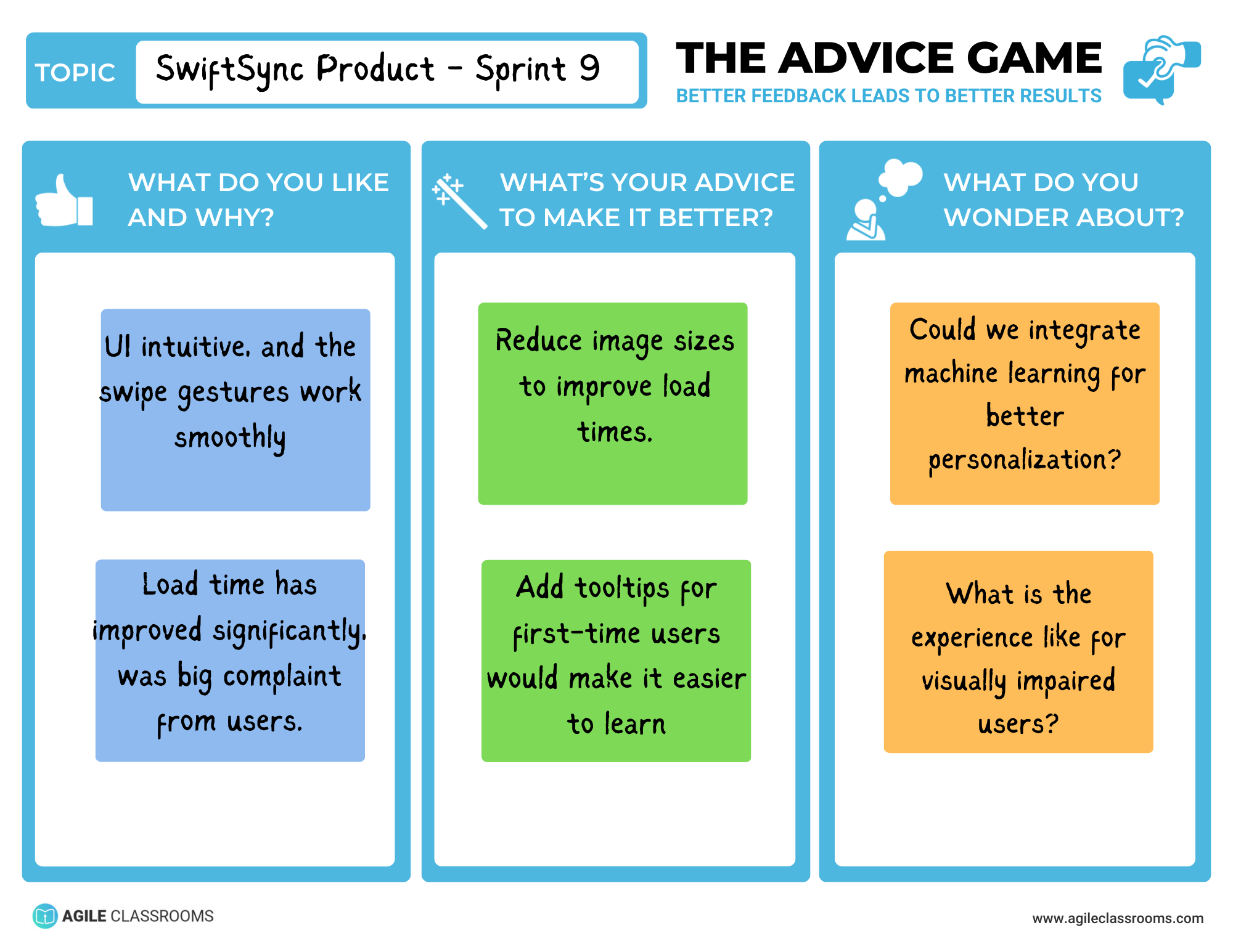
With the Advice Game, the review changes. The team demos the work. Stakeholders write silently. They capture what worked, what would make the product better, and what they still wonder about. Only then does the group discuss patterns.
That sequence changes the quality of the review.
The product team can see which comments are isolated preferences and which ones point to real risk. They can separate usability advice from new feature requests. They can turn repeated questions into backlog items, research tasks, or acceptance criteria.
The team is not trying to make everyone equally loud. It is trying to make the useful signal harder to miss.
Where The Advice Game Helps Most
Use the Advice Game when the work would benefit from many perspectives but the conversation is likely to get noisy, uneven, or vague. It is especially useful for:
- classroom project critique
- sprint reviews
- product demos
- design reviews
- process retrospectives
- creative work that needs response without live pile-on critique
It is less useful when the decision owner already knows the exact question and needs one expert judgment. The Advice Game is for broad sensemaking. It helps a group reveal patterns before the room starts arguing about solutions.
The Facilitation Rule That Makes It Work
Do not skip the silent part. That is the whole mechanism. If people start talking right away, the Advice Game becomes a normal feedback discussion with better prompts. The prompts help, but they are not enough. The power comes from independent thinking first, visible advice second, group interpretation third.
The facilitator's job is to protect that order.
- Name the focus.
- Give the three prompts.
- Hold silence while people write.
- Cluster the advice.
- Decide what changes, what waits, and what needs more discovery.
The last step matters. A feedback session that creates no decision is just a performance of collaboration. Advice should change the next move. That does not mean every suggestion gets accepted. It means the work owner can point to the advice and say, with evidence, what they are doing next.
From Reaction To Improvement
The Advice Game is not complicated. That is part of its value. It gives people a safer way to contribute, gives the facilitator visible material to work with, and gives the team or class a clearer path from reaction to improvement.
The next time you need feedback, do not start with open discussion. Start with visible advice.
Take the Next Step
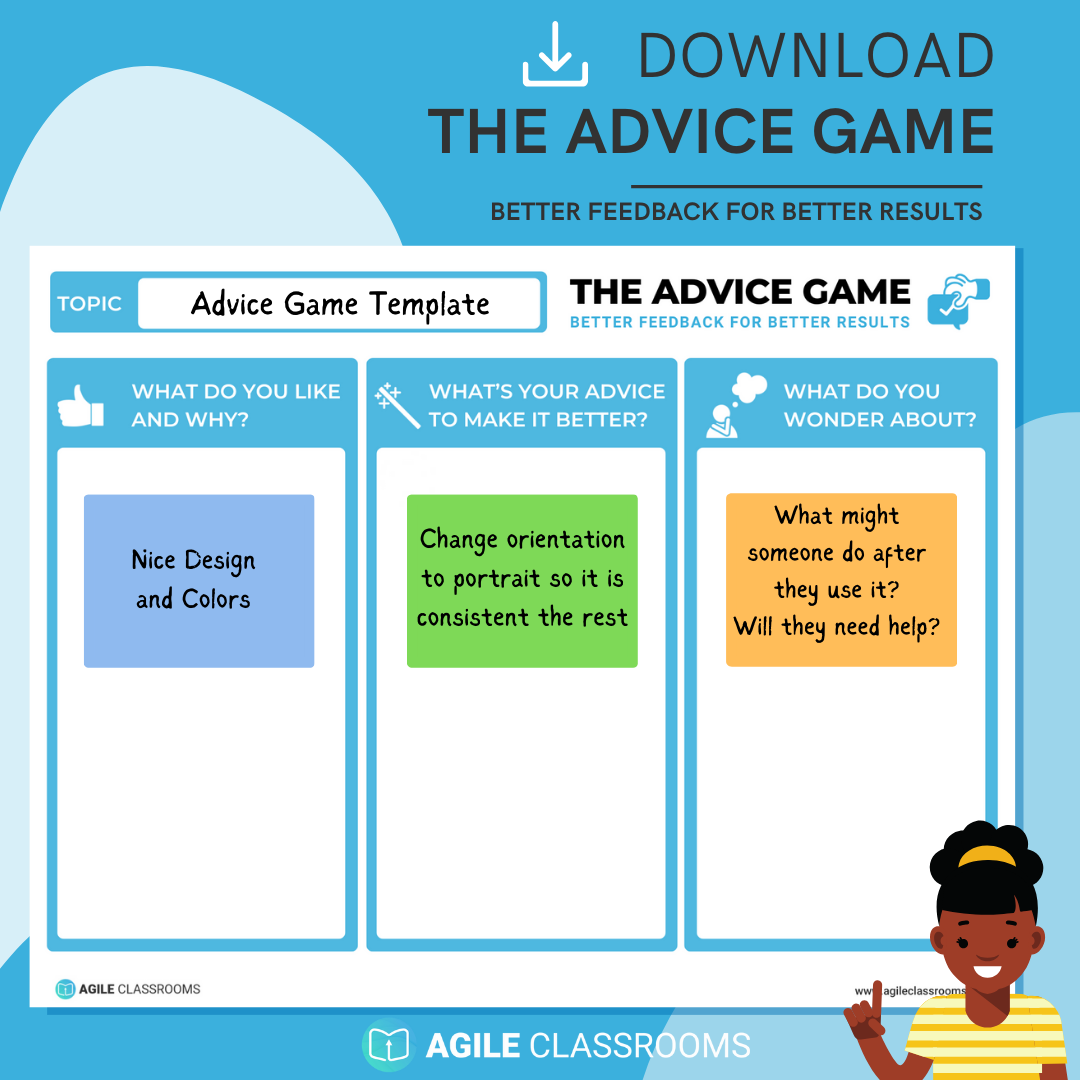
Want to try it with your team or classroom? Download the Advice Game template from Agile Classrooms.
Once you have collected advice, sort it into next steps with The Insight Game.