In collaborative work, the tone can shift. You feel it immediately. Meetings still happen, documents get filled, the language remains professional, and the structure looks intact.
But the energy changes. People stop working to improve something. They start working to show that improvement work is happening.
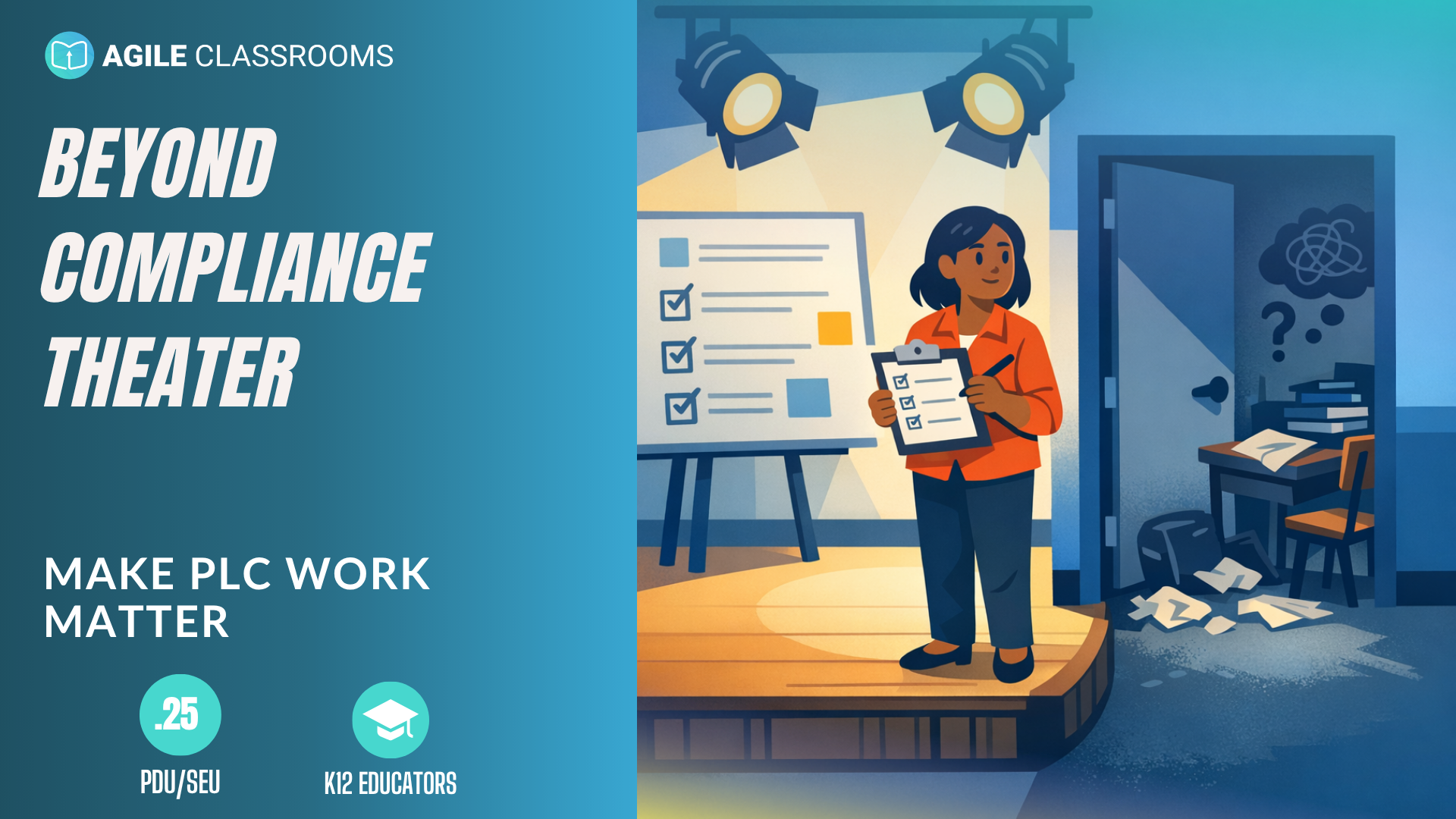
That is compliance theater.
It looks organized. It often feels dead.
Compliance theater rarely looks chaotic. It looks polished. It features forms, templates, checklists, required artifacts, and expected talking points — all presented as proof the process is being followed. From the outside, it appears disciplined. Inside, it feels like drag.
Educators know when they're asked to generate evidence instead of doing the actual work. Once they sense that shift, their attention shifts. The goal becomes completion, not learning.
How schools get here
It usually starts with good intentions. Leaders want visibility, consistency, effective PLC time, and serious improvement efforts — all reasonable goals.
But overbuilt visibility asks for proof that crowds out actual improvement. Teams document every move, producing official-looking artifacts for every meeting. Process trumps progress.
That's when the theater starts.
The danger isn't just annoyance
Compliance theater isn't merely irritating; it's corrosive. It teaches teams to optimize for visible authority, not practical usefulness, changing behavior fast. People become careful, not curious; polished, not effective.
This isn't an indictment of teams, but a challenge to leadership. When your PLC design asks for performance, you get performance. When it demands genuine improvement, you empower it.
What evidence are your PLCs producing: proof of work, or proof of learning?