Why PLCs Feel Productive but Change Nothing
PLCs often feel productive. They aren't. Meetings are held, issues raised, conversations thoughtful, and plans appear solid on paper.
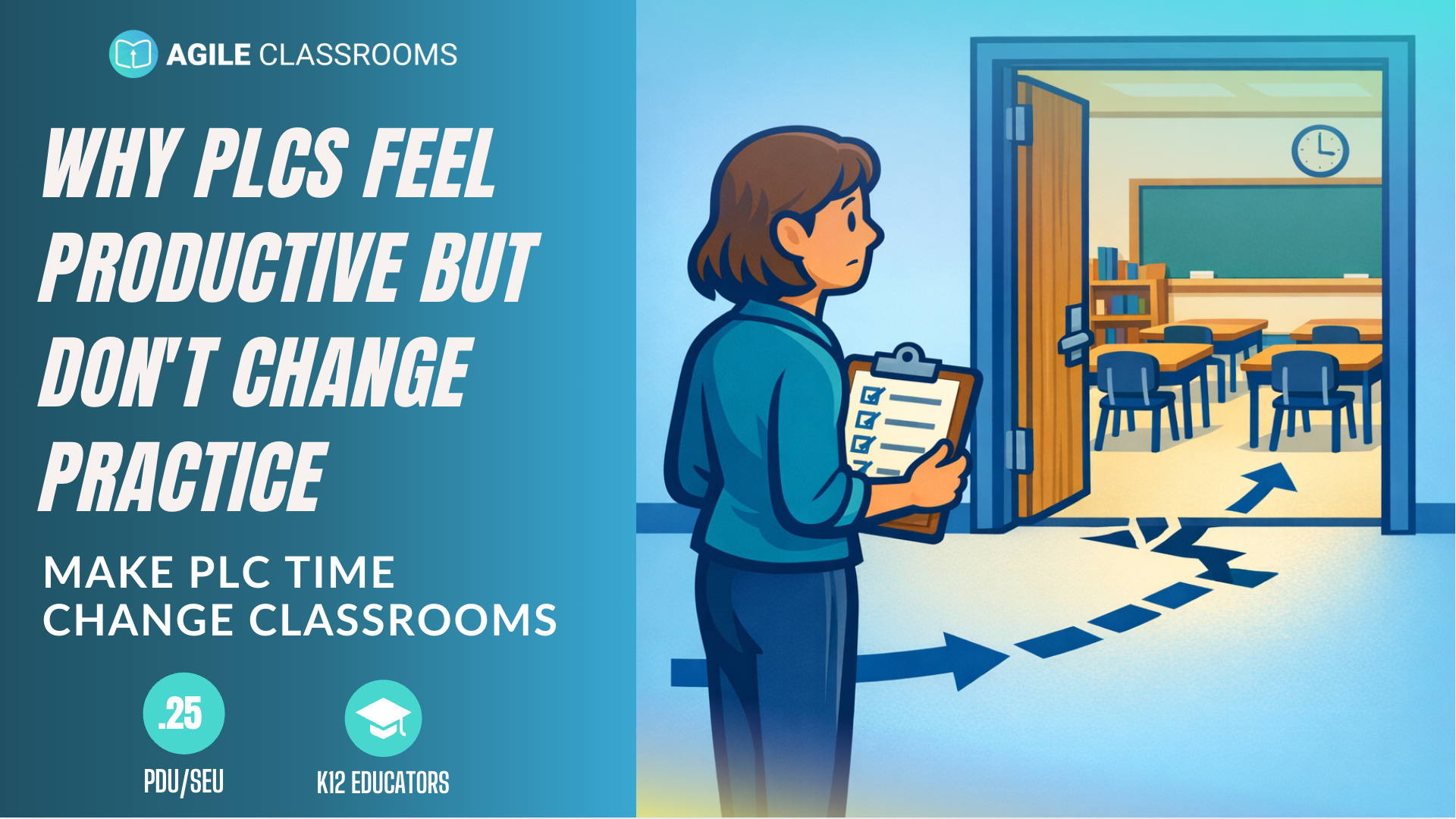
Yet a week later, the same instructional problem mocks you from the whiteboard. Teams talked, planned, and documented. But the classroom didn't budge.
In schools, improvement isn't what you discussed. It's what changed.
Why this happens
Many PLCs are built on a reasonable instinct: think carefully before acting. In stable environments, that works. Schools aren't stable.
Schools are a storm of variables: interruptions, uneven pacing, competing priorities, and human unpredictability. Students zig when you expect a zag. Classroom conditions shift.
What looks solid in a meeting dissolves in practice.
That's where PLCs get stuck.
They're designed for alignment, planning, and documentation. Not for learning from real action. So teams pour energy into perfecting a plan before testing it.
That feels responsible. It's also a trap.
A plan is just an assumption until it survives contact with students.
Planning is not improvement
This is the quiet error underpinning much PLC work. A thoughtful plan can still be wrong. A detailed document can still be useless.
A strong discussion can still leave practice untouched.
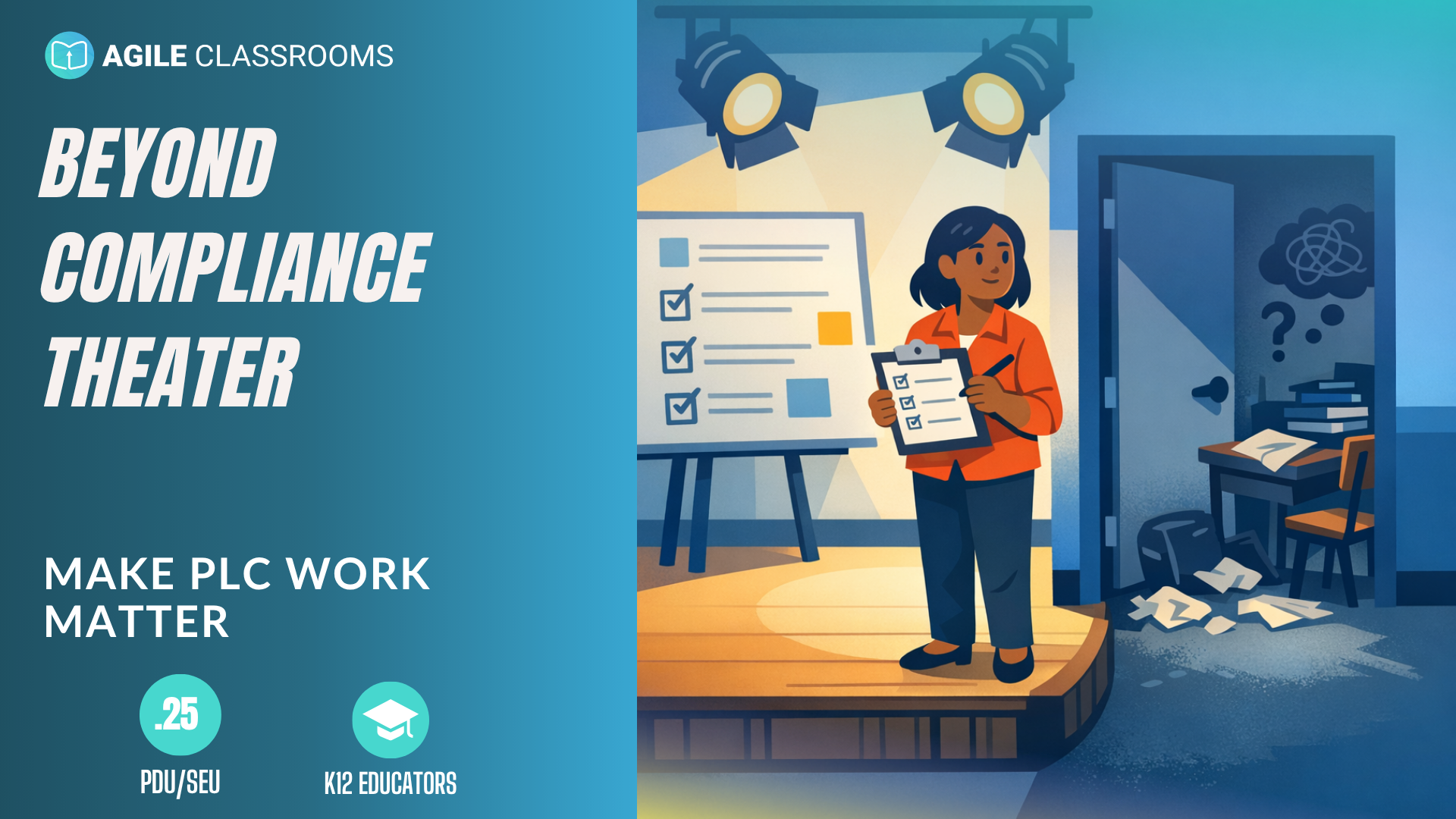
When PLCs confuse planning with progress, they reward the appearance of thoughtful work, not evidence of change.
That's how drift begins.
More templates. More notes. More rehashing.
More refinement. Not because anyone is lazy. But because the structure keeps pulling people back toward planning rather than learning.
The real issue is design
When PLCs stop producing movement, it's tempting to blame: tired teachers, resistant people, lack of commitment, insufficient accountability.
Sometimes those things are present. But often the deeper issue is simpler.
The design is wrong.
If a structure demands more discussion and documentation than trying and learning, don't be surprised when the output is busyness, not improvement. Capable people can do a lot of work inside a weak design. That doesn't make the design strong.
What a better PLC does
If a PLC's job is to improve learning and practice, its structure must support it. It needs to help teams:
- Try small changes in real classrooms, immediately.
- Learn from what actually happens, not what was supposed to.
- Adapt quickly, based on evidence.
- Make progress visible.
- Spend less energy protecting plans, more testing them.
It has to treat improvement as something you learn your way into, not something scripted perfectly in advance. This is the shift schools need to make.
A better question
Stop asking, "Did we have a good PLC meeting?"
Ask: "Did anything get better because we met?"
That question clarifies everything. It makes the work honest. It makes evidence matter.
It forces classroom reality into view. It returns PLCs to their real job.
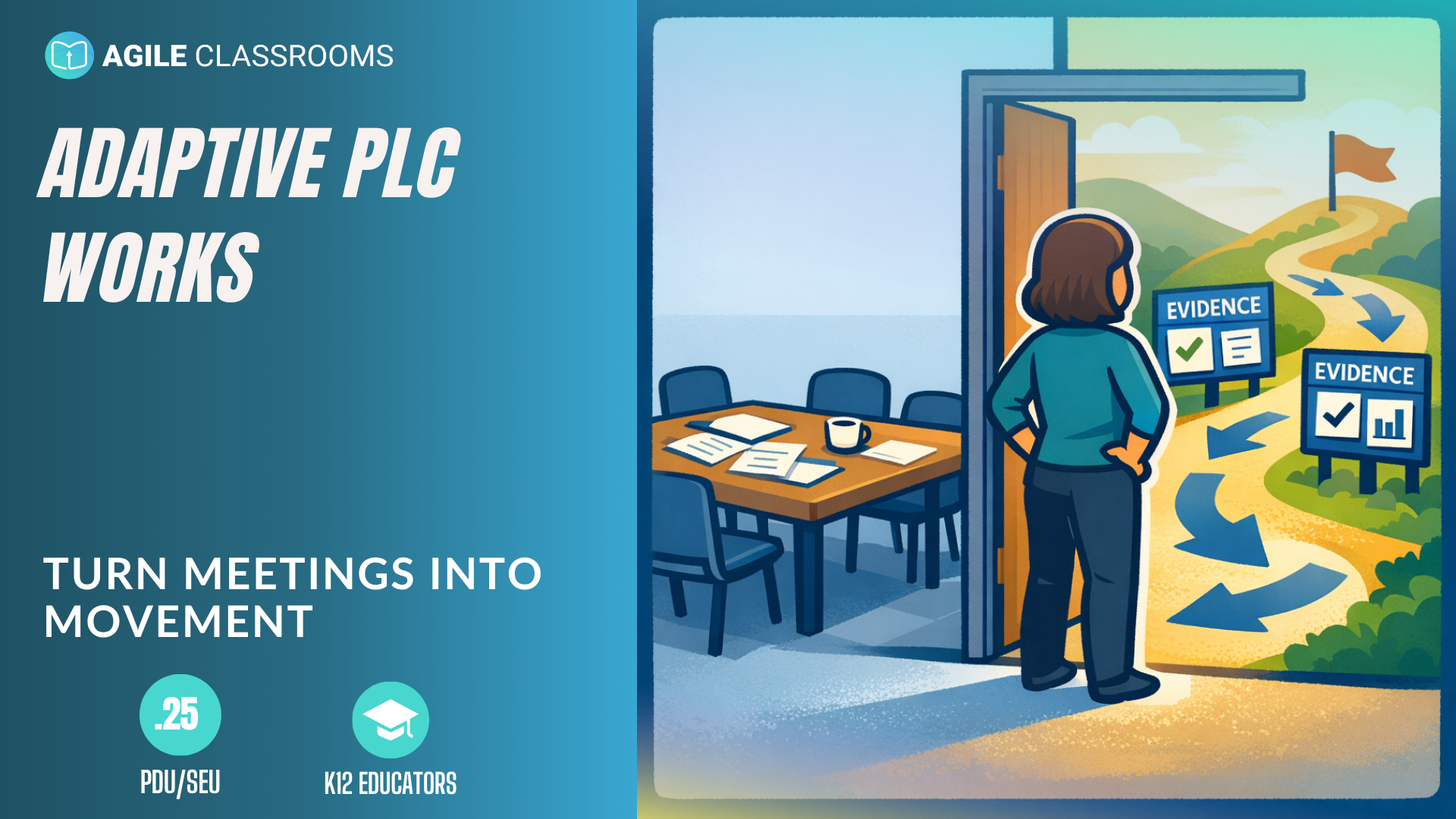
If your PLC design favors thoughtful conversation over practical improvement, that's fixable. Adaptive PLC is built for this shift: moving teams from planning-heavy collaboration to lightweight cycles of action, learning, and visible progress.
Stop planning. Start improving. Download the Adaptive PLC Guide.