Make growth visible
Help students see evidence of collaboration, ownership, communication, and adaptability.

Guide
A practical coaching guide for helping students reflect on Agile learning behaviors, name evidence of growth, and choose one next step for becoming more self-directed.
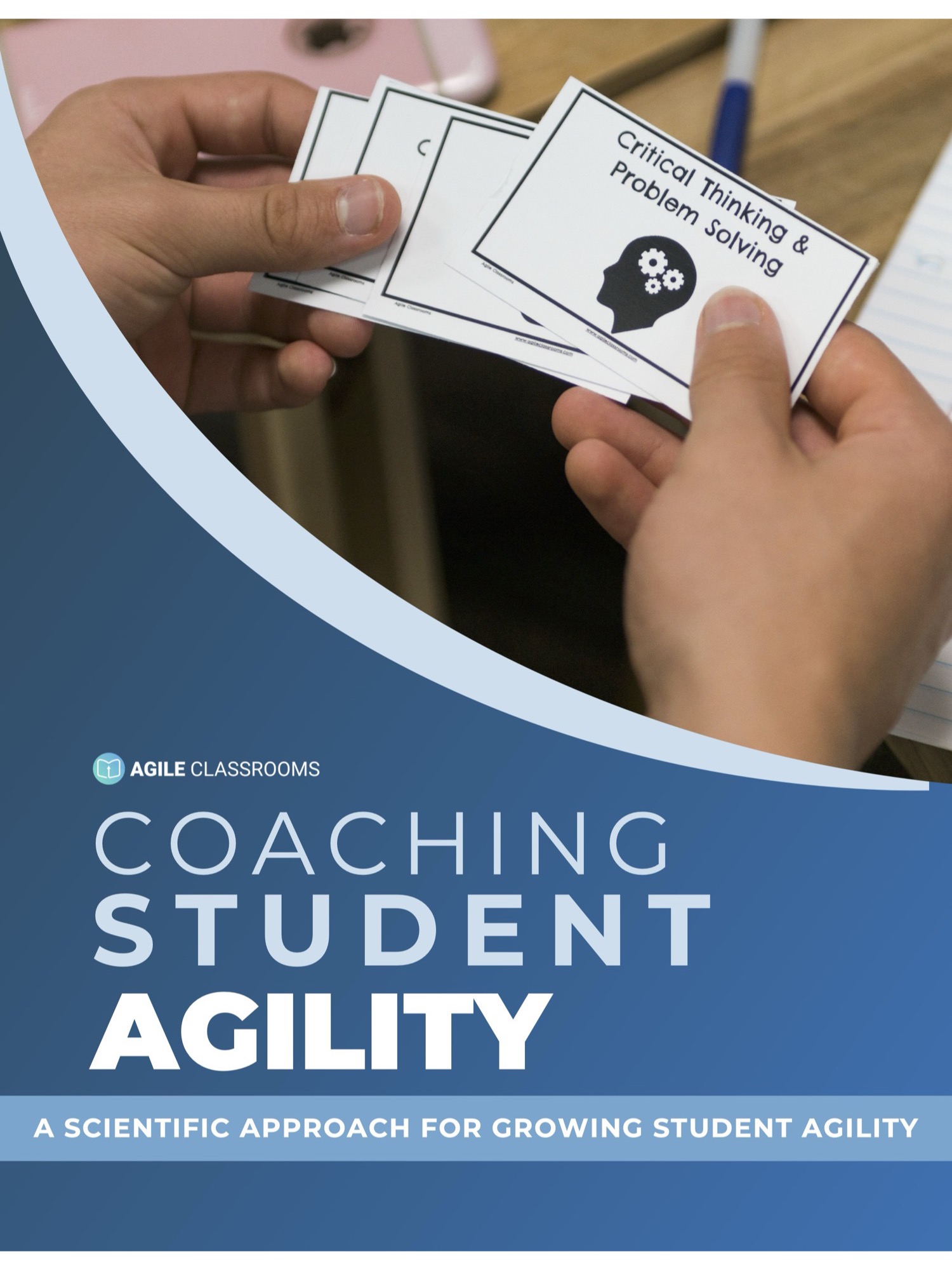
Help students see evidence of collaboration, ownership, communication, and adaptability.
Give teachers a structure for asking better questions and supporting student agency.
Turn reflection into one clear behavior students can practice in the next sprint.
A calm three-step frame for a coaching conversation that points at evidence, not opinion.
What actually happened? Point to a moment, an artifact, or a specific choice.
How did that help or limit your learning, your team, or your work?
What's one small thing you'll practice in the next sprint?
Choose one student agility behavior or skill to inspect.
Ask students to point to moments, artifacts, choices, or patterns that show what happened.
Discuss how the behavior helped or limited learning, teamwork, or progress.
Keep the improvement small, visible, and practice-ready.
Return to the next step during a future Check-In, Review, or Retrospect.
Student agency grows through practice and coaching, not slogans. The protocol gives educators a way to help students notice their learning behaviors, connect those behaviors to evidence, and choose a manageable next move. It keeps coaching specific. Instead of telling students to "be more responsible" or "collaborate better," the conversation points to what actually happened and what can improve next.
This resource supports self-management, communication, collaboration, reflection, and adaptive problem solving. These are suggested connections, not a formal standards alignment.
Download the free protocol and help students turn reflection into one practical next step.
Download for free