Make progress visible
Help students show what they created, learned, tested, or improved during the sprint.

Guide
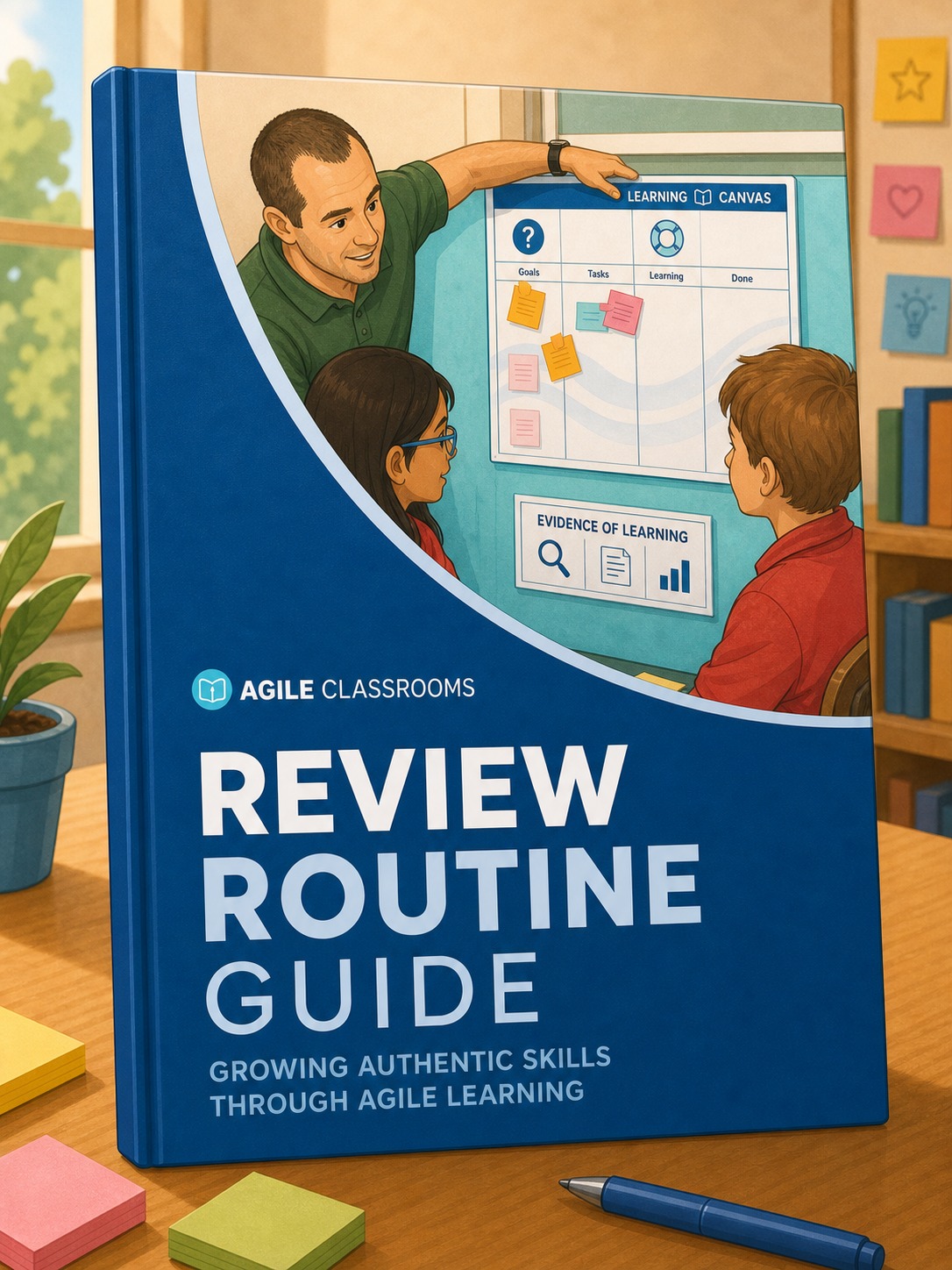
A practical guide for helping students share work, gather useful feedback, inspect evidence, and decide what should improve next.
Help students show what they created, learned, tested, or improved during the sprint.
Structure feedback so it becomes evidence for the next decision, not just opinions about the work.
Turn review conversations into clearer next steps for revision, learning, or future sprints.
Review is where work meets feedback. Three prompts that turn a review into a next improvement.
What's the actual work or learning we want feedback on?
What did people notice, like, or wonder about?
One specific change we'll make in the next sprint.
Clarify the work, goal, question, or evidence the group should focus on.
Students show progress, explain decisions, and make the current state visible.
Use a clear structure so peers, educators, or stakeholders respond in ways students can use.
Separate isolated preferences from repeated signals, questions, and useful advice.
Decide what changes now, what waits, and what needs more learning or discovery.
Review helps students learn from work while there is still something to do with the feedback. Instead of treating feedback as a final judgment, the routine frames it as information students can use to improve the next move. A strong Review also gives teachers better evidence. Students make their thinking, progress, decisions, and questions visible, which makes coaching more specific and reflection more grounded.
This resource supports communication, collaboration, feedback, reflection, evidence use, and continuous improvement. These are suggested connections, not a formal standards alignment.
Download the free Review guide and help students turn shared work, evidence, and feedback into better next moves.
Download for free