Reflect on the process
Help students look at how they worked, not only what they produced.

Guide
A practical guide for helping students reflect on how the sprint went, name what helped or got in the way, and improve how they work together next time.
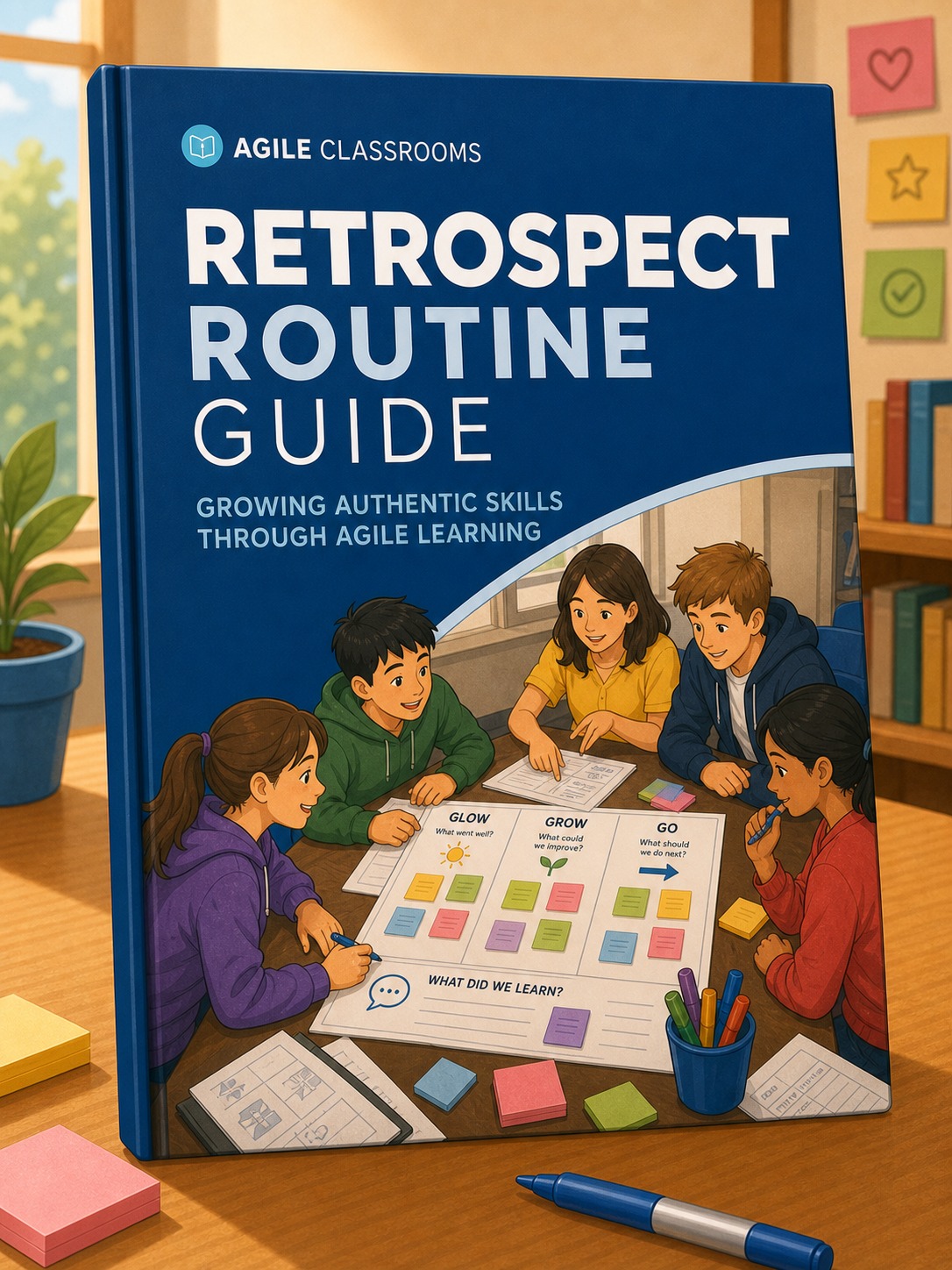
Help students look at how they worked, not only what they produced.
Surface habits, collaboration moves, support needs, and friction that shaped the sprint.
Turn reflection into one or two concrete changes students can try next time.
A short, student-friendly retro shape. Three sticky-note prompts that turn reflection into action.
What worked for us and we want to keep doing.
What slowed us down or kept us from learning well.
One specific thing we'll try in the next sprint.
Ask students to think about the work, the collaboration, and the learning process.
Name routines, behaviors, supports, or choices that made progress easier.
Surface roadblocks, confusion, delays, uneven participation, or unclear expectations.
Keep the next step specific enough for students to actually try in the next sprint.
Capture the improvement on the Learning Canvas, team agreement, or next sprint plan.
Retrospect helps students build the habit of improving the way they learn, not just finishing the assignment. It gives teams a structured moment to notice patterns, name what mattered, and decide how they will work better next time. The routine keeps reflection practical. Instead of ending with broad statements like "communicate better," students choose a visible improvement they can practice in the next sprint.
This resource supports reflection, collaboration, communication, self-management, and continuous improvement. These are suggested connections, not a formal standards alignment.
Download the free Retrospect guide and help students turn reflection into a clear improvement for next time.
Download for free