Turn goals into a plan
Help students translate refined learning goals into specific work they can start, track, and finish.

Guide
A practical guide for helping students turn refined learning goals into a clear sprint plan with visible work, roles, and next steps.
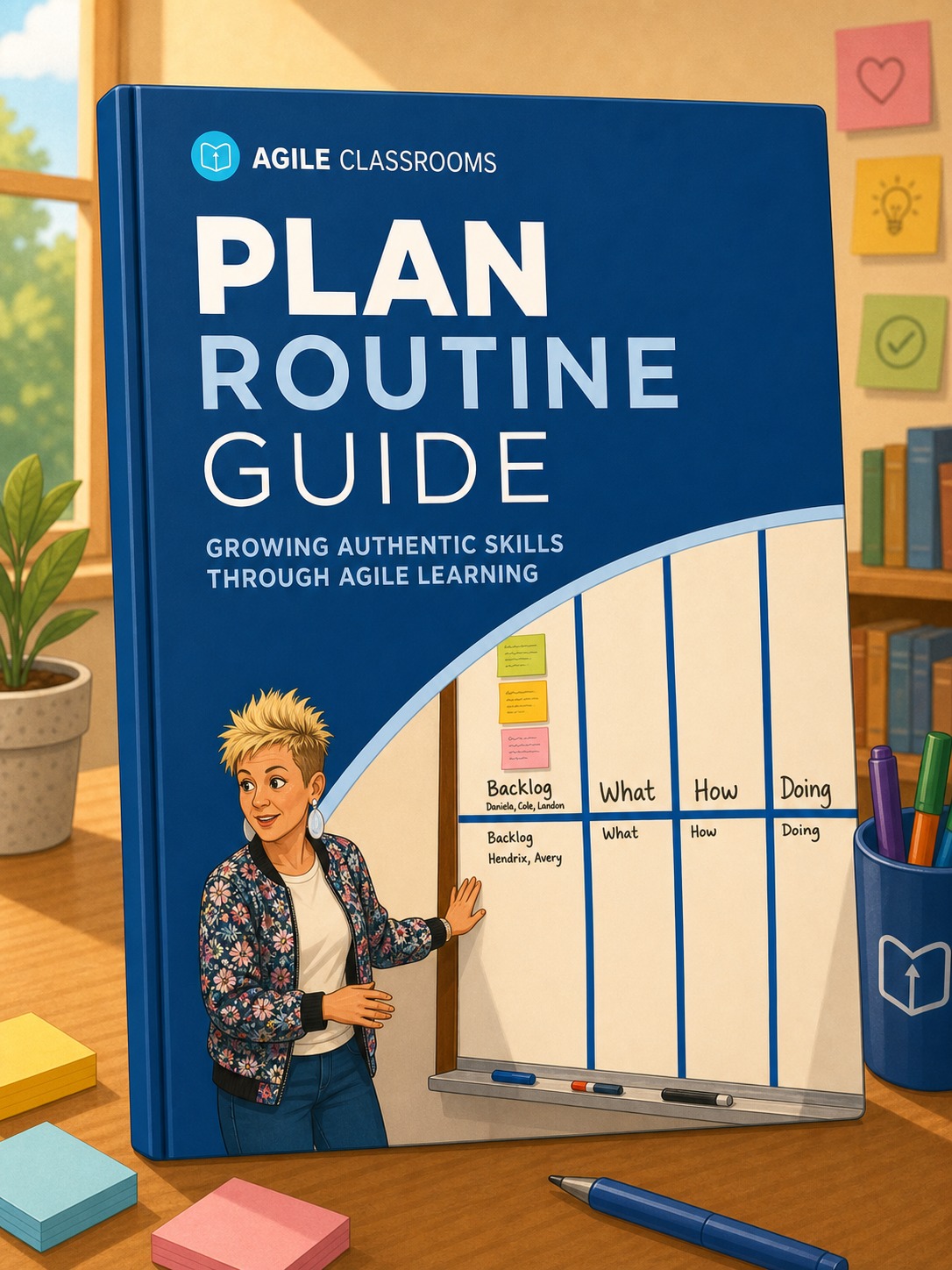
Help students translate refined learning goals into specific work they can start, track, and finish.
Clarify tasks, priorities, roles, supports, and checkpoints before the sprint begins.
Give students enough structure to plan responsibly while still practicing choice and collaboration.
A simple shape students fill in together so a sprint plan is shared, not just teacher-issued.
What we're trying to learn or produce in this sprint.
The visible work we'll take on next.
Who's doing what — and who's supporting.
What we agree to finish before our next Review.
Review the current learning goal, project outcome, or deliverable before planning tasks.
Choose the work that fits the time, readiness, and purpose of the sprint.
Identify tasks, checkpoints, supports, and evidence of progress.
Decide who is doing what, where help is needed, and how the team will coordinate.
Move the work into the Learning Canvas, backlog, or team board so the sprint can begin with shared direction.
Student ownership does not mean asking students to figure everything out alone. The Plan routine gives students a clear structure for turning goals into visible work. It helps the class move from “we know what matters” to “we know what we are going to do next.” That structure lowers confusion, makes support needs easier to see, and gives teachers more room to coach instead of chase every step.
This resource supports planning, communication, self-management, collaboration, and reflection. These are suggested connections, not a formal standards alignment.
Download the free Plan guide and help students turn learning goals into visible work, clear next steps, and shared direction.
Download for free