Make Learning Visible
Use backlogs, boards, and success criteria so students always know where they are, what is next, and how they are doing.

Guide
A practical guide for using Agile Classrooms routines, visible learning artifacts, and learning cycles to grow student ownership and collaboration.
The entry point into the Agile Classrooms framework — written for real classrooms, not corporate Agile copied into school.
Use backlogs, boards, and success criteria so students always know where they are, what is next, and how they are doing.
Run short, repeatable cycles where students plan their work, check progress, share results, and reflect on how to improve.
Scaffold autonomy and teamwork so students build the skills to make decisions and work together over time.
Read the overview so the routines, artifacts, and learning cycles fit together as one system.
Pick the part of the learning cycle that would help your students most right now — Refine, Plan, Check-In, Review, or Retrospect.
Use a simple artifact, board, backlog, or goal structure students can actually see and update.
Let students plan, work, check in, review, and reflect in a manageable rhythm.
Use what you learn to adjust the next sprint, routine, or collaboration structure.
Teachers are being asked to prepare students for a changing world while still managing standards, projects, pacing, and classroom realities.
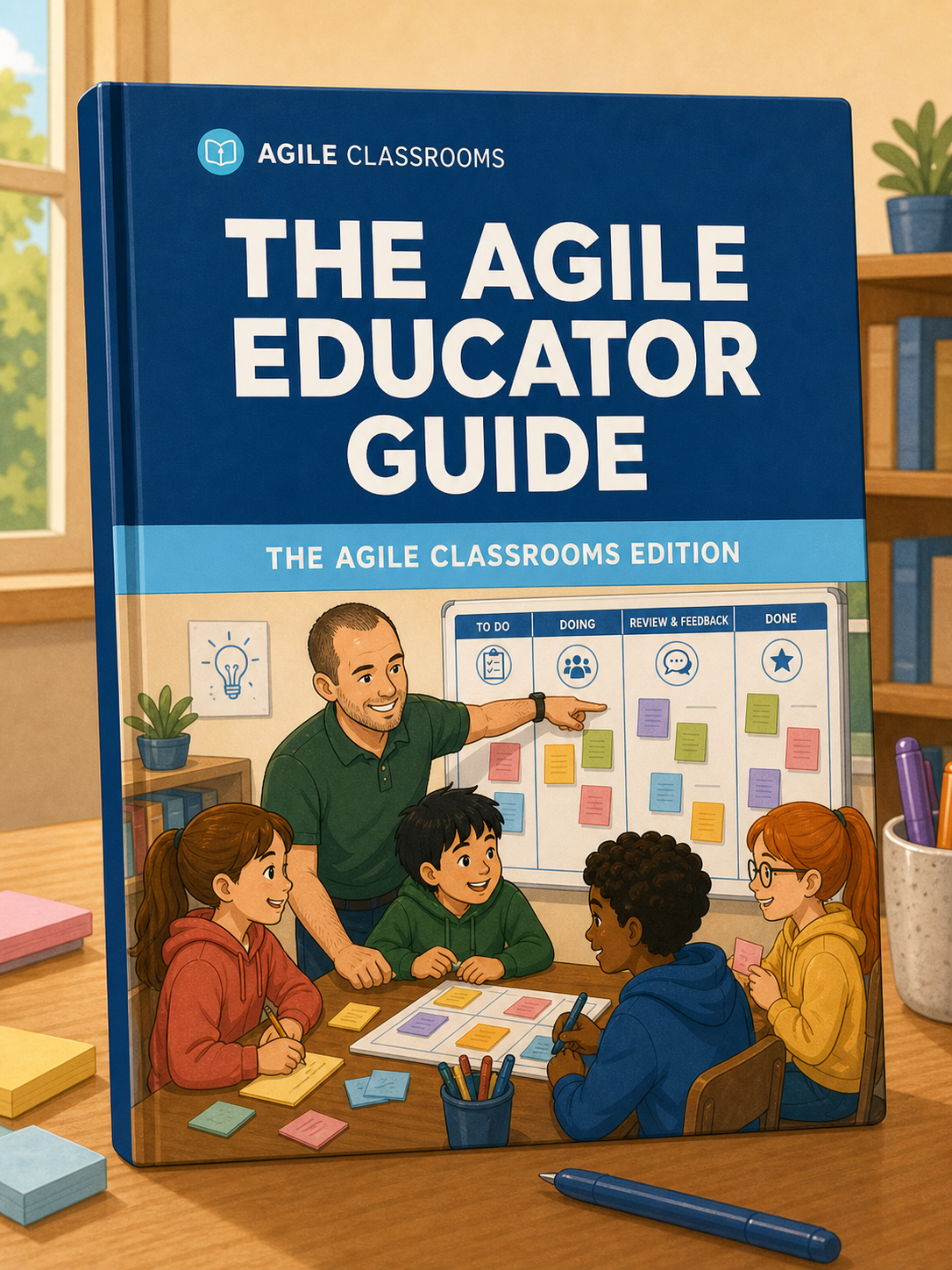
Project-based learning, STEM, CTE, work-based learning, and student agency can be powerful, but they need structure. The Agile Educator Guide gives educators a practical way to help students see the work, share the work, and improve the work over time.
The guide is the entry point into the Agile Classrooms framework. It connects the Learning Sprint, visible learning artifacts, classroom routines, and the spectrums of choice and collaboration into one practical system educators can start using.
The guide supports the broader skills schools care about most. These are suggested connections, not a formal standards alignment.
Download the Agile Educator Guide and use it to begin building visible learning, student ownership, and stronger collaboration. Want to practice the routines with guidance? Explore the Certified Agile Classrooms Teacher workshop.
Download the free guide