Have you ever struggled with managing your classroom effectively, or found it challenging to keep students engaged and accountable? Imagine a classroom where:
- Students self-monitor and adjust their learning.
- Students proactively seek feedback and peer support.
- Teachers instantly know who needs help.
- Students' progress is visible at all times.
- Group work transforms from confusion to clarity, with clear accountability.
- Teachers spend less time on classroom management and more time coaching students.
These are just some of the benefits of The Check-In Routine, a core component of the Agile in education approach, specifically tailored to foster self-directed learning and student agency.
What is the Check-In Routine?
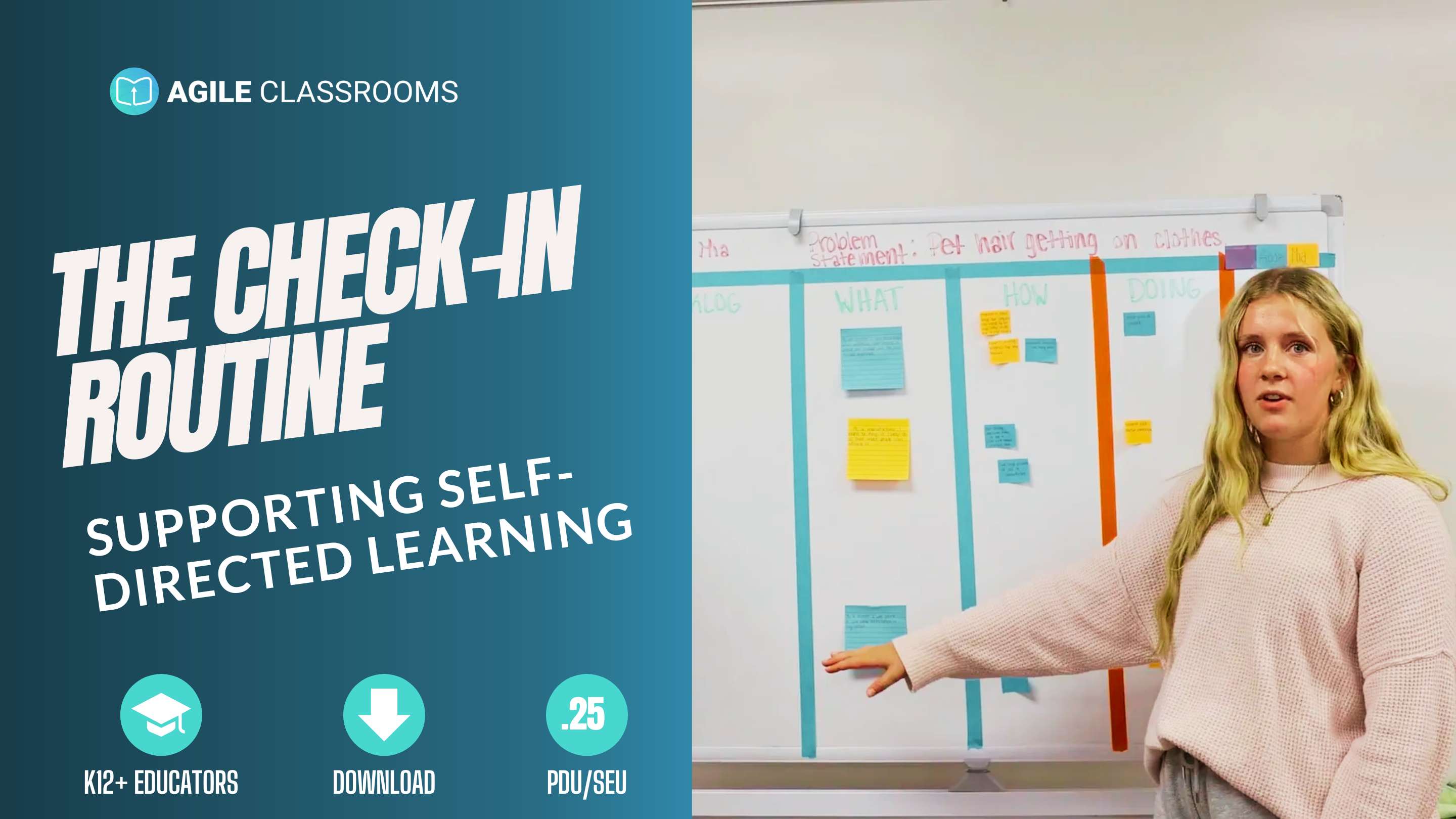
The Check-In Routine is a short, frequent Agile practice adapted from Scrum in the classroom. Typically lasting just 5–7 minutes at the beginning of each class period, it leverages Learning Canvases to make learning plans, tasks, and progress transparent. It stimulates student discussions, builds their capacity to adapt, and encourages early, continuous feedback.
During each Check-In, Agile Classrooms use four essential questions:
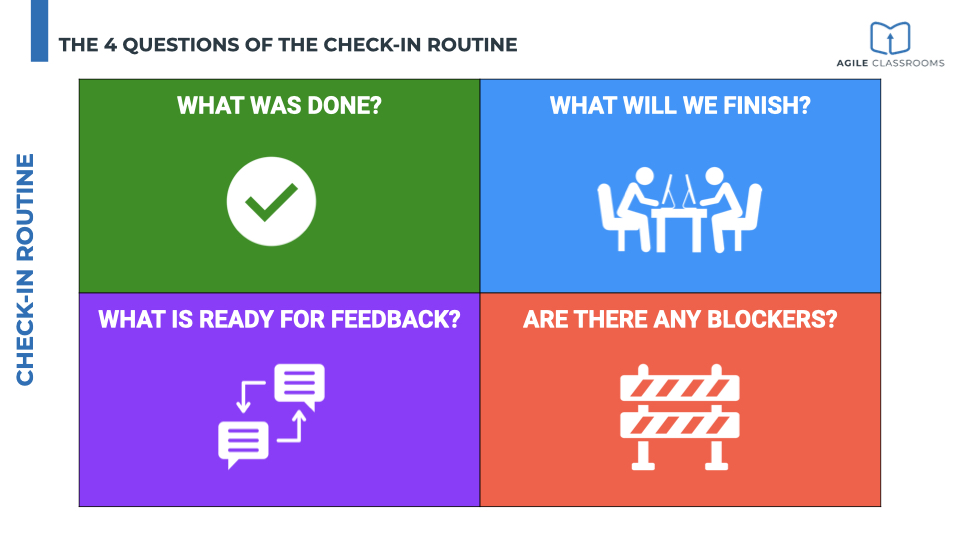
The 4 core questions of the Check-In Routine help make student learning visible and actionable.
What was done since the last Check-In?
Students identify completed tasks and move them to the 'Done' column on the Learning Canvas. Quick verification ensures tasks truly meet the criteria of 'Done'.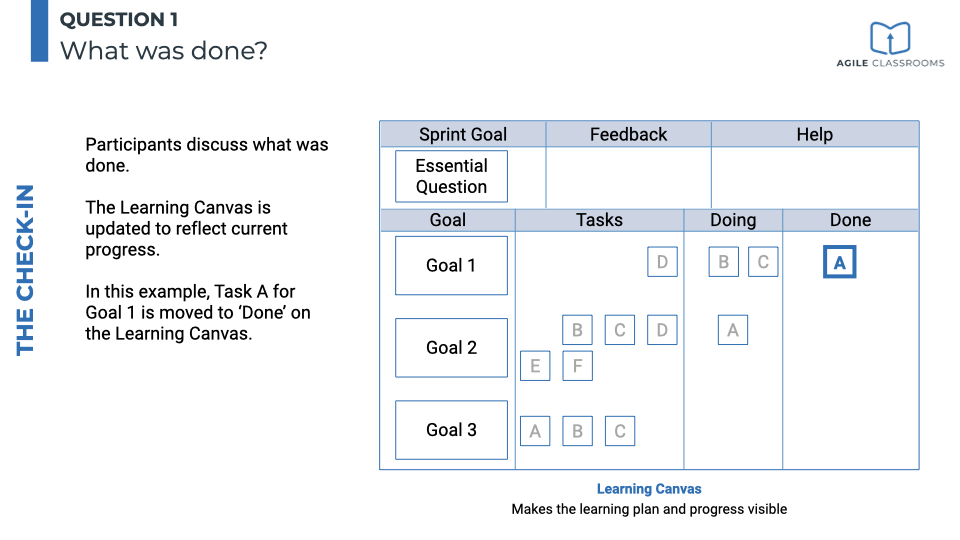
Students move finished tasks to the Done column to visualize their progress on the Learning Canvas.
What do we intend to finish by our next Check-In?
Students select and commit to tasks for the upcoming period, moving tasks into the 'Doing' column and clearly labeling who is responsible, fostering clarity and accountability.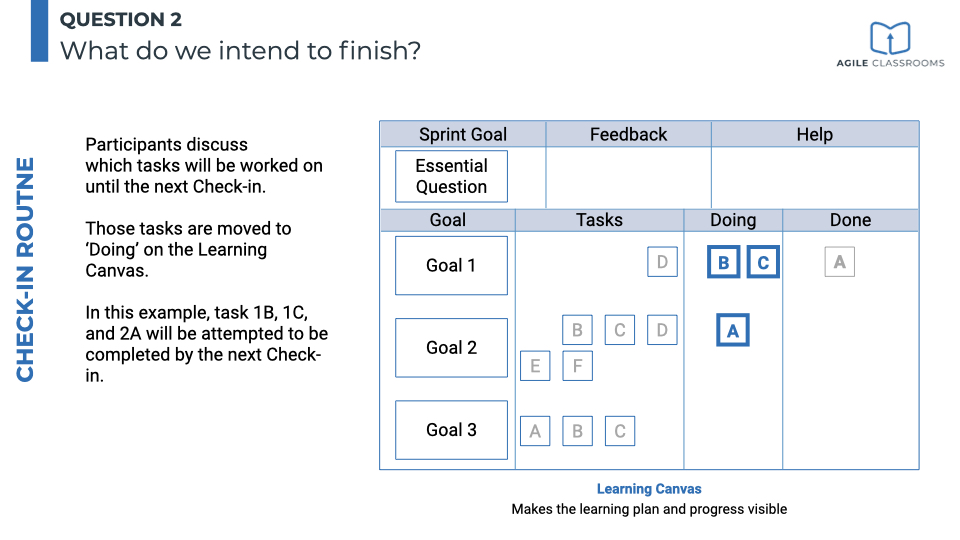
Students choose and move tasks to the Doing column on the Learning Canvas.
What is ready for feedback or assessment?
Items ready for evaluation are placed in the 'Feedback' area of the Learning Canvas, ensuring timely, meaningful feedback.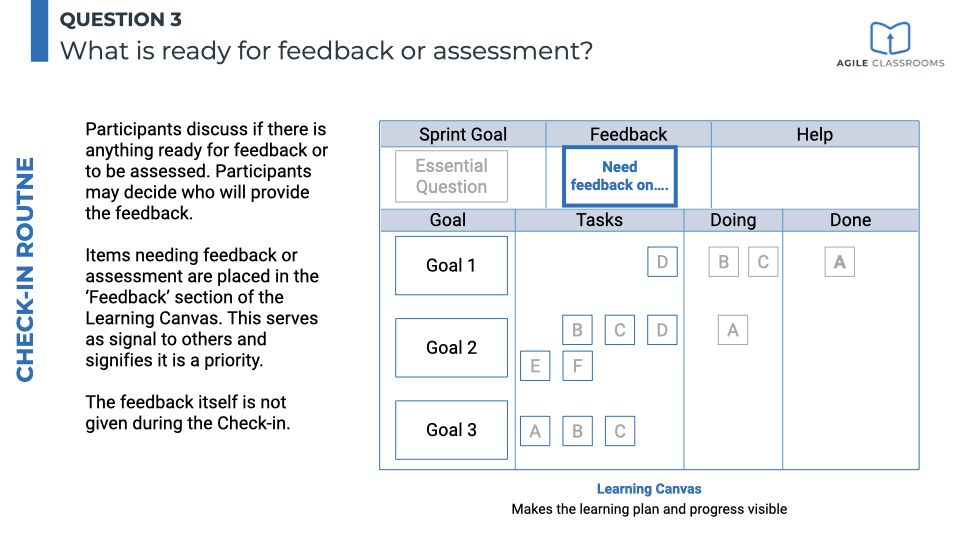
Any item that needs feedback gets moved to the Feedback section on the Learning Canvas. A strong visual signal to others feedback is needed from them.
Are there any roadblocks?
Students identify and communicate obstacles clearly, moving them into the 'Help' area. The Check-In focuses on identifying—not solving—blockers immediately, ensuring efficient use of class time.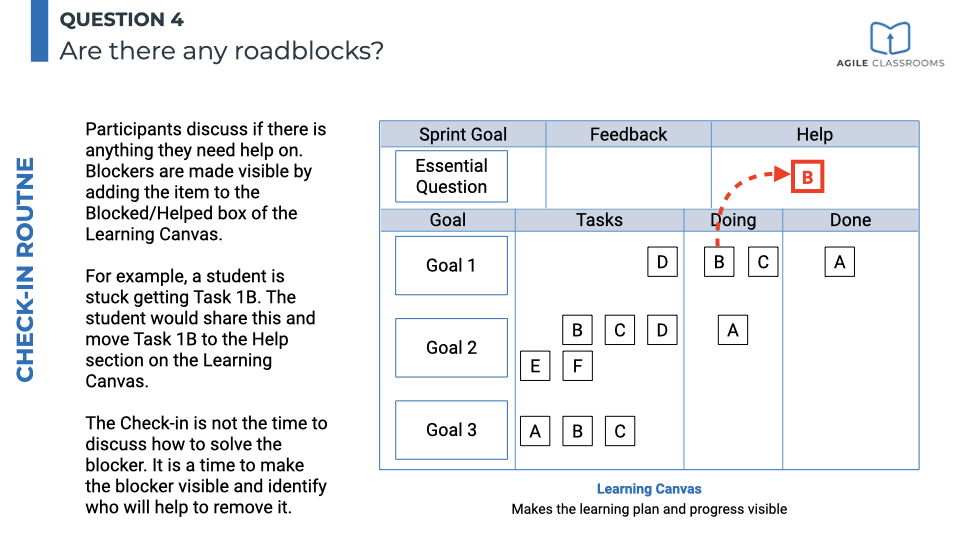
Identifying blockers early helps remove obstacles and maintain momentum. Any item that needs support is moved to the Help section of the Learning Canvas.
Scaffolding and Differentiating the Check-In
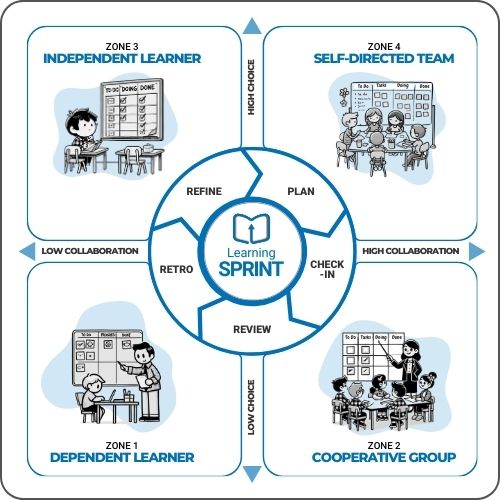
The Check-In Routine aligns beautifully with the Spectrums of Collaboration and Choice, crucial frameworks for implementing student-centered learning effectively and reducing educator overwhelm:
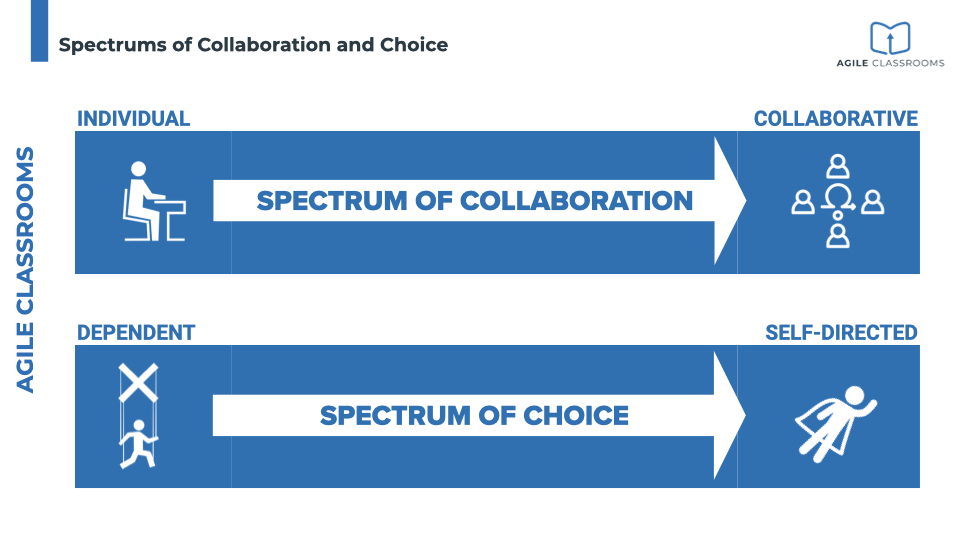
Spectrum of Collaboration
- Individual: Students manage their own Learning Canvas independently.
- Group: Students provide peer feedback but manage their own tasks.
- Team: Students manage tasks collectively using a shared Learning Canvas.
Students move from individual to team-based collaboration as skills develop.
Explore the Spectrum of Collaboration →
Spectrum of Choice
- Teacher-Led: The teacher models the Check-In process, guiding all four questions.
- Co-Led: Students answer questions with teacher support.
- Student-Led: Students lead the Check-In independently and involve the teacher only when needed.
As students grow in confidence, they take greater ownership of the Check-In process.
Explore the Spectrum of Choice →
Practical Resources for Your Classroom
Ready to implement or refine your Check-In Routine? We've created easy-to-use printable resources to support your Agile classroom.
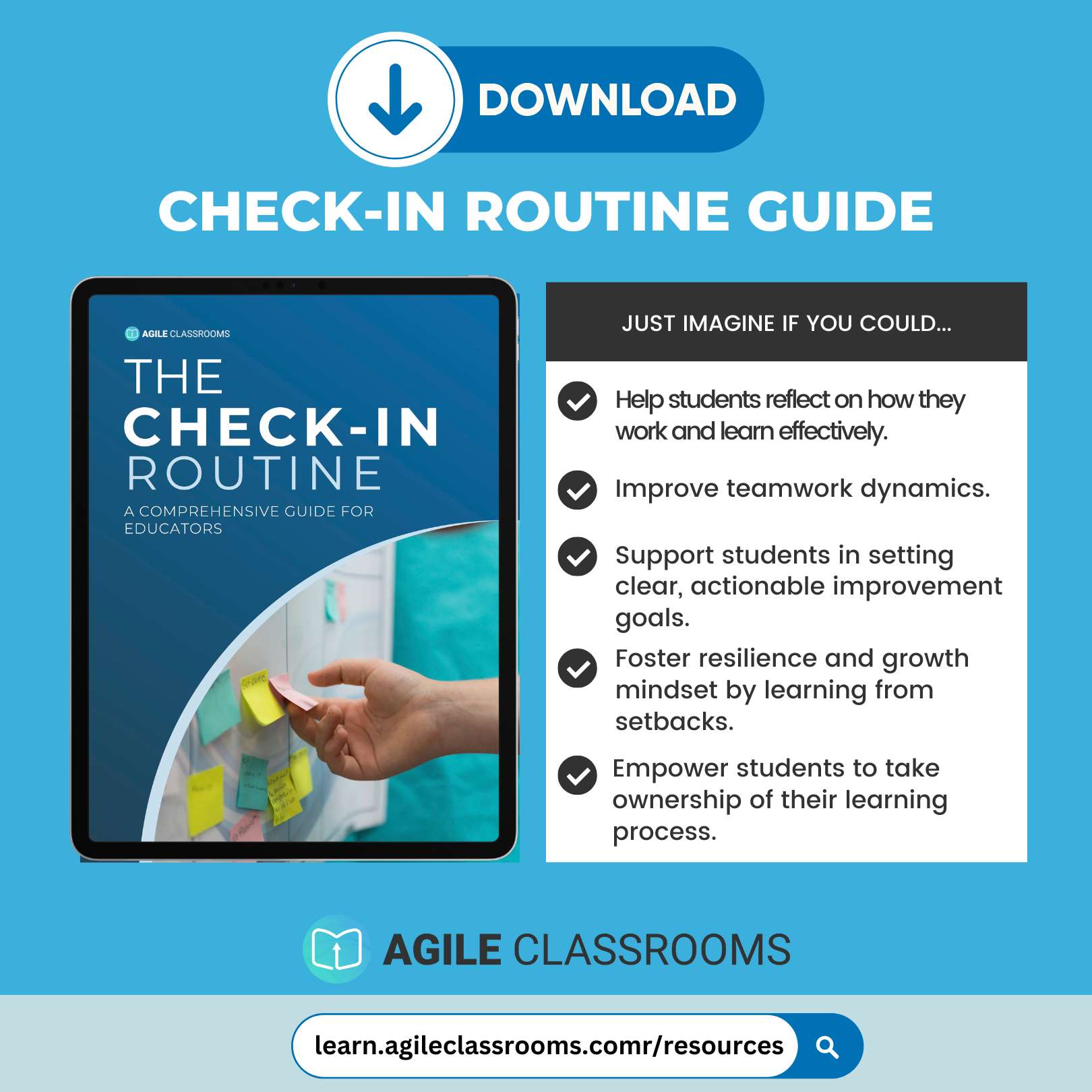
Visit the Agile Education Framework Pages (comprehensive introduction to Agile methods in teaching)
By adopting the Check-In Routine, you're fostering a classroom culture that emphasizes student agency, self-directed learning, and meaningful collaboration, while significantly reducing your own workload.