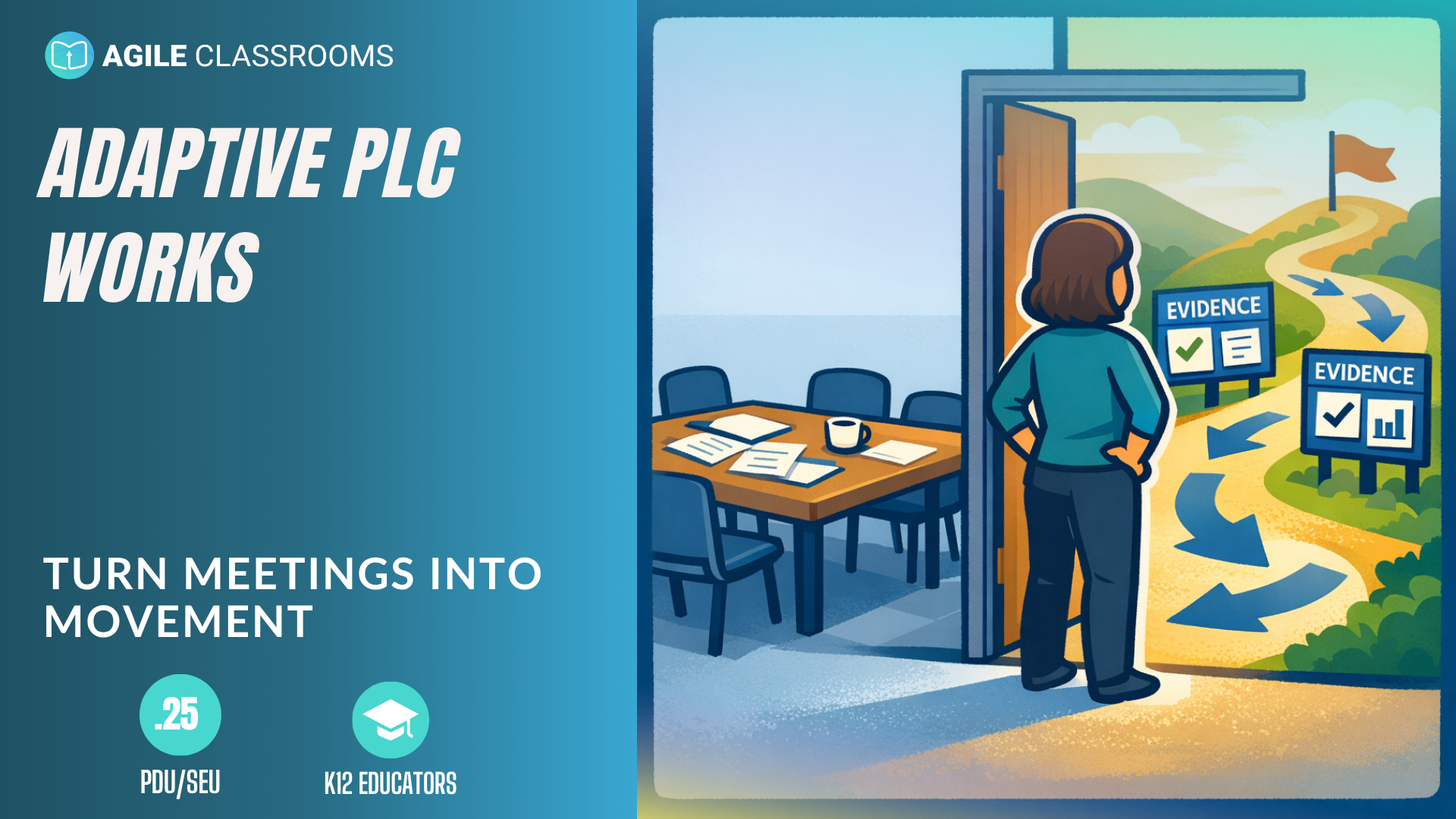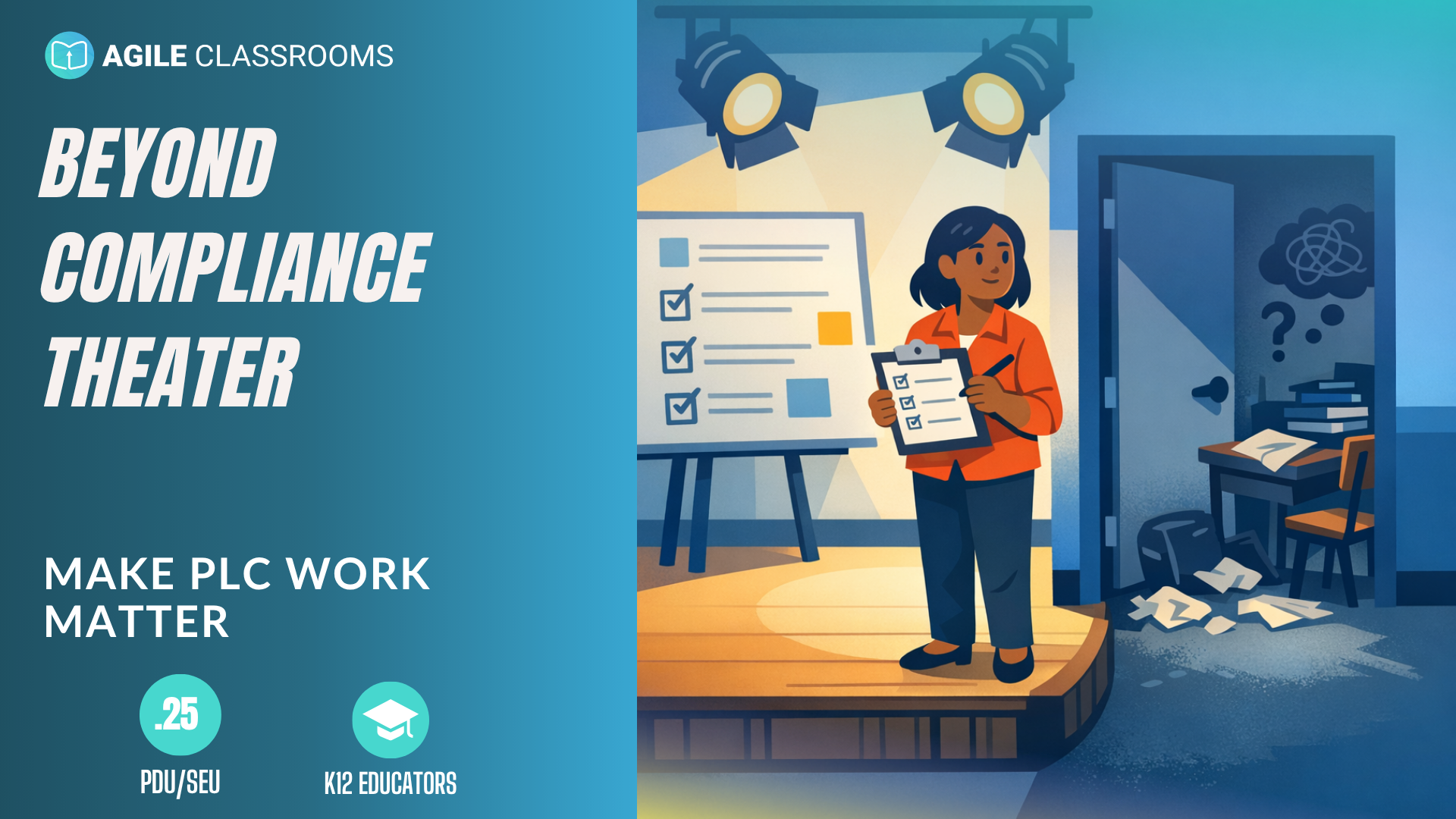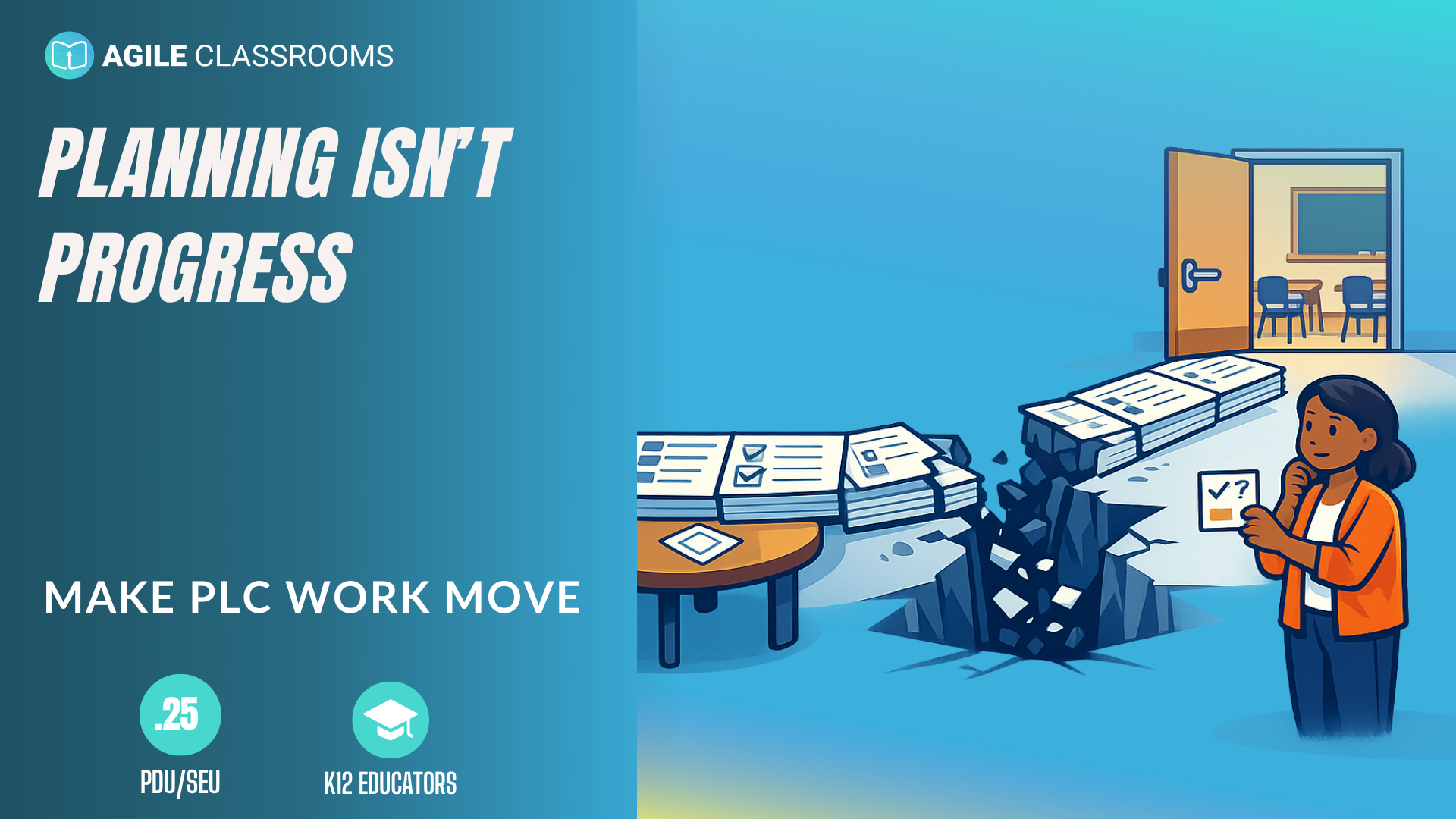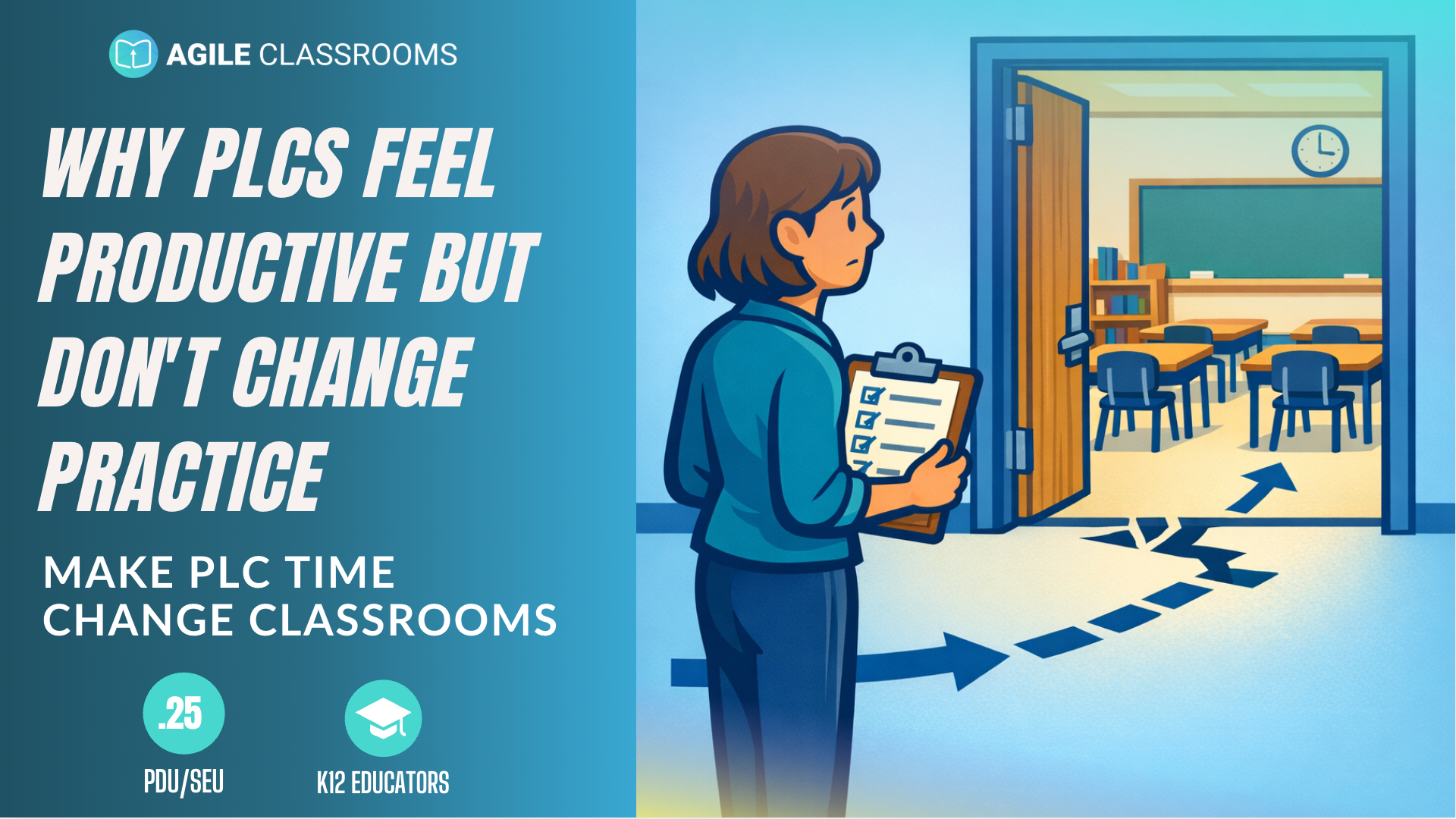
Most teams don't lose momentum because they stop caring. They lose it because the work loses rhythm. Without rhythm, improvement drifts.
Meetings get absorbed by updates. Key issues get crowded out. Next steps go vague.
Learning gets delayed. Soon, the work becomes a grind.
Adaptive PLC uses four simple routines to prevent that drift:
- Plan
- Check-In
- Review
- Retrospective
Their simplicity is their power.
Plan
Plan clarifies what to improve, what action to take, and what to observe. This is where discipline begins. Not with a giant plan, but with one clear enough to act. The question isn't, "How do we solve everything?" It's, "What is the next meaningful move?"
Check-In
Check-In prevents the long silence between intention and review. It keeps the work alive as it happens. A good Check-In asks:
- What are we noticing?
- What feels different?
- What friction is showing up?
- What support is needed?
Check-Ins ground the work in reality.
Review
Review prompts the team to look at what actually happened. This sounds obvious. It's also where many teams struggle. Without an honest Review, PLCs recycle opinions. A Review creates a genuine learning moment, asking the team to examine evidence, patterns, and outcomes — not just intentions.
Retrospective
Retrospective turns attention to how the team is working. Not just what happened in the classroom, but how the improvement work itself functions. This is how teams get better at improving. The Retrospective answers:
- What supported our progress?
- What got in the way?
- What should we keep, change, or simplify next time?
Why Routines Matter
Routines aren't exciting. That's exactly why they work. They reduce ambiguity, create predictability, and support focus. They give teams a shared operating pattern. In busy school environments, predictability is a gift. It lowers the cognitive load of collaboration so more attention can go toward the actual improvement work.
Why These Four Routines Matter Together
A single routine helps. A complete rhythm helps more. Plan creates direction. Check-In maintains connection. Review creates learning. Retrospective improves the process itself. Together, they create forward motion — not dramatic motion, but usable motion that lasts.
Ready to Apply These Routines?
What small shift could bring more rhythm to your team's improvement work?
Earn 0.25 SEUs/PDUs for reading this. Renew your PMP, CSM, or CSPO certification.