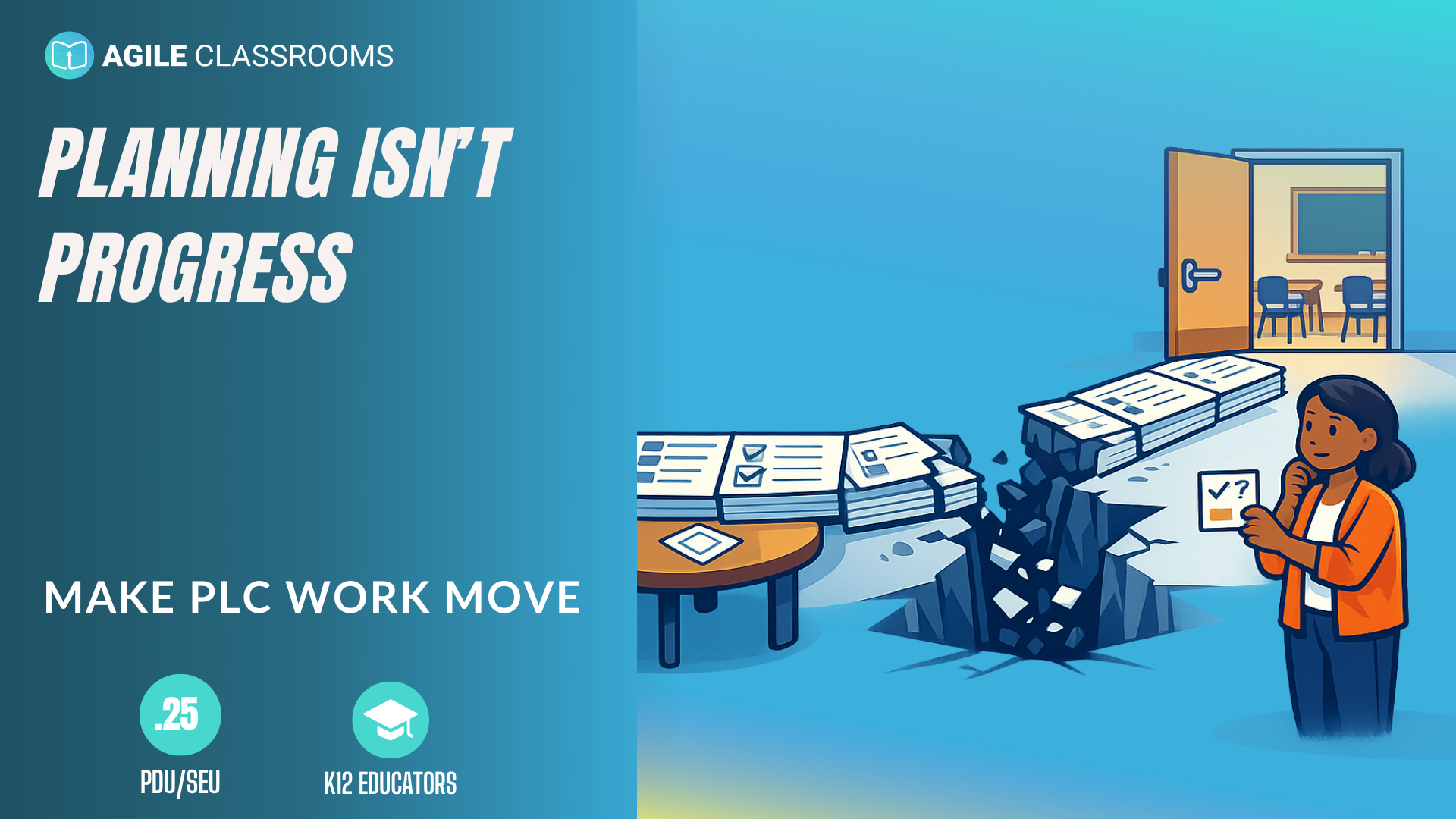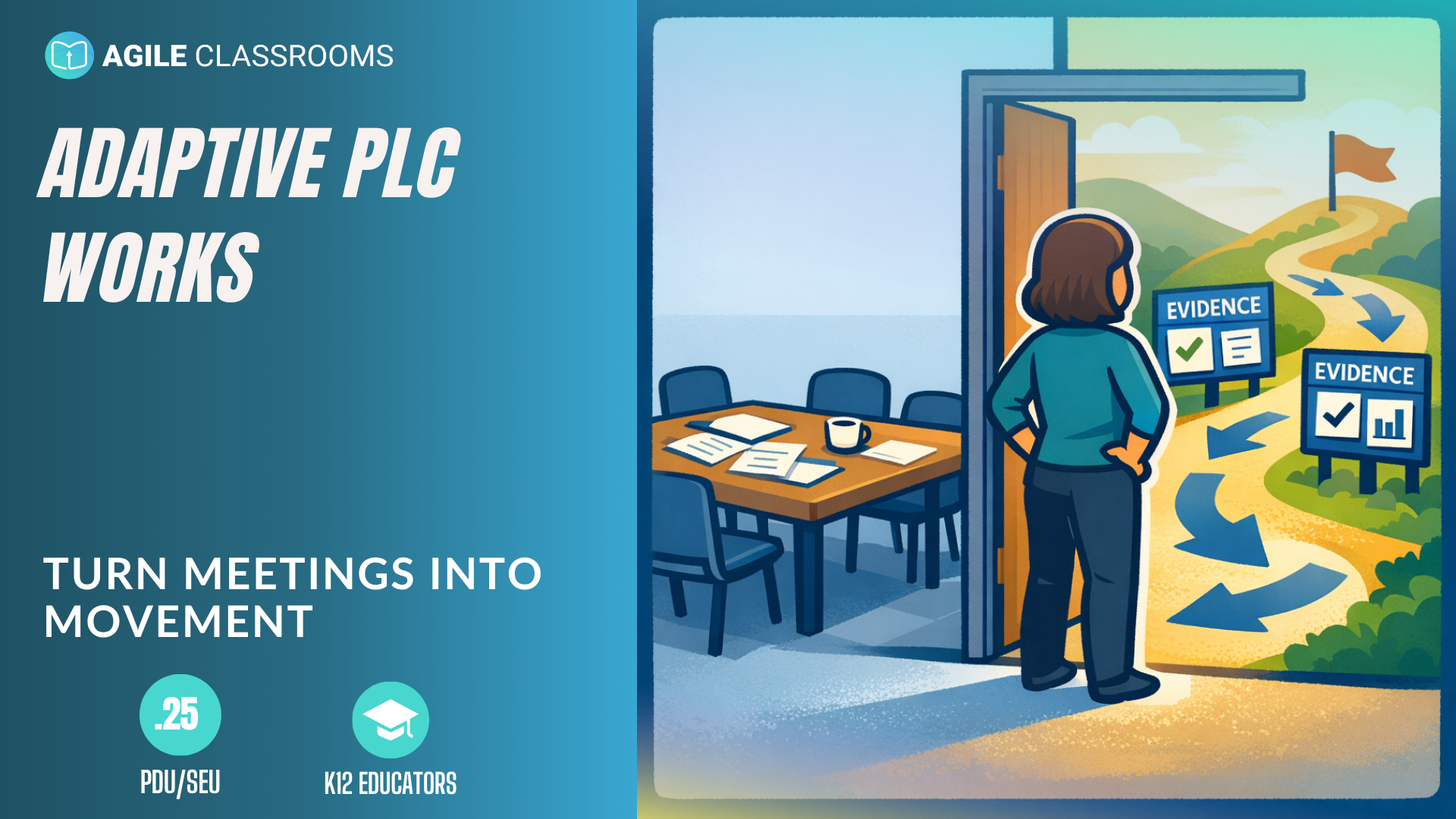
People hear "school improvement model" and sort it into one of two buckets: inspiring-but-abstract, or practical-but-crushing. Adaptive PLC dodges both traps. It is not grand theory divorced from school reality, nor an implementation burden repackaged as "support." It is a practical system, built for educator teams to make actual progress under the conditions schools actually operate within.
The Real Job
The core job sounds simple, but it is not: improve student experience without getting lost in meeting drift, paperwork, or overplanning. This is not about running better meetings. It is not about filling out better templates. It is not about aligning more thoroughly. Adaptive PLC channels collaborative educator time into:
- Better student learning experiences
- Sharper instructional decisions
- Improved conditions for teaching and learning
- Faster learning cycles for adults
Built for Reality, Not Wishful Thinking
Most improvement models assume stable conditions: time to think, to prepare, to align, to implement cleanly. Schools rarely deliver. They are constrained, interrupted, and full of surprises. Adaptive PLC starts there. It assumes:
- Limited time
- Inherent complexity
- Competing priorities
- Uneven classroom conditions
- Diverse student responses
- The need to learn while doing the work
The model feels lighter because it does not impose ideal conditions on a non-ideal system. It moves teams inside reality.
Make the Work Visible Without Making Paperwork the Work
Many PLCs generate conversation. Adaptive PLC generates learning. Its structure helps teams:
- Pinpoint a meaningful focus
- Define an improvement vision
- Take a manageable next step
- Review what happened
- Adapt based on evidence
This cycle is not glamorous. It is useful. And utility is what tired educators are starved for.
It's Not About Perfect Plans
Adaptive PLC does not make planning the main event. It makes planning support for action. The real work happens when a team tries something, sees what actually happens, and learns its way forward. That is why the model uses improvement sprints and recurring routines. The goal is not to draw the perfect map before you move. It is to move in a disciplined way that keeps generating insight.
Designed to Stop the Drift
PLCs drift when work goes fuzzy, when roles blur, when meetings lose rhythm, when visibility drowns in paperwork, when "next steps" are vague, and when no one learns a damn thing. Adaptive PLC counters this with concrete choices:
- Intentional team formation
- Clear roles
- An improvement vision
- Improvement sprints
- Four routines: Plan, Check-In, Review, Retrospective
- Visible improvement artifacts
These are not bells and whistles. They are anti-drift mechanisms.
Designed to Be Worth the Time
Educators do not need another structure that sounds good but feels dead. They need collaborative time to feel honest, focused, and to matter. Adaptive PLC ensures teams leave a PLC knowing:
- The problem
- What they're trying next
- What to pay attention to
- When they'll revisit what happened
That clarity is not everything. But it is most of it. Clarity cuts drag. Cut drag makes momentum possible.
Your Next PLC
Is Adaptive PLC one more framework to manage? The real question is: would our team benefit from a structure that moves us from talking to learning faster? You do not need to agree with every term. You need to picture your next useful step.
Act Now
Ready to transform talk into learning? Explore the Adaptive PLC method and download the free Adaptive PLC Guide, authored by Dr. Laura Williams and John Miller.