Make professional learning visible
Teams can see goals, evidence, questions, experiments, and next steps instead of keeping the work hidden in conversation.

Guide
A practical guide for helping educator teams make professional learning visible, evidence-informed, collaborative, and action-based.
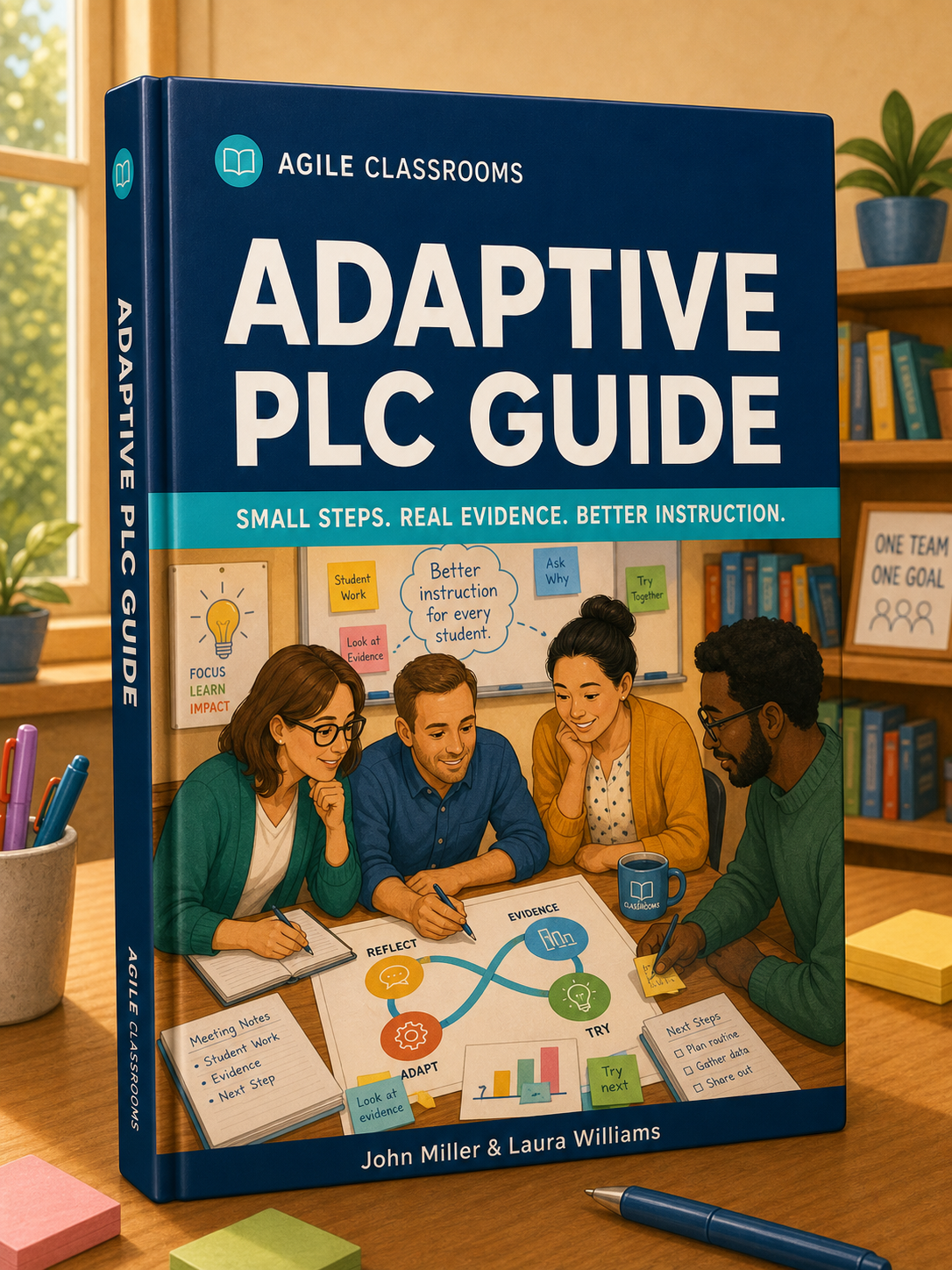
Teams can see goals, evidence, questions, experiments, and next steps instead of keeping the work hidden in conversation.
The guide helps teams turn student work, classroom observations, and feedback into clearer decisions about what to try next.
Short cycles help PLCs choose a focus, test a change, inspect what happened, and improve together.
Name the learning need, teaching challenge, or improvement question the team wants to work on.
Bring student work, observations, feedback, or other evidence into the conversation.
Choose a small action the team can test before the next meeting.
Look at what changed, what became clearer, and what the team should do next.
Traditional PLCs can drift into updates, planning talk, or broad discussion. Adaptive PLCs create a tighter rhythm: make the work visible, use evidence, try small changes, and learn together. The point is not more meeting activity. The point is a clearer path from professional learning to better instruction.
Agile Classrooms helps schools build shared systems for visible work, collaboration, feedback, and continuous improvement. Adaptive PLCs bring that same philosophy into educator teams, where adults need practical ways to learn, adapt, and improve together.
Explore the broader Agile Classrooms framework in the online guide, or visit the dedicated Adaptive PLCs site for more on educator team practice.
Download the free guide and give your PLC a practical structure for visible, evidence-informed improvement.
Download for free