Innovation in education can feel risky.
You might worry about falling behind on standards, facing pushback from administrators or parents, or not having the time or tools to bring your ideas to life.
But the bigger risk?
Doing nothing.
When we don’t innovate:
- We risk keeping a system that doesn’t serve our students.
- We risk burning out.
- We risk preparing students for exams—but not for life.
And yet, even moving an inch forward can feel impossible in schools. The constraints are real. The pressure is high. But there is a safe path forward.
- You don’t need a new curriculum.
- You don’t need to buy expensive tools.
- You don’t need to flip the system upside down.
All it takes is turning two simple dials.
The Two Dials: Student Choice and Student Collaboration
These are the levers that power meaningful innovation.
When you increase student choice and student collaboration, you start to build the conditions where 21st-century skills naturally thrive—self-direction, critical thinking, communication, creativity, and complex problem-solving.
As you turn these dials further, something powerful begins to happen:
Students start learning in self-managing teams.
- They make decisions.
- They support each other.
- They become the drivers of their own learning.
Just like in the real world.
Want a visual reference? See the Spectrum of Choice and Collaboration used in Agile Classrooms.
But how do you do this without chaos? How do you turn up the dials in a way that feels manageable—for you and your students?
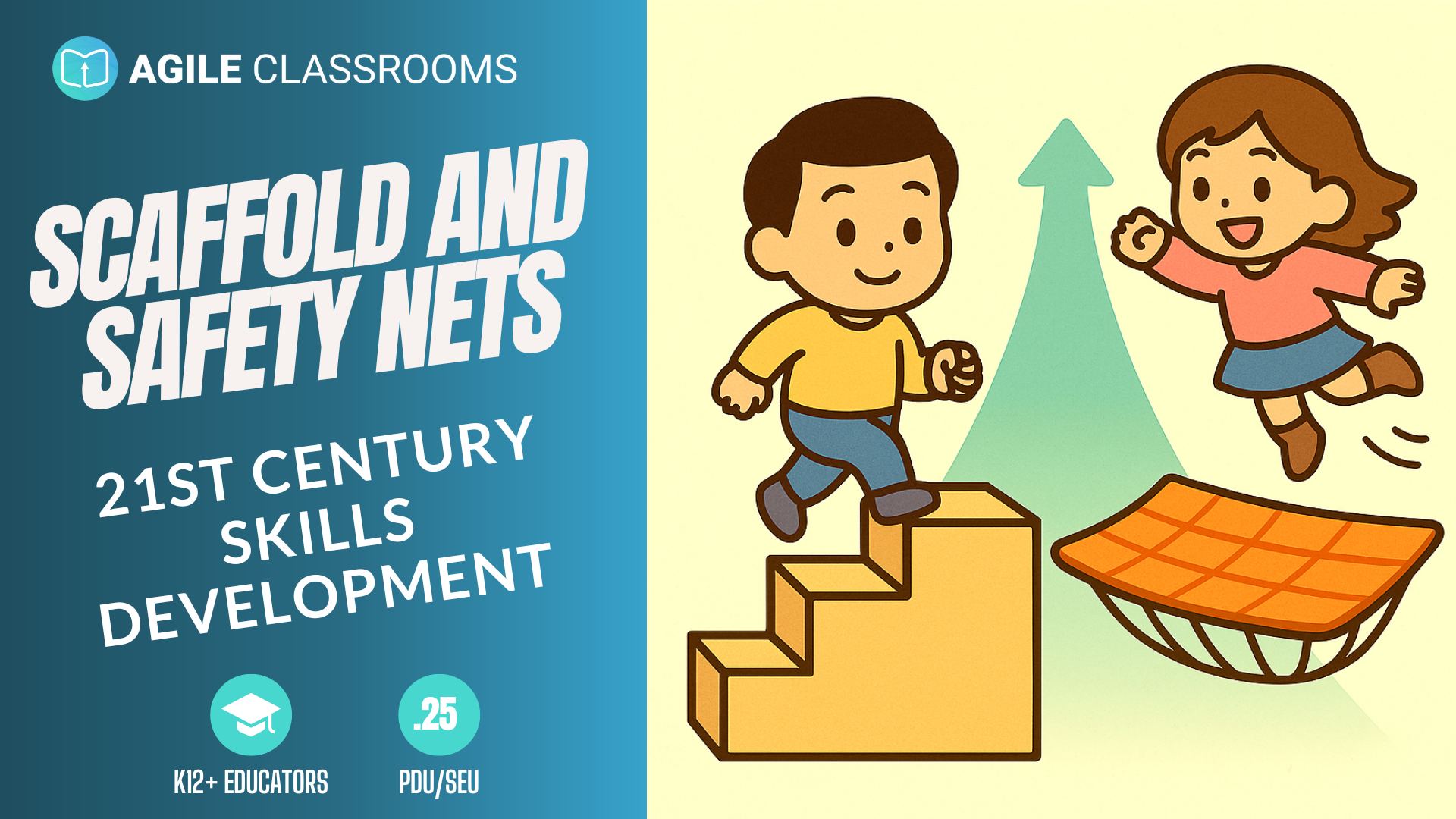
There are two practical paths forward: Scaffolding and the Safety Net.
Scaffolding: Start Small and Grow
The scaffolding approach is like strength training. You don’t walk into the gym and lift 200 pounds. You start where you are, then add weight as you go.
In the classroom, this means:
- Starting with limited choices, then expanding them
- Beginning with structured collaboration before moving to open-ended team projects
This approach builds stability and confidence. It may take more time to see dramatic shifts, but the foundation becomes rock-solid.
Safety Net: Start Big with a Backup Plan
The safety net approach is for those who are ready to go bold—but want a soft landing.
You raise the dials significantly—giving students a high level of choice and collaboration from the start. Then, if it feels too overwhelming, you dial it back.
It’s like walking a tightrope with a net below. You push beyond comfort zones, but you’re never without support.
This method can challenge limiting beliefs (in both you and your students) and create rapid momentum.
Whichever Path You Take, You’re Moving Forward
Whether you scaffold slowly or leap with a safety net, both paths are safe. Both paths are powerful. And both move you toward a classroom where students are engaged, empowered, and equipped for the future.
So the real question is:
Which approach will you take?
- Start small.
- Start big.
- Just start.
- Your students will grow.
- Your teaching will evolve.
- The joy of learning—for you and them—will come roaring back.
Note: While this post is written for K–12 educators, the core idea applies to anyone in a leadership or coaching role. Scaffolding and safety nets are essential tools for growing capacity—whether you’re developing students, teams, or emerging leaders.
Ready to go further?
Explore how student choice and collaboration connect to the Agile Classrooms Framework. Join an upcoming ACT (Agile Classrooms Teacher) Workshop and start building your own innovative learning environment.
👉 Join an ACT Workshop to bring Agile Classrooms to life in your school.