Some students are growing and still feel like they are failing. Their work is better than it was three weeks ago. Their explanations are clearer. Their team habits are less chaotic. Their feedback is more specific. But if the only comparison is the class average, the top example, or the final standard, that progress can disappear.
That is the problem ipsative assessment helps solve, especially when a classroom uses repeatable routines. A routine gives students repeated performances to compare. Ipsative assessment gives them the question to ask: how did this attempt improve from the last one?
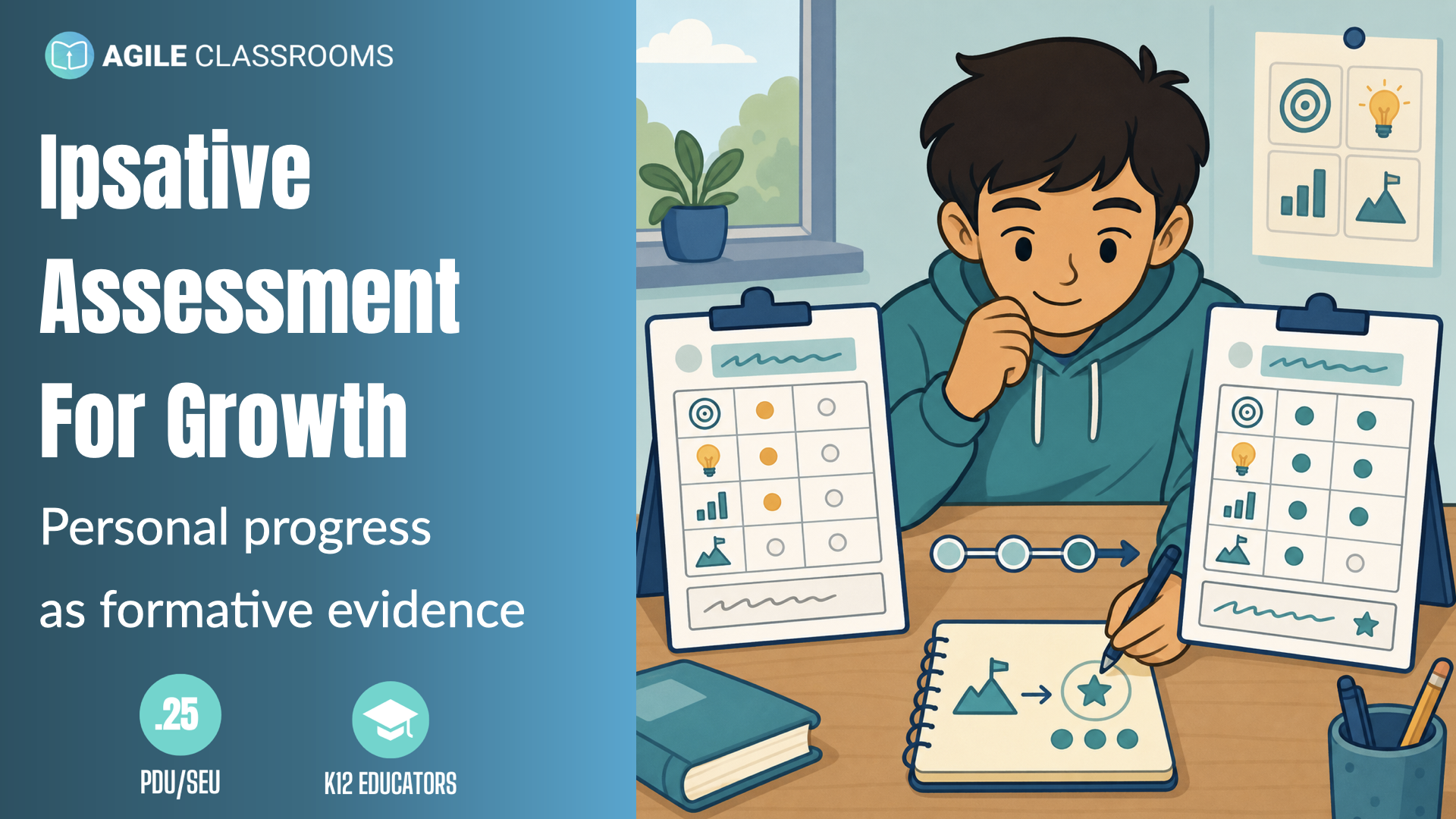
Ipsative assessment compares a student's current performance with that same student's previous performance. Instead of asking only, "How did this work compare to the standard?" or "How did this student compare to the class?" it asks, "How does this attempt compare to the last attempt?" That makes the evidence more personal without making it soft.
That comparison gives students a way to see learning as movement. It also gives teachers a way to talk about progress without making every assessment conversation about ranking. The conversation can stay focused on performance, not identity.
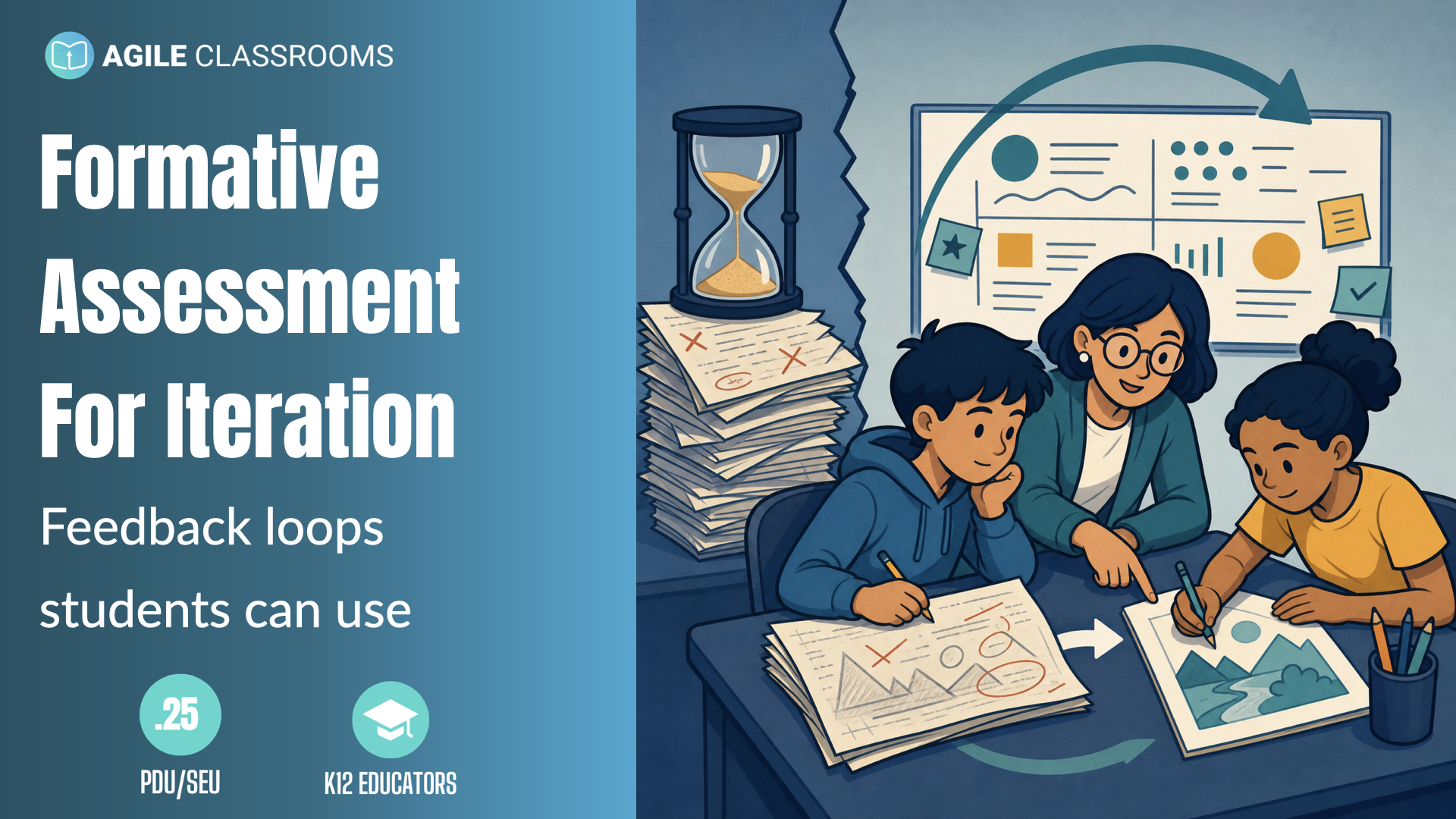
In a companion article, we described how formative assessment turns learning into iteration. Ipsative assessment is especially useful as a formative pattern for skill development, because it makes personal progress visible across repeated attempts while there is still time to improve. That makes it a strong fit for classroom routines that students practice again and again.
The Problem With One-Time Feedback
A student can receive a score, a rubric, or a comment and still not know what changed. They may know the work is not yet strong. They may know the answer was incorrect. They may know the grade went up or down. But they may not see the pattern of their own development.
That is especially hard for skills. Collaboration, communication, writing, problem solving, planning, revision, and reflection rarely improve in one clean jump. They improve through repeated attempts. Students try something, get evidence, adjust, try again, and gradually become more capable. If assessment only captures the latest performance, students can miss the growth story.
What Makes An Assessment Ipsative?
An assessment becomes ipsative when the reference point is the learner's own previous work. Assessment researchers use the term for self-referenced comparison: current performance is interpreted against earlier performance, not only against peers, averages, or external criteria. The point is not to lower expectations; the point is to make progress visible enough to guide the next attempt.
For example, the comparison can happen inside the actual artifacts students already produce. The teacher is not inventing a separate assessment event. The evidence is already in the drafts, boards, feedback comments, plans, and retrospectives.
- A student compares the first science lab explanation with the revised version and notices that the new claim actually uses evidence from the data table.
- A team compares its current sprint board with the previous sprint board and sees that fewer cards sat in "stuck" for three days before anyone asked for help.
- A writer compares the claim-evidence sentence in the first draft with the revised paragraph after a review routine.
- A student compares the plan they made before the last problem set with the plan they made after seeing which strategy actually worked.
- A group looks at whether its feedback conversations improved since the last review, not just whether the final product looked better.
The question is not only, "Is this good?" The question is, "What is better, clearer, stronger, or more intentional than before?" That gives the class one more lens: personal progress over time.
The Practical Pattern
Iteration depends on comparison. Without comparison, revision gets mushy. Students change the work, but they do not know whether the change made it better. They try harder, but they may be trying the same weak strategy again.
A practical ipsative routine needs three things: the previous attempt, the current attempt, and one comparison question tied to a skill. Without those, reflection drifts back into feelings or teacher opinion. With them, students have a concrete way to evaluate performance.
The routine can be simple. Students need a saved attempt, a repeat attempt, and a criterion that makes the comparison visible. The criterion can come from the routine guide, a class rubric, or a single look-for the teacher wants students to practice.
- Save the first attempt.
- Name the skill or criterion students will compare.
- Inspect the next attempt for evidence of change.
- Choose the next move from that evidence.
That is what makes ipsative assessment useful for skill development. It does not only say, "Here is where you are." It says, "Here is how this attempt relates to the last one, and here is what that means for the next attempt."
The teacher's feedback gets more precise too. Instead of commenting only on the current product, the teacher can say, "Your claim is clearer than it was in the first draft. The next move is connecting the evidence more directly."
Now the student has recognition and direction in the same sentence. The feedback names growth without pretending the next target has disappeared. That is the balance teachers need when they want to encourage effort and still protect quality.
What Changes For Students And Teachers
Ipsative assessment helps students avoid two traps. Peer comparison is a growth killer when it becomes the only story. A student decides they are "bad at this" because they are still behind the strongest example in the room, even though their own work has moved. Grades become dangerous when they turn into labels. One performance becomes an identity.
Ipsative assessment pushes back on both. You are not just this score. You are not just this draft. You are a learner with a previous attempt, a current attempt, and a next attempt. That does not make the standard disappear. It makes the path toward the standard more visible.
For teachers, the payoff shows up in the quick conference. A student may still be below the target and also be making important progress. Another student may be above the target but coasting. A team may have a strong final product but weak collaboration habits.
In a 30-second desk-side check-in, the teacher can move from "Here is what your work is missing" to a more useful performance conversation. The student still hears the gap, but they also hear the evidence of movement. That changes the emotional tone and the instructional value of the check-in.
- "Here is what improved."
- "Here is what did not change yet."
- "Here is the next skill to practice."
- "Here is the evidence I want you to compare next time."
That turns reflection from a mood into a claim with evidence. Students practice setting goals, monitoring their work, using feedback, and choosing better strategies because they can see what changed. The teacher is no longer carrying the whole comparison alone.
A Classroom Example
During a peer feedback lesson, the first review round is usually rough. That makes it a good place to use ipsative assessment, because students can hear the difference between weak advice and stronger advice almost immediately.
In the first review, feedback often sounds like this. The comments are friendly, but they do not give the next team much to act on.
- "Good job."
- "Add more detail."
- "I like the colors."
- "Make it better."
The teacher could correct each comment, but the bigger opportunity is to help students see growth in the feedback skill itself. The class is not only improving a product; it is improving the routine performance that makes better review possible.
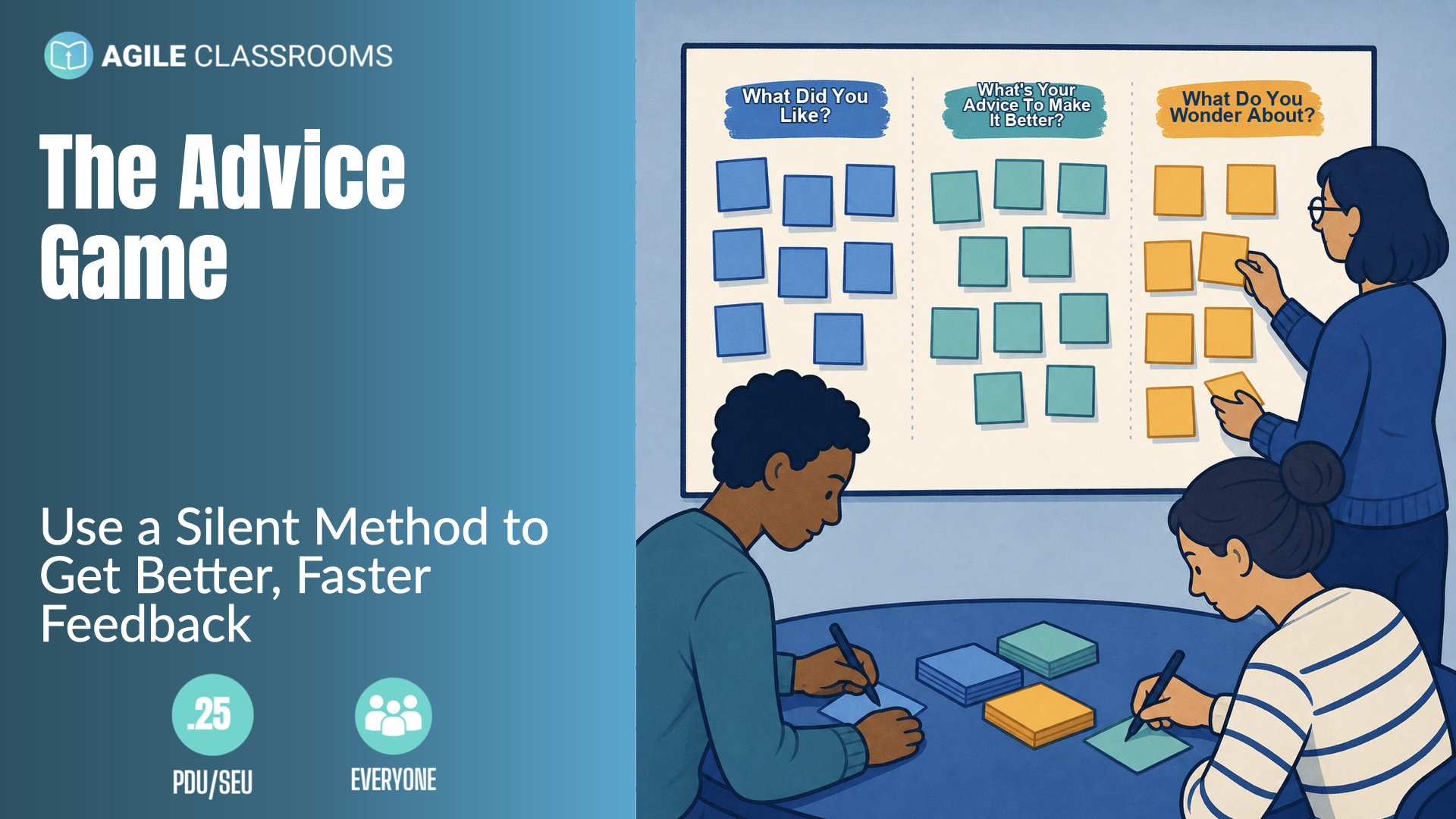
The class uses the Advice Game to practice safer, more specific advice. Students compare their first feedback comments with their new ones.
Now the comments sound different. Students can compare the quality of advice, not just remember that the teacher asked for more detail.
- "Your claim is clear, but I cannot tell which evidence supports it."
- "The diagram helps me understand the process. I would add labels to show the order."
- "Your team has three examples. The strongest one is the second because it connects to the question."
Students can see their feedback skill improving. The teacher can name what changed. The next review has a clearer target.
That comparison is ipsative. The assessment is formative because it changes the next move. It is ipsative because students compare their current skill with their previous skill.
The Routines That Make It Practical
Ipsative assessment works best when students have repeated chances to inspect, compare, and adjust. That is where Agile learning routines help. The routine is not a worksheet wrapper. It is the engine that gives students something specific to compare.
For a teacher, the routine guide makes the ipsative approach practical. The online guide sections point teachers to the downloadable full routine guides, and those guides give specific performance criteria, rubrics, or look-fors for the routine. Students are not just asking whether they "did better." They can compare how their team planned, reviewed work, gave advice, reflected, or adapted from one attempt to the next.
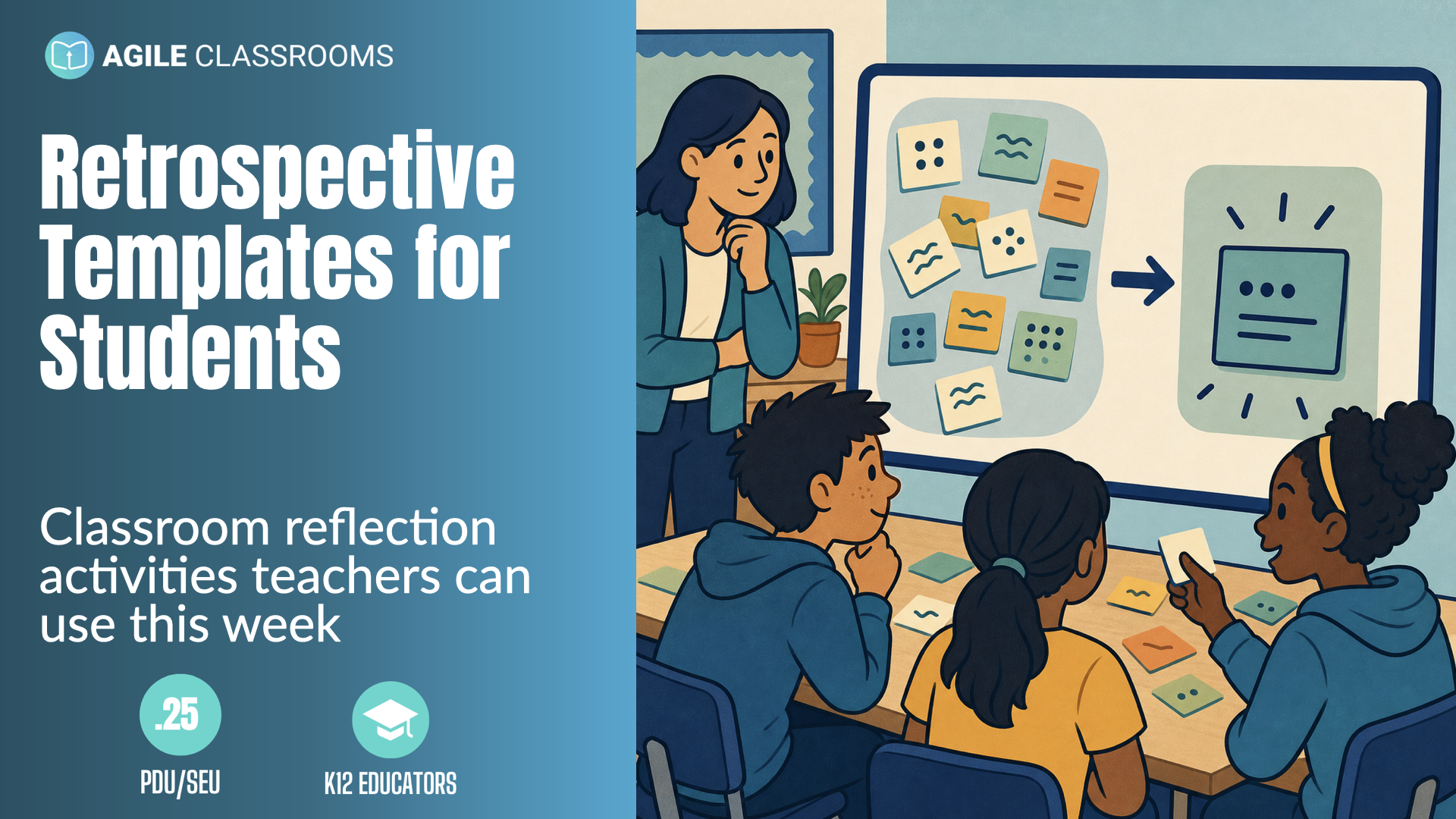
The Learning Sprint section makes the repeated cycle visible. Review routines give students a place to inspect work in progress and compare it with the goal or a previous attempt. The Advice Game lets students practice feedback, then compare the quality of one feedback round with the next. Student Retrospective Templates help students name what changed without turning reflection into a vague class discussion.
The Retrospect routine section is where the comparison becomes a decision: what will we improve in the next sprint? Without routine criteria, ipsative assessment can drift into vague reflection. With a guide, students can use a specific rubric or look-for to decide what improved, what did not move, and what performance target comes next.
Keep The Balance
Ipsative assessment is not a replacement for every other kind of assessment. Students still need to know what quality looks like. Teachers still need to connect learning to goals and standards. Sometimes the important question really is whether the student met a specific criterion.
The mistake is treating that as the only question.
There is also a real risk in using only ipsative assessment. A class can create a growth bubble where everyone is improving compared with their own last attempt, but the work is still not close enough to the standard, the audience need, or the real-world task.
A student might improve the formatting of a lab report three times and still miss the core scientific relationship. That is false progress.
For learning and skill development, students also need to know how they are changing.
That is where ipsative assessment is so useful. It gives students a way to see their own movement, not just their current position.
Take The Next Step
Choose one routine students already practice, then use ipsative assessment to evaluate their performance in that routine. Save the first attempt. After the next attempt, use the routine guide's rubric or criteria to compare evidence of change before students choose what to improve next.
Use the Retrospect routine section to find and download the full routine guide, then help students ask a tighter set of performance questions. The rubric or look-fors give students something more specific than memory or opinion.
- What did we try?
- What changed?
- What improved?
- What evidence shows that?
- What will we try next?
That is ipsative assessment in a practical classroom rhythm. It helps students see progress as something they can study, explain, and improve.